Scholars have identified the so-called "Bisayanization" of Mindanao, which is the same in Northern Luzon with the "Ilocanization" because of the migration and settlement of Ilocanos in any corner of Amianan.
Due to the slave raiding practices of the Sulu Sultanate, people from the different parts of the archipelago were captured and became slaves. With due respect to our Bisayan brothers, the term Bisaya denoted chattel slaves along with the words banyaga, ipun and ammas.
Bisayanization is continuing process as noted by Maria Mangahas on the Samal people of the island south of Davao which means loss of identity and integration into mainstream society. Yengoyan (1966) coined the term to describe the taking up of Bisayan identity by the Mandayas of Eastern Mindanao through baptism.
Regarding land ownership, prehispanic Filipinos did not know the concept of private property until the introduction of torrens title system by the Spaniards. Anyone has the right to till the land and get whatever from it, called usufruct, but the forest and other lands were considered communal. The basis of wealth during those days was not the land, it was the ownership of slaves, porcelain and jewelry. It was useless to own large tracts of land if one could not employ farm hands to cultivate them.
It is because of the introduction of private ownership of land that led to the dispossession of lands from the indigenous peoples ofMindanao. The influx of migrants from the north to Mindanao, already accustomed to the idea of private property as regards land, created complications as the communal ownership of land was not yet understood. Today, how many people in Mindanao owned lands previously "owned" or shall we say considered as communal property by the lumads and the Moros? The same question could be posed regarding the Cordilleras, Mindoro and Palawan.

"Dissent" ed Inglis, no onsomlang ka et ag ka onabuloy ed kabaliksan na saray totoon maganon manisia ed ibabaga na karaklan.
Featured Post
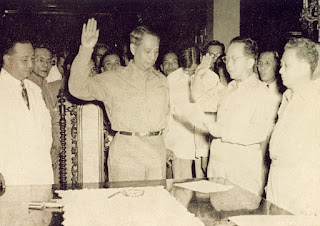
Say Pangasinensen ngalngalin nanmaliw ya pangolo na bansa: Si Carlos Peña Romulo (1898-1985)
Nipaakar ed sayan talintao. Say inpansamba nen Carlos P. Romulo ed arap nen Pangolon Manuel Roxas nen 1946. Walad kawanan si Speaker of th...
Jan 21, 2008

Jan 14, 2008
Mam E
(pakanonotan kinen Prop. Nieves Benito Epistola)
Inatey kayon agtakayo amaestraan,
Diad UP inaron escuelaan;
Mam E so inngaran day escuelayo,
Polyan yo ak ’katoy itawag kod sikayo
Mam E nen akasawa kilay Epistola,
Panón nen marikit kayo, Mam B, awa?
Akin ta aga Mam N
masanting met ya ngaran?
Sakey ya ngarem agko nalinguanan so pan-imes yod siak,
Ed Recto Hall nen asumpal so tepetko, pansalitak;
Pati say matayo angankoy makabirbir ya kabaleyan
Matan unan timanguad banwa ed Caboloan
Anggano inaral yoy arom ya dila,
Inaro yo met so salita nen Urduja;
Say binetla nen melag ya ugaw kini,
Atan met so, on atan!, salitan bekásen yod si Apolaki.
Say Ágila
Diad toktok na kiew ed palandey
singan arin akalagey
onbántag ed leksab ya makaoley
makdem so mata to’d atatagey ya pasén
ikampayto saray pakpak ya matakken
ontikiab mansingkat na kanen.
Quo Vadis, Baley ko?
Natan inerso laen mo, baley ko?
Kasumpal na duaran bagio;
Nantilak ya dilap tan gawat,
ed dakel ya lúyag
Saray anak mo’d biektaew
naisalét ed duaran bánsan mibabakál;
Ed Bikol say Mayon ngalngalin onterak,
No natuloy et dakel so manirap
Ontagey langula say bili na tariwa,
Gasolina tan plete ontombok metla;
Balet anápan na dumaralos, maestra
Onsingger la’d pambilay na alila
Politikon tilaan sikara labat so naksel,
Say táwag na baley agda naderengel;
Saray totoon makaantad pamaábig mo, Baley ko,
Bulág, emél, télek ed panmaongan mo!
Baley kon Filipinas, kapigan so kawayangan mo?
Pián ondayew ed Pilipino say mundo,
Pián patit na revolución o junta militar nayarawi ka
O ed masamit ya invitación na diktadura!
Iná
(dedikadod si Florida S. Fernandez
ya inianak nen unan agew na Agosto)
Pimmaway ed bao
anagasang, maplés, agangano
sakey, duara, taluran segundo
naiyanak
irapton inawit diad eges
siam ya bulán
manlapud bini
nanmalew ya ugaw
agni asumpal say panangaro
bimmaleg, nambalolaki
nanaral, nanasawa
wadtan nin mantagibi
manpasalamat ka anak
sakey labat so inam
manpasalamat ka met ed amam
antam la no akin.
Say pinalsa ed dalem na dayat
Onsipáksipák so daluyong ed pangpang na dayat
walay ugaw batik batik, mannaay-ayam
diad beneg na ermen ya malorem ya kabuasan
onoogip say pinalsa ed kaaralem na taew
mapalnan ontitikiab saray manok ed tapew
senga alinguanan ya panaon
ta abayag ya akadokol
mankugkugip ya buagen
mansasamit ed ambilonget ya papasén
bangta onbalikuat, abangon, mantayegteg so dalin!
Say Inarok
(parad si M.P.)
Andukey so andikit ya buik ton anggan abalá
say mataton masanting ya makabaláni
bibil ton gabay ton paanguban
lupa ton maganan agko nalinguanan
eléng ton maotok ya balibalin nengnengen
laman ton argolyotoy botelya na cola
say baog to'd bikking walay sansakey ya piglat
tan say beneg ya ataratar na balyanget
mansalita, manelek, onemes – makaiter ya kasil
maaro, maanus sikaton inar-arok
balet natan manaakis so asugat ya posok.
Abalang ya piráwat na panangaro
(parad si M.P.)
Nonot mo bii
Panonton abalang so piráwat tan dua
Ta agkamet makadandán ed razón tan alilingko
No agmo met tuan penerdona saray kasalananko
No agmomet gabay ya impawil ed siak.
Nonoten ko met
Panonton abalang so piráwat tan dua
Ta agtaka aboloyan ed nilooban mon moyong
Balet kimmerewak ed sika lay perdona
Ta gabay ko ni so impawil ed sika
Nonoten tan dua sirin
No walani so gunaét na panangaro tan dua
No kapigan tan manpawilan agko balet anta.
Sarayan anlong et entri ed Unan Paliagan na Anlong ed Pangasinan ya inisponsor na Komision na Dilan Filipino nen 2006. Saraya et kaiba na "Urduja" ya analon Honorable Mention. Unan naipalapag ed Makata: An online journal of Philippine & International contemporary poetry ed Disyembre 2007 ya paway to.
(pakanonotan kinen Prop. Nieves Benito Epistola)
Inatey kayon agtakayo amaestraan,
Diad UP inaron escuelaan;
Mam E so inngaran day escuelayo,
Polyan yo ak ’katoy itawag kod sikayo
Mam E nen akasawa kilay Epistola,
Panón nen marikit kayo, Mam B, awa?
Akin ta aga Mam N
masanting met ya ngaran?
Sakey ya ngarem agko nalinguanan so pan-imes yod siak,
Ed Recto Hall nen asumpal so tepetko, pansalitak;
Pati say matayo angankoy makabirbir ya kabaleyan
Matan unan timanguad banwa ed Caboloan
Anggano inaral yoy arom ya dila,
Inaro yo met so salita nen Urduja;
Say binetla nen melag ya ugaw kini,
Atan met so, on atan!, salitan bekásen yod si Apolaki.
Say Ágila
Diad toktok na kiew ed palandey
singan arin akalagey
onbántag ed leksab ya makaoley
makdem so mata to’d atatagey ya pasén
ikampayto saray pakpak ya matakken
ontikiab mansingkat na kanen.
Quo Vadis, Baley ko?
Natan inerso laen mo, baley ko?
Kasumpal na duaran bagio;
Nantilak ya dilap tan gawat,
ed dakel ya lúyag
Saray anak mo’d biektaew
naisalét ed duaran bánsan mibabakál;
Ed Bikol say Mayon ngalngalin onterak,
No natuloy et dakel so manirap
Ontagey langula say bili na tariwa,
Gasolina tan plete ontombok metla;
Balet anápan na dumaralos, maestra
Onsingger la’d pambilay na alila
Politikon tilaan sikara labat so naksel,
Say táwag na baley agda naderengel;
Saray totoon makaantad pamaábig mo, Baley ko,
Bulág, emél, télek ed panmaongan mo!
Baley kon Filipinas, kapigan so kawayangan mo?
Pián ondayew ed Pilipino say mundo,
Pián patit na revolución o junta militar nayarawi ka
O ed masamit ya invitación na diktadura!
Iná
(dedikadod si Florida S. Fernandez
ya inianak nen unan agew na Agosto)
Pimmaway ed bao
anagasang, maplés, agangano
sakey, duara, taluran segundo
naiyanak
irapton inawit diad eges
siam ya bulán
manlapud bini
nanmalew ya ugaw
agni asumpal say panangaro
bimmaleg, nambalolaki
nanaral, nanasawa
wadtan nin mantagibi
manpasalamat ka anak
sakey labat so inam
manpasalamat ka met ed amam
antam la no akin.
Say pinalsa ed dalem na dayat
Onsipáksipák so daluyong ed pangpang na dayat
walay ugaw batik batik, mannaay-ayam
diad beneg na ermen ya malorem ya kabuasan
onoogip say pinalsa ed kaaralem na taew
mapalnan ontitikiab saray manok ed tapew
senga alinguanan ya panaon
ta abayag ya akadokol
mankugkugip ya buagen
mansasamit ed ambilonget ya papasén
bangta onbalikuat, abangon, mantayegteg so dalin!
Say Inarok
(parad si M.P.)
Andukey so andikit ya buik ton anggan abalá
say mataton masanting ya makabaláni
bibil ton gabay ton paanguban
lupa ton maganan agko nalinguanan
eléng ton maotok ya balibalin nengnengen
laman ton argolyotoy botelya na cola
say baog to'd bikking walay sansakey ya piglat
tan say beneg ya ataratar na balyanget
mansalita, manelek, onemes – makaiter ya kasil
maaro, maanus sikaton inar-arok
balet natan manaakis so asugat ya posok.
Abalang ya piráwat na panangaro
(parad si M.P.)
Nonot mo bii
Panonton abalang so piráwat tan dua
Ta agkamet makadandán ed razón tan alilingko
No agmo met tuan penerdona saray kasalananko
No agmomet gabay ya impawil ed siak.
Nonoten ko met
Panonton abalang so piráwat tan dua
Ta agtaka aboloyan ed nilooban mon moyong
Balet kimmerewak ed sika lay perdona
Ta gabay ko ni so impawil ed sika
Nonoten tan dua sirin
No walani so gunaét na panangaro tan dua
No kapigan tan manpawilan agko balet anta.
Sarayan anlong et entri ed Unan Paliagan na Anlong ed Pangasinan ya inisponsor na Komision na Dilan Filipino nen 2006. Saraya et kaiba na "Urduja" ya analon Honorable Mention. Unan naipalapag ed Makata: An online journal of Philippine & International contemporary poetry ed Disyembre 2007 ya paway to.
Dec 29, 2007
NCCA farcical election of December 10
To give you a glimpse on the politics of language in thePhilippines, here's a letter of protest by Dr. Nolasco of KWF decrying the underhanded methods employed in the recent election.
Baleg so epekto to yan agawad NCCA. No basaen yo ya maong et natalusan ya saray Tagalog gabay da ya sikara labat so minabang ed publikon institusyon ya singa National Language and Translation Committee na NCCA. So antak et anggapoy miyembro na satan ya executive committee ya Pangasinense. Sinolo na saray Tagalog aman ta walay getma da ya kontrolen iramay arom ya dila ed panangiyalis daray dokumento o antokaman. Nepeg labat ya amin ya salita komon et nairiprisinta ed satan ya committee. No walay miyembro tayod diman, walay boses na Pangasinan.
I include here a petition letter written by Edgar Godin, based on Nolasco's letter, for concerned artists and cultural workers or anyone interested in the preservation of Philippine languages. Please send it to the NCCA with your name and signature affixed.
REPUBLIKA NG PILIPINAS
Tanggapan ng Pangulo
KOMISYON SA WIKANG FILIPINO
G/F Watson Bldg., 1610 J.P. Laurel Street
San Miguel, Manila
P.O Box 2282 Manila
13 December 2007
Usec Vilma Labrador
Acting Chairperson
National Commission on Culture and the Arts
Intramuros Manila
Dear Usec. Labrador:
This refers to the undersigned's letter dated 10 December 2007 expressing his protest over the election of officers of the National Committee on Language and Translation Executive Council (NCLT-ExeCon2007 - 2010 held on even date. (Please see Annex "A".)
It may be important to note at the outset that through a letter dated 06 December 2007, the undersigned, for and in behalf of the Komisyon sa Wikang Filpino (KWF), moved that National Commission on Culture and the Arts (NCCA) defer the said election (Annex "B"). Hereinbelow are the grounds:
(a) Failure to communicate with the stakeholders the rules on application for membership to the NCLT; and
(b) Gross underrepresentation of the sector and mass disenfranchisement.
Failure to Communicate the Rules on NCLT Membership
In a letter dated 07 December 2007, Dr. Galileo S. Zafra, NCLTSecretary, rebutted the claims of the undersigned (Annex "C").Concerning the first allegation, he asseverated that the rules on the application for membership to the NCLT were published in three (3) newspapers (i.e., Manila Standard, Philippine Daily Inquirer,and Manila Bulletin). The same were also reportedly posted at the NCCA website, and announced during the television and radio programs(i.e., Sining Gising at Channel 4 and DZRH)
Contrary to the claims of Dr. Zafra, however, the specific rules on application for membership to the NCLT (i.e. well known in language teaching, not limited to the Filipino language) were never published(Annex "D"). What the NCCA published in the newspapers are the 2007 Amended Implementing Rules and Regulations of Republic Act No. 7356.
Thus, while the NCAA Board has widened the criteria for membership in the NCLT to include thereto those in the language teaching and translation professions (not only involving the national language),the same has been rendered meaningless because such information did not reach and was not widely communicated to the stakeholders. Consequently, the KWF received many complaints from institutions, organizations and individuals saying that they were not able to apply for membership with the NCLT because of lack of knowledge and information, thereby requesting the postponement of the election of officers for the NCLT ExeCon 2007 - 2010 (Annexes "E" to "M").
Gross Under-representation Inequitable Distribution and Disenfranchisement
The ineffectual promulgation of the rules on application for NCLT membership resulted in gross underrepresentation, inequitable distribution and disenfranchisement of stakeholders in Philippine languages and translation.
Per records, only 37 applicants applied for the NCLT membership, with only 27 were found to be qualified as election participants for the Executive Council (ExeCon) 2007-2010 (Annex "N"). Of this number, 20 are representatives of the Tagalog/Filipino language. Moreover, the so called eligible voters form no more than six (6)interlocking directorates/affiliates in a common entity or association (Annexes "O","O-1"TO"O-10". These six interlocking entities consist of UP, SANGFIL, FIT, the WIKA network, PSLF and SALIN.
To illustrate, Dr. Zafra , a Tagalog, is a faculty member of the University of the Philippines Departamento ng Filipino, permanent secretary general of SANGFIL, (Sangunian sa Filipino), Katipong Tagapagpaganap of FIT (Filipinas Institute of Translation), and signatory to the WIKA (Wika ng Kultura at Agham) petition. He cannot hide his affiliations by simply saying that he registered as an individual applicant, (Look at Annex "O" for more cases.)
No representative from the indigenous peoples of Mindanao and the Muslimized groups involved in language work and translation was able to vote and be voted upon in the elections. As expected, the six (6)interlocking entities led by Virgilio Armalio "won" in the uncontested election.
As submitted by the different stakeholders in the Philippine languages and translation petitioning for postponement, the election of officers for the NCLT ExeCon 2007 - 2010 held on 10 December 2007 runs counter to the very principles to which the NCCA policies and programs are ought to be governed, i.e., "pluralistic" (by fostering deep respect for the cultural identity of each locality, region or ethno linguistic locality, as well as elements assimilated from other cultures through the natural process of acculturations), "democratic" (by encouraging and supporting the participation of the vast masses of the Filipino people in each programs and projects), and "non-partisan" (by being open to all people and institutions, regardless of creed, affiliation, ideology, ethnic origin, age, gender, or class, with no organized group or sector having monopoly of its services.
In view of the foregoing, the undersigned respectfully moves that the NCCA Board of Commissioners: (a) declare a failure and / or nullification of election for the officers of the NCLT - Execon2007 - 2010; (b) formulate rules which will ensure the democratic participation of the different stakeholders in order to prevent a repeat of the December 10 farcical election, and (c) authorize the conduct of a new one after proactively inviting stakeholders in the different regions and ethnolinguistic groups and effectively disseminating the rules on application for NCLT membership to allow all the interested parties to submit their respective applications therefor.
It is further prayed that the election for the representative of the Subcommission on Cultural Dissemination to the NCCA Board scheduled on 14 December 2007 be held in abeyance until after the resolution of the controversy at hand.
Thank you.
Very truly yours,
RICARDO MA. NOLASCO
Acting Chairperson
SEEKING THE DECLARATION OF FAILURE OR NULLIFICATION OF THE DECEMBER 10, 2007 ELECTION FOR THE NATIONAL COMMITTEE ON LANGUAGE AND TRANSLATION- EXECUTIVE COUNCIL 2007-2010
WHEREAS, pursuant to Section 56, Rule X of the 2007 Amended Implementing Rules and Regulations of Republic Act No. 7356, there shall be National Committees (NCs) which shall be composed of artists and cultural workers, and individuals recognized in their fields, organized into groups, which shall be the mechanism through which the community of Philippine artists and cultural workers can participate in decision-making, preparation of policies and programs affecting culture and arts;
WHEREAS, according to the same section, NCs are encouraged to set up their membership so that the various ethno-linguistic groups and organizations of artists and cultural workers coming from the political subdivisions of the country are properly and equitably represented ;
WHEREAS, the specific membership requirements for the NCLT – which in effect broadened the institutional membership to applicants involved in the preservation, development and promotion of the Philippine languages , and individual membership to applicants who are translators, researchers, educators, or advocates of the Philippine languages – were never published nor properly disseminated for the information and guidance of all concerned;
WHEREAS, as a consequence, only 37 applicants applied for NCLT membership, with only 27 were found to be qualified as election participants for the Executive Council (ExeCon) 2007-2010, most of which are Tagalog and Metro Manila based and forming no more than six (6) interlocking directorates /affiliates in a common entity or association (UP, SANGFIL, FIT, the WIKA network, PSLF and SALIN);
Baleg so epekto to yan agawad NCCA. No basaen yo ya maong et natalusan ya saray Tagalog gabay da ya sikara labat so minabang ed publikon institusyon ya singa National Language and Translation Committee na NCCA. So antak et anggapoy miyembro na satan ya executive committee ya Pangasinense. Sinolo na saray Tagalog aman ta walay getma da ya kontrolen iramay arom ya dila ed panangiyalis daray dokumento o antokaman. Nepeg labat ya amin ya salita komon et nairiprisinta ed satan ya committee. No walay miyembro tayod diman, walay boses na Pangasinan.
I include here a petition letter written by Edgar Godin, based on Nolasco's letter, for concerned artists and cultural workers or anyone interested in the preservation of Philippine languages. Please send it to the NCCA with your name and signature affixed.
REPUBLIKA NG PILIPINAS
Tanggapan ng Pangulo
KOMISYON SA WIKANG FILIPINO
G/F Watson Bldg., 1610 J.P. Laurel Street
San Miguel, Manila
P.O Box 2282 Manila
13 December 2007
Usec Vilma Labrador
Acting Chairperson
National Commission on Culture and the Arts
Intramuros Manila
Dear Usec. Labrador:
This refers to the undersigned's letter dated 10 December 2007 expressing his protest over the election of officers of the National Committee on Language and Translation Executive Council (NCLT-ExeCon2007 - 2010 held on even date. (Please see Annex "A".)
It may be important to note at the outset that through a letter dated 06 December 2007, the undersigned, for and in behalf of the Komisyon sa Wikang Filpino (KWF), moved that National Commission on Culture and the Arts (NCCA) defer the said election (Annex "B"). Hereinbelow are the grounds:
(a) Failure to communicate with the stakeholders the rules on application for membership to the NCLT; and
(b) Gross underrepresentation of the sector and mass disenfranchisement.
Failure to Communicate the Rules on NCLT Membership
In a letter dated 07 December 2007, Dr. Galileo S. Zafra, NCLTSecretary, rebutted the claims of the undersigned (Annex "C").Concerning the first allegation, he asseverated that the rules on the application for membership to the NCLT were published in three (3) newspapers (i.e., Manila Standard, Philippine Daily Inquirer,and Manila Bulletin). The same were also reportedly posted at the NCCA website, and announced during the television and radio programs(i.e., Sining Gising at Channel 4 and DZRH)
Contrary to the claims of Dr. Zafra, however, the specific rules on application for membership to the NCLT (i.e. well known in language teaching, not limited to the Filipino language) were never published(Annex "D"). What the NCCA published in the newspapers are the 2007 Amended Implementing Rules and Regulations of Republic Act No. 7356.
Thus, while the NCAA Board has widened the criteria for membership in the NCLT to include thereto those in the language teaching and translation professions (not only involving the national language),the same has been rendered meaningless because such information did not reach and was not widely communicated to the stakeholders. Consequently, the KWF received many complaints from institutions, organizations and individuals saying that they were not able to apply for membership with the NCLT because of lack of knowledge and information, thereby requesting the postponement of the election of officers for the NCLT ExeCon 2007 - 2010 (Annexes "E" to "M").
Gross Under-representation Inequitable Distribution and Disenfranchisement
The ineffectual promulgation of the rules on application for NCLT membership resulted in gross underrepresentation, inequitable distribution and disenfranchisement of stakeholders in Philippine languages and translation.
Per records, only 37 applicants applied for the NCLT membership, with only 27 were found to be qualified as election participants for the Executive Council (ExeCon) 2007-2010 (Annex "N"). Of this number, 20 are representatives of the Tagalog/Filipino language. Moreover, the so called eligible voters form no more than six (6)interlocking directorates/affiliates in a common entity or association (Annexes "O","O-1"TO"O-10". These six interlocking entities consist of UP, SANGFIL, FIT, the WIKA network, PSLF and SALIN.
To illustrate, Dr. Zafra , a Tagalog, is a faculty member of the University of the Philippines Departamento ng Filipino, permanent secretary general of SANGFIL, (Sangunian sa Filipino), Katipong Tagapagpaganap of FIT (Filipinas Institute of Translation), and signatory to the WIKA (Wika ng Kultura at Agham) petition. He cannot hide his affiliations by simply saying that he registered as an individual applicant, (Look at Annex "O" for more cases.)
No representative from the indigenous peoples of Mindanao and the Muslimized groups involved in language work and translation was able to vote and be voted upon in the elections. As expected, the six (6)interlocking entities led by Virgilio Armalio "won" in the uncontested election.
As submitted by the different stakeholders in the Philippine languages and translation petitioning for postponement, the election of officers for the NCLT ExeCon 2007 - 2010 held on 10 December 2007 runs counter to the very principles to which the NCCA policies and programs are ought to be governed, i.e., "pluralistic" (by fostering deep respect for the cultural identity of each locality, region or ethno linguistic locality, as well as elements assimilated from other cultures through the natural process of acculturations), "democratic" (by encouraging and supporting the participation of the vast masses of the Filipino people in each programs and projects), and "non-partisan" (by being open to all people and institutions, regardless of creed, affiliation, ideology, ethnic origin, age, gender, or class, with no organized group or sector having monopoly of its services.
In view of the foregoing, the undersigned respectfully moves that the NCCA Board of Commissioners: (a) declare a failure and / or nullification of election for the officers of the NCLT - Execon2007 - 2010; (b) formulate rules which will ensure the democratic participation of the different stakeholders in order to prevent a repeat of the December 10 farcical election, and (c) authorize the conduct of a new one after proactively inviting stakeholders in the different regions and ethnolinguistic groups and effectively disseminating the rules on application for NCLT membership to allow all the interested parties to submit their respective applications therefor.
It is further prayed that the election for the representative of the Subcommission on Cultural Dissemination to the NCCA Board scheduled on 14 December 2007 be held in abeyance until after the resolution of the controversy at hand.
Thank you.
Very truly yours,
RICARDO MA. NOLASCO
Acting Chairperson
SEEKING THE DECLARATION OF FAILURE OR NULLIFICATION OF THE DECEMBER 10, 2007 ELECTION FOR THE NATIONAL COMMITTEE ON LANGUAGE AND TRANSLATION- EXECUTIVE COUNCIL 2007-2010
WHEREAS, pursuant to Section 56, Rule X of the 2007 Amended Implementing Rules and Regulations of Republic Act No. 7356, there shall be National Committees (NCs) which shall be composed of artists and cultural workers, and individuals recognized in their fields, organized into groups, which shall be the mechanism through which the community of Philippine artists and cultural workers can participate in decision-making, preparation of policies and programs affecting culture and arts;
WHEREAS, according to the same section, NCs are encouraged to set up their membership so that the various ethno-linguistic groups and organizations of artists and cultural workers coming from the political subdivisions of the country are properly and equitably represented ;
WHEREAS, the specific membership requirements for the NCLT – which in effect broadened the institutional membership to applicants involved in the preservation, development and promotion of the Philippine languages , and individual membership to applicants who are translators, researchers, educators, or advocates of the Philippine languages – were never published nor properly disseminated for the information and guidance of all concerned;
WHEREAS, as a consequence, only 37 applicants applied for NCLT membership, with only 27 were found to be qualified as election participants for the Executive Council (ExeCon) 2007-2010, most of which are Tagalog and Metro Manila based and forming no more than six (6) interlocking directorates /affiliates in a common entity or association (UP, SANGFIL, FIT, the WIKA network, PSLF and SALIN);
WHEREAS, in spite of the request by the various sectors for the postponement thereof, the election for the 13-member NCLT ExeCon 2007-2010 pushed through on 10 December 2007;
NOW, THEREFORE, we, the different stakeholders in the field of Philippine languages and translation, do hereby strongly urge the NCCA Board of Commissioners, either during a special meeting or through a referendum, to: (a) declare a failure of election for the NCLT ExeCon 2007-2010 as the same runs counter to the very principles by which the NCCA policies and programs are ought to be governed, i.e., "pluralistic" (by fostering deep respect for the cultural identity of each locality, region or ethno-linguistic locality, as well as elements assimilated from other cultures through the natural process of acculturation) , " democratic" (by encouraging and supporting the participation of the vast masses of the Filipino people in its programs and projects), and "non-partisan" (by being open to all people and institutions, regardless of creed, affiliation, ideology, ethnic origin, age, gender or class, with no organized group or sector having monopoly of its services); (b) formulate rules which will ensure the democratic participation of the sector; and (c) set a new election date for the officers of the NCLT ExeCon, after allowing the submission of additional applications for individual and institutional NCLT membership based on the duly promulgated rules.
It is further prayed that the election for the representative of the Subcommission on Cultural Dissemination to the NCCA Board scheduled on 14 December 2007 be held in abeyance until after the resolution of the controversy at hand.
Signed on ___ December 2007, Philippines.
Dec 12, 2007
Rethinking Nationalism: The Legacy of Jose Wright Diokno
But I can tell you the dream all Philippine nationalists share. It is the dream to be the first colony in Asia to achieve modernity, as it was the first to mount a revolution and the first to attain independence. It is the dream to join the modern world without sacrificing democracy to dictatorship, as others are doing; nor at the expense of the poor – who have paid the price elsewhere - but of those who reaped the benefits of colonialism and therefore can afford the cost of modernization. Philippine nationalism is determined to achieve this dream...
A fiery senator from the Philippines addressed these candid words to a mixed audience in New York. Every uttered word, every compass and stroke of his firm hands, his reverberating tone inside the hall could not escape the dense scrutiny of the adamant crowd, most of them whites, comprising of politicians, businessmen and others. It was like hearing an unheard revelation that deserved critical analysis of which it could irritate American sensitivity. But this did not deter the man in the platform. He might have thought about it, a day or months before, and his resolve was to deliver it as it was. No matter what would happen, the consequences he must bear. And he did. Now, as he approached the terminal part of his brilliant exposition on nationalism, here contained the coup de grace that would create his enemies. “... [T]o leave us alone,” came out from his uncouth mouth like a thunder as it roared and wildly shocked the disconcerted assembly. No one could ever spoke with such audacity and temerity before a peregrine throng except the man of his time - Jose Wright Diokno.
Jose Diokno, or Pepe as his colleagues called him, knew that what he had done would put him on the suspicious surveillance of the authorities. It was 1968 and President Ferdinand Marcos was now three years in office. Diokno’s public career reached the limelight when as Secretary of Justice he brazenly exposed anomalous deals involving Harry Stonehill, an American tobacco magnate and quite a number of government officials. The investigation uncovered the deadening corruption besetting the Macapagal government. Diokno’s stint as Justice Secretary came to an end when at the heat of the controversy the administration gave notice of his forcible resignation. Unperturbed by this momentary setback, Diokno achieved the zenith of his political career as he would become the bold senator from Batangas. Entangled in numerous political engagements around the country, the radical posture he has shown to the American public served only as a foretaste of his nationalism.
He lived in a turbulent decade of widespread corruption inside the bureaucratic limits of the government he served. Reelected in 1969, Marcos’ actuations hinted a furtive desire of usurping more powers. Diokno, on one hand, sensed the proximate probability of Marcos using his emergency powers to stay longer. In a speech delivered in the Senate in mid-June 1972, Diokno prophetically declared that “a throne of bayonets” was in the offing. Succinctly underlining the classical symptoms of an autocracy, he disclosed that “under the present constitution, therefore, there is no legal way which President Marcos may extend. He could only hold on to the presidency illegally.” His dire prediction arrived.
In September 21, more than two months after he delivered his speech, Martial Law placed the entire country under the soon-to-be repressive authority of Marcos and the military. Diokno was caught suddenly in a tight spot because of his political convictions. Marcos ordered his imprisonment together with fellow opposition leaders. Nothing could be more realistic and descriptive of a political prisoner than Diokno’s experience in a cell. Thus, when he spoke about human rights he elucidated with authority, not because he was a man of stature but a witness he was of how cruel and oppressive the militaristic rule he resisted.
After the sluggish years in detention when he was freed rather reluctantly, the inertia in him that was stored for years began to unfold. Indeed, the state of inactivity as he described it as “life of boredom, a life of frustration” would be eventually liberated by a buried energy, which would put him in the forefront of nationalist history. It was the history, which he tried to mold and reconstruct when all formidable obstacles were mounted against him. Despite the grave threat that would arise from his frank protestations and creed against Martial Law, he was determined to inform his people.
With sharp and perceptive dissection of events, he articulated his sympathy for the nation. Taking his cue from the great Claro M. Recto, he knew well the illness that has plagued his country. “The true believer in Recto,” Diokno asserted, “owes it to himself to come out of the shell in which he has hibernated during the last two years and a half, and speak out against the desecration of our democratic institution.” That he became a true believer of Recto is unquestionably true. He practiced what he preached. Recto’s nationalism acquired a new form and character as Diokno imbibed that ideology throughout his life and career.
Along with Tañada and Recto, he recognized the existence of US military bases as an obvious form of United States neocolonialism. He did not fail to invoke his sentiments about the external and internal menace that would arise when the military bases shall continue in Philippine territory. To him, full and plenary sovereignty required the exercise of such sovereignty without the impediments of colonial control. Dismantling the bases, he argued, was the first step towards attaining that ultimate goal.
Hence, he organized the Anti-Bases Coalition (ABC) together with other leading nationalists – a movement whose objective was to drive out the bases and return them to its rightful owners. Throughout his pronouncements, a thread could be traced between its lines - that of genuine nationalism, which pulsated poignantly in his heart. “Nationalism,” Diokno emphasized, “is more than patriotism. It is also the belief that, because the Philippines is our country, it is we who must have the power to direct its affairs, internal and external for it is we who bear the responsibility for its future.”
Because the people decide on their own government, it is the people who must bear the responsibility. Only an informed people could direct the path to freedom and progress. During his speaking engagements, his convictions did not waver about the need to continue the democratic struggle. Quiet submission to the use of force appeared to him as pusillanimity. He warned that such course “not only condemns our rights to death, we also condemn our hopes and our dreams, our present and our children’s future.”
While Pepe Diokno did not see the day when American soldiers withdrew from Subic and Clark, his convictions, more or less, contributed to the cause, which he espoused - the eviction of the military bases. Recto, Tañada and Diokno, the triumvirate as pillars of Filipino nationalism, belonged to a tumultuous era when being nationalist was equated with being communist; hence, an enemy of the state. But Diokno braved all the storms risking even his life to a meaningful end.
It is only right to pay homage to the man whose untarnished integrity remains an inspiration for all Filipinos. This inevitably brings us to the question: what was the impact of Diokno’s legacy today? It is similar in asking: did Diokno’s dream of a ‘nation for our children’ become a tangible reality? Pity because economic statistics answers with a resounding no! Four consecutive presidencies had come and went but a real democracy never existed. A burgeoning population with hungry stomachs, with no jobs and without the benefit of a decent home is still around. Disparity of income created a very wide chasm between the rich and the poor. Personality and traditional politics failed to restructure the government. Although American troops had left since 1991, both the Philippines and the U.S. – a little different from the former military agreement – signed new military pacts. Diokno might have been so uneasy in his grave learning that the military alliance he criticized is back again.
He struggled for the betterment of his beloved country yet treacherous circumstances foiled his attempts – the paradoxical realities after EDSA. Nationalism burned in his heart yet deceitful circumstances again tried to but failed to stifle that passion. More than ever, his nationalism still can wage war against such contradictions. While vestiges of colonialism stay and abetted by the status quo, Jose Diokno, the name resonates a call for nationalism. It did not die with him. It is only again about to begin. It is a challenge he bequeathed to his people for those who would dare.
[First published in People's Digest Newsweekly (Dagupan City) July 17-23, 2007]
A fiery senator from the Philippines addressed these candid words to a mixed audience in New York. Every uttered word, every compass and stroke of his firm hands, his reverberating tone inside the hall could not escape the dense scrutiny of the adamant crowd, most of them whites, comprising of politicians, businessmen and others. It was like hearing an unheard revelation that deserved critical analysis of which it could irritate American sensitivity. But this did not deter the man in the platform. He might have thought about it, a day or months before, and his resolve was to deliver it as it was. No matter what would happen, the consequences he must bear. And he did. Now, as he approached the terminal part of his brilliant exposition on nationalism, here contained the coup de grace that would create his enemies. “... [T]o leave us alone,” came out from his uncouth mouth like a thunder as it roared and wildly shocked the disconcerted assembly. No one could ever spoke with such audacity and temerity before a peregrine throng except the man of his time - Jose Wright Diokno.
Jose Diokno, or Pepe as his colleagues called him, knew that what he had done would put him on the suspicious surveillance of the authorities. It was 1968 and President Ferdinand Marcos was now three years in office. Diokno’s public career reached the limelight when as Secretary of Justice he brazenly exposed anomalous deals involving Harry Stonehill, an American tobacco magnate and quite a number of government officials. The investigation uncovered the deadening corruption besetting the Macapagal government. Diokno’s stint as Justice Secretary came to an end when at the heat of the controversy the administration gave notice of his forcible resignation. Unperturbed by this momentary setback, Diokno achieved the zenith of his political career as he would become the bold senator from Batangas. Entangled in numerous political engagements around the country, the radical posture he has shown to the American public served only as a foretaste of his nationalism.
He lived in a turbulent decade of widespread corruption inside the bureaucratic limits of the government he served. Reelected in 1969, Marcos’ actuations hinted a furtive desire of usurping more powers. Diokno, on one hand, sensed the proximate probability of Marcos using his emergency powers to stay longer. In a speech delivered in the Senate in mid-June 1972, Diokno prophetically declared that “a throne of bayonets” was in the offing. Succinctly underlining the classical symptoms of an autocracy, he disclosed that “under the present constitution, therefore, there is no legal way which President Marcos may extend. He could only hold on to the presidency illegally.” His dire prediction arrived.
In September 21, more than two months after he delivered his speech, Martial Law placed the entire country under the soon-to-be repressive authority of Marcos and the military. Diokno was caught suddenly in a tight spot because of his political convictions. Marcos ordered his imprisonment together with fellow opposition leaders. Nothing could be more realistic and descriptive of a political prisoner than Diokno’s experience in a cell. Thus, when he spoke about human rights he elucidated with authority, not because he was a man of stature but a witness he was of how cruel and oppressive the militaristic rule he resisted.
After the sluggish years in detention when he was freed rather reluctantly, the inertia in him that was stored for years began to unfold. Indeed, the state of inactivity as he described it as “life of boredom, a life of frustration” would be eventually liberated by a buried energy, which would put him in the forefront of nationalist history. It was the history, which he tried to mold and reconstruct when all formidable obstacles were mounted against him. Despite the grave threat that would arise from his frank protestations and creed against Martial Law, he was determined to inform his people.
With sharp and perceptive dissection of events, he articulated his sympathy for the nation. Taking his cue from the great Claro M. Recto, he knew well the illness that has plagued his country. “The true believer in Recto,” Diokno asserted, “owes it to himself to come out of the shell in which he has hibernated during the last two years and a half, and speak out against the desecration of our democratic institution.” That he became a true believer of Recto is unquestionably true. He practiced what he preached. Recto’s nationalism acquired a new form and character as Diokno imbibed that ideology throughout his life and career.
Along with Tañada and Recto, he recognized the existence of US military bases as an obvious form of United States neocolonialism. He did not fail to invoke his sentiments about the external and internal menace that would arise when the military bases shall continue in Philippine territory. To him, full and plenary sovereignty required the exercise of such sovereignty without the impediments of colonial control. Dismantling the bases, he argued, was the first step towards attaining that ultimate goal.
Hence, he organized the Anti-Bases Coalition (ABC) together with other leading nationalists – a movement whose objective was to drive out the bases and return them to its rightful owners. Throughout his pronouncements, a thread could be traced between its lines - that of genuine nationalism, which pulsated poignantly in his heart. “Nationalism,” Diokno emphasized, “is more than patriotism. It is also the belief that, because the Philippines is our country, it is we who must have the power to direct its affairs, internal and external for it is we who bear the responsibility for its future.”
Because the people decide on their own government, it is the people who must bear the responsibility. Only an informed people could direct the path to freedom and progress. During his speaking engagements, his convictions did not waver about the need to continue the democratic struggle. Quiet submission to the use of force appeared to him as pusillanimity. He warned that such course “not only condemns our rights to death, we also condemn our hopes and our dreams, our present and our children’s future.”
While Pepe Diokno did not see the day when American soldiers withdrew from Subic and Clark, his convictions, more or less, contributed to the cause, which he espoused - the eviction of the military bases. Recto, Tañada and Diokno, the triumvirate as pillars of Filipino nationalism, belonged to a tumultuous era when being nationalist was equated with being communist; hence, an enemy of the state. But Diokno braved all the storms risking even his life to a meaningful end.
It is only right to pay homage to the man whose untarnished integrity remains an inspiration for all Filipinos. This inevitably brings us to the question: what was the impact of Diokno’s legacy today? It is similar in asking: did Diokno’s dream of a ‘nation for our children’ become a tangible reality? Pity because economic statistics answers with a resounding no! Four consecutive presidencies had come and went but a real democracy never existed. A burgeoning population with hungry stomachs, with no jobs and without the benefit of a decent home is still around. Disparity of income created a very wide chasm between the rich and the poor. Personality and traditional politics failed to restructure the government. Although American troops had left since 1991, both the Philippines and the U.S. – a little different from the former military agreement – signed new military pacts. Diokno might have been so uneasy in his grave learning that the military alliance he criticized is back again.
He struggled for the betterment of his beloved country yet treacherous circumstances foiled his attempts – the paradoxical realities after EDSA. Nationalism burned in his heart yet deceitful circumstances again tried to but failed to stifle that passion. More than ever, his nationalism still can wage war against such contradictions. While vestiges of colonialism stay and abetted by the status quo, Jose Diokno, the name resonates a call for nationalism. It did not die with him. It is only again about to begin. It is a challenge he bequeathed to his people for those who would dare.
[First published in People's Digest Newsweekly (Dagupan City) July 17-23, 2007]
Nov 27, 2007
Language Recognition
If non-Tagalogs want their language to be recognized locally and internationally, they must start institutionalizing departments of linguistics in universities of their respective regions and localities. If they want to put an end to the masquerade that Tagalog is the language of Filipinos when in fact there are other languages, marginalized by the status quo, now is the auspicious time to do so.
Language is wealth. Universities abroad are capitalizing on our languages and they are earning dollars from them. They are robbing us of our heritage and they are the ones who get recognition. Filipino intellectuals and cultural artists must secure to themselves the cultures of their ancestors by studying, propagating and disseminating them.
In terms of economic productivity as a language, English had become the richest on the basis of its dissemination. How many millions of dollars had been paid since the creation of TOEFL, IELTS, TSE, TWE etc. Filipinos should by now look at English as cultural capital. Why not establish a modified form of those tests recognized by the English community around the world administered by Filipinos?
In the same way, Pangasinan, Ilocano, Kapampangan, Bisaya and others could also join the league only if the stakeholders recognize their own. When? Decades from now? Now is the time!
TPFL (Test of Pangasinan as a Foreign Language), anyone?
Language is wealth. Universities abroad are capitalizing on our languages and they are earning dollars from them. They are robbing us of our heritage and they are the ones who get recognition. Filipino intellectuals and cultural artists must secure to themselves the cultures of their ancestors by studying, propagating and disseminating them.
In terms of economic productivity as a language, English had become the richest on the basis of its dissemination. How many millions of dollars had been paid since the creation of TOEFL, IELTS, TSE, TWE etc. Filipinos should by now look at English as cultural capital. Why not establish a modified form of those tests recognized by the English community around the world administered by Filipinos?
In the same way, Pangasinan, Ilocano, Kapampangan, Bisaya and others could also join the league only if the stakeholders recognize their own. When? Decades from now? Now is the time!
TPFL (Test of Pangasinan as a Foreign Language), anyone?
Nov 26, 2007
PI 100 Syllabus
I am posting the syllabus I made for PI 100, which is a course on Rizal, the national hero of the Philippines. I taught this course for one year at UP. Everyone is free to copy and use it provided the author is cited.
_________ El Filibusterismo (orihinal sa Espanyol, isinalin sa Ingles at Filipino)
_________ One Hundred Letters of Jose Rizal. Manila: Lopez Memorial Museum, 1959.
_________Escritos de Jose Rizal. Tomo I-XIII. Jose Rizal National Centennial Commission, 1961. Mga katipunan ng mga akda ni Rizal na isinalin rin sa Ingles at Filipino.
Kalaw, Teodoro M. ed. Epistolario Rizalino. Tomo I (1877-87); II (1887-90); III (1890-92); IV (1892- 96); V unang parte (1886-1888) at ikalawang parte (1888-1896). Manila: Bureau of Printing, 1938.
Coates, Austin. Rizal – Filipino Nationalist & Patriot. Manila: Solidaridad Publishing House, 1992. Isinalin ni Nilo S. Ocampo bilang Rizal – Makabayan at Martir. QC: UP Press, 1995.
Guerrero, Leon Ma. The First Filipino. Guerrero Publishing, 2003.
Ramos, Jesus Fer. et. al. Kalipunan ng mga Sinulat ni Dr. Jose P. Rizal (Tula, Sanaysay, Nobela, Liham). walang datos ng naglimbag pati petsa ng pagkakalimbag.
Mga karagdagang babasahin
Agoncillo, Teodoro A. & Milagros C. Guerrero. The History of the Filipino People. Quezon City: Malaya Books, 1970: Chapters 6, 7, 8, 9 &10.
Arcilla, Jose S. Rizal and the Emergence of the Philippine Nation. QC: Office of Research & Publications, Ateneo de Manila University, 1991.
Constantino, Renato. “Veneration without Understanding” in Dissent and Counter-consciousness. QC: Malaya Books, 1970.
Fast, Jonathan & Jim Richardson. Roots of Dependency: Political and Economic Revolution in 19th Century Philippines. Quezon City: Foundation for Nationalist Studies, 1979: Chapters II,
VII & VIII.
Foronda, Marcelino. The Canonization of Rizal. Manila, 1960.
Ileto, Reynaldo C. “Rizal and the Underside of Philippine History” in Filipinos and their Revolution: Event, Discourse and Historiography. QC: Ateneo de Manila University Press, 1998.
Joaquin, Nick. “Anatomy of the Anti-Hero” & “Why was the Rizal Hero a Creole?” in A Question of Heroes. Anvil, 2005.
Melendrez-Cruz, Patricia & Apolonio Chua. Himalay: Kalipunan ng mga Pag-aaral kay Rizal. Manila: Sentrong Pangkultura ng Pilipinas, 1991.
Ocampo, Ambeth R. Rizal without the Overcoat. Anvil, 2000.
Ocampo, Nilo S. May Gawa na Kaming Natapus Dini: si Rizal at ang Wikang Tagalog. QC: Office of the Vice Chancellor for Research and Development, University of the Philippines, 2002.
Quibuyen, Floro C. A Nation Aborted: Rizal, American Hegemony and Philippine Nationalism. QC: Ateneo de Manila University Press, 2000.
Sarkisyanz, Manuel. “Rizal’s Image: Archetypes, Influences, Analogies and Impacts” in Rizal and Republican Spain and other Rizalist Essays. Manila: National Historical Institute, 1995.
Schumacher, John N., S.J. The Propaganda Movement: 1880-1895. QC: Ateneo de Manila University Press, 1997: Chapters 5 & 12.
Mga pangangailangan ng kurso
Pagdalo sa klase (10%)
Tumbasan ng marka
1.0 96-100; 1.25 91-95; 1.5 86-90; 1.75 81-85; 2.0 76-80; 2.25 71-75; 2.5 66-70; 2.75 61-65; 3.0 56-60;4.0 51-55; 5.0 0-50
Mga tuntunin sa panunuring-sanaysay
Sumulat ng isang panunuring-sanaysay tungkol sa isang akdang hinggil kay Rizal, nakasulat sa Ingles o Filipino.
Maglalaman ito dapat ng 1500 na mga salita at naka-double space.
Balangkas ng kurso at schedule
I. Mga Lapit sa Pag-aaral kay Rizal
II. Jose Rizal: Buhay ng isang Bayani
A. Inihula sa mga bituin
1. Ang panahon bago ang kanyang pagsilang
2. Kapanganakan at Kabataan, 1861-1871
"Memorias de Un Estudiante de Manila" (1878-1881): Kabanata 1 at 2.
"Sa aking kabata" (ca 1869)
3. Buhay sa Paaralan at Pamantasan, 1872-1881
"Memorias": Kabanata 3, 4, 5 at 6
"San Eustaquio, Martir" (1876)
"A la Juventud Filipina" (1879)
"El Consejo de los Dioses" (1880)
4. Paglayag sa labas ng Kapuluan
B. Pagtahak sa kapalaran
1. Sa Madrid
"El Amor Patrio" (1882)
"Discurso-Brindis" (1884)
2. Pagpapakadalubhasa sa Paris at Heidelberg
3. Buhay sa Berlin
"Guillermo Tell" (Setyembre 1886)
"Limang Salita ni Hans Christian Andersen" (1886)
4. Noli Me Tangere
"Noli Me Tangere" (1887)
"A las flores de Heidelberg" (1887)
C. Mga pagsubok
1. Pag-uwi sa Calamba
2. Pagtanggap at pagtutol sa Noli
3. Matinding pagtutol ng mga prayle sa nobela
4. Pinayuhang umalis
5. Ang Hacienda ng Calamba
D. Pakikibaka at Pagsasakripisyo
1. Tungong Inglatera
2. Pag-aaral sa Museong Britano
3. Kilusang Propaganda
"Sa Kababayang Dalaga sa Malolos" (Pebrero 1889)
"La Vision de Fray Rodriguez" (1889)
"Por Telefono" (1889)
4. Noli ipinagbawal
5. Krisis sa pamilya
6. Sucesos ni Morga
"Filipinas Dentro de Cien Años" (Setyembre 1889-Pebrero 1890)
"Al Excmo. Sr.D. Vicente Barrantes" (Pebrero 1890)
7. Pagkakahati sa Madrid
"Sobre la Indolencia de los Filipinos" (Hulyo-Setyembre 1890)
8. El Filibusterismo
E. Ang Tadhana
1. Pagpunta sa Hongkong
"Ang mga Karampatan ng Tao" (1891-92)
2. Paglikas ng pamilya
"Makamisa" (1892)
3. Pagkaunsyami ng balak sa Hilagang Borneo
4. Pag-uwi at pagpapatapon sa Mindanao
5. Ang mga Heswita sa Dapitan
6. Abalang gawain sa Talisay
"La Curacion de los Hechizados (Apuntes Hechos Para el Estudio de la Medicina Filipina)"
7. si Josephine Bracken
8. Ang pagsabog ng himagsikan
9. Ang paglilitis
"Manifesto a algunos Filipinos" (Disyembre 1896)
10. Ang huling mga araw
Mi Ultimo Adios, Disyembre 1896
11. Kamatayan at Muling Pagsilang
Panonood ng pelikulang Jose Rizal ni Marilou Diaz-Abaya
III. Kongklusyon – si Rizal sa harap ng mga Hamon ng Kasalukuyan
A. si Rizal at ang edukasyon
B. si Rizal at ang patuloy na hamon ng himagsikan
C. si Rizal at ang hamon ng pagkamakabayan
D. si Rizal at pananampalataya
E. Ang paglagpas at pag-igpaw kay Rizal
Philippine Institutions 100 (PI 100)
Departamento ng Filipino at Panitikan ng Pilipinas, Kolehiyo ng Arte at Literatura, Unibersidad ng Pilipinas sa Diliman
G. Erwin S. Fernandez
(BR 2079 Oras ng Konsultasyon LH 1-2; MB 1-2)
Departamento ng Filipino at Panitikan ng Pilipinas, Kolehiyo ng Arte at Literatura, Unibersidad ng Pilipinas sa Diliman
G. Erwin S. Fernandez
(BR 2079 Oras ng Konsultasyon LH 1-2; MB 1-2)
Mga layunin
□ masuri ang buhay at kaisipan ni Rizal batay sa konteksto ng kanyang panahon.
□ madalumat at maunawaan ang lipunang kinabibilangan at kinairalan ni Rizal.
□ maiugnay at mapahalagahan ang mga kaisipan ni Rizal sa mga hamon ng kasalukuyang panahon.
Mga pangunahing babasahin
Rizal, Jose. Noli Me Tangere (orihinal sa Espanyol, isinalin sa Ingles at Filipino)
□ masuri ang buhay at kaisipan ni Rizal batay sa konteksto ng kanyang panahon.
□ madalumat at maunawaan ang lipunang kinabibilangan at kinairalan ni Rizal.
□ maiugnay at mapahalagahan ang mga kaisipan ni Rizal sa mga hamon ng kasalukuyang panahon.
Mga pangunahing babasahin
Rizal, Jose. Noli Me Tangere (orihinal sa Espanyol, isinalin sa Ingles at Filipino)
_________ El Filibusterismo (orihinal sa Espanyol, isinalin sa Ingles at Filipino)
_________ One Hundred Letters of Jose Rizal. Manila: Lopez Memorial Museum, 1959.
_________Escritos de Jose Rizal. Tomo I-XIII. Jose Rizal National Centennial Commission, 1961. Mga katipunan ng mga akda ni Rizal na isinalin rin sa Ingles at Filipino.
Kalaw, Teodoro M. ed. Epistolario Rizalino. Tomo I (1877-87); II (1887-90); III (1890-92); IV (1892- 96); V unang parte (1886-1888) at ikalawang parte (1888-1896). Manila: Bureau of Printing, 1938.
Coates, Austin. Rizal – Filipino Nationalist & Patriot. Manila: Solidaridad Publishing House, 1992. Isinalin ni Nilo S. Ocampo bilang Rizal – Makabayan at Martir. QC: UP Press, 1995.
Guerrero, Leon Ma. The First Filipino. Guerrero Publishing, 2003.
Ramos, Jesus Fer. et. al. Kalipunan ng mga Sinulat ni Dr. Jose P. Rizal (Tula, Sanaysay, Nobela, Liham). walang datos ng naglimbag pati petsa ng pagkakalimbag.
Mga karagdagang babasahin
Agoncillo, Teodoro A. & Milagros C. Guerrero. The History of the Filipino People. Quezon City: Malaya Books, 1970: Chapters 6, 7, 8, 9 &10.
Arcilla, Jose S. Rizal and the Emergence of the Philippine Nation. QC: Office of Research & Publications, Ateneo de Manila University, 1991.
Constantino, Renato. “Veneration without Understanding” in Dissent and Counter-consciousness. QC: Malaya Books, 1970.
Fast, Jonathan & Jim Richardson. Roots of Dependency: Political and Economic Revolution in 19th Century Philippines. Quezon City: Foundation for Nationalist Studies, 1979: Chapters II,
VII & VIII.
Foronda, Marcelino. The Canonization of Rizal. Manila, 1960.
Ileto, Reynaldo C. “Rizal and the Underside of Philippine History” in Filipinos and their Revolution: Event, Discourse and Historiography. QC: Ateneo de Manila University Press, 1998.
Joaquin, Nick. “Anatomy of the Anti-Hero” & “Why was the Rizal Hero a Creole?” in A Question of Heroes. Anvil, 2005.
Melendrez-Cruz, Patricia & Apolonio Chua. Himalay: Kalipunan ng mga Pag-aaral kay Rizal. Manila: Sentrong Pangkultura ng Pilipinas, 1991.
Ocampo, Ambeth R. Rizal without the Overcoat. Anvil, 2000.
Ocampo, Nilo S. May Gawa na Kaming Natapus Dini: si Rizal at ang Wikang Tagalog. QC: Office of the Vice Chancellor for Research and Development, University of the Philippines, 2002.
Quibuyen, Floro C. A Nation Aborted: Rizal, American Hegemony and Philippine Nationalism. QC: Ateneo de Manila University Press, 2000.
Sarkisyanz, Manuel. “Rizal’s Image: Archetypes, Influences, Analogies and Impacts” in Rizal and Republican Spain and other Rizalist Essays. Manila: National Historical Institute, 1995.
Schumacher, John N., S.J. The Propaganda Movement: 1880-1895. QC: Ateneo de Manila University Press, 1997: Chapters 5 & 12.
Mga pangangailangan ng kurso
Pagdalo sa klase (10%)
Isang mahabang pagsusulit (30%)
Mga maiikling pagsusulit (30%)
Maikling panunuring-sanaysay (30%)
Tumbasan ng marka
1.0 96-100; 1.25 91-95; 1.5 86-90; 1.75 81-85; 2.0 76-80; 2.25 71-75; 2.5 66-70; 2.75 61-65; 3.0 56-60;4.0 51-55; 5.0 0-50
Mga tuntunin sa panunuring-sanaysay
Sumulat ng isang panunuring-sanaysay tungkol sa isang akdang hinggil kay Rizal, nakasulat sa Ingles o Filipino.
Maglalaman ito dapat ng 1500 na mga salita at naka-double space.
Balangkas ng kurso at schedule
I. Mga Lapit sa Pag-aaral kay Rizal
II. Jose Rizal: Buhay ng isang Bayani
A. Inihula sa mga bituin
1. Ang panahon bago ang kanyang pagsilang
2. Kapanganakan at Kabataan, 1861-1871
"Memorias de Un Estudiante de Manila" (1878-1881): Kabanata 1 at 2.
"Sa aking kabata" (ca 1869)
3. Buhay sa Paaralan at Pamantasan, 1872-1881
"Memorias": Kabanata 3, 4, 5 at 6
"San Eustaquio, Martir" (1876)
"A la Juventud Filipina" (1879)
"El Consejo de los Dioses" (1880)
4. Paglayag sa labas ng Kapuluan
B. Pagtahak sa kapalaran
1. Sa Madrid
"El Amor Patrio" (1882)
"Discurso-Brindis" (1884)
2. Pagpapakadalubhasa sa Paris at Heidelberg
3. Buhay sa Berlin
"Guillermo Tell" (Setyembre 1886)
"Limang Salita ni Hans Christian Andersen" (1886)
4. Noli Me Tangere
"Noli Me Tangere" (1887)
"A las flores de Heidelberg" (1887)
C. Mga pagsubok
1. Pag-uwi sa Calamba
2. Pagtanggap at pagtutol sa Noli
3. Matinding pagtutol ng mga prayle sa nobela
4. Pinayuhang umalis
5. Ang Hacienda ng Calamba
D. Pakikibaka at Pagsasakripisyo
1. Tungong Inglatera
2. Pag-aaral sa Museong Britano
3. Kilusang Propaganda
"Sa Kababayang Dalaga sa Malolos" (Pebrero 1889)
"La Vision de Fray Rodriguez" (1889)
"Por Telefono" (1889)
4. Noli ipinagbawal
5. Krisis sa pamilya
6. Sucesos ni Morga
"Filipinas Dentro de Cien Años" (Setyembre 1889-Pebrero 1890)
"Al Excmo. Sr.D. Vicente Barrantes" (Pebrero 1890)
7. Pagkakahati sa Madrid
"Sobre la Indolencia de los Filipinos" (Hulyo-Setyembre 1890)
8. El Filibusterismo
"El Filibusterismo" (1891)
E. Ang Tadhana
1. Pagpunta sa Hongkong
"Ang mga Karampatan ng Tao" (1891-92)
2. Paglikas ng pamilya
"Makamisa" (1892)
3. Pagkaunsyami ng balak sa Hilagang Borneo
4. Pag-uwi at pagpapatapon sa Mindanao
5. Ang mga Heswita sa Dapitan
6. Abalang gawain sa Talisay
"La Curacion de los Hechizados (Apuntes Hechos Para el Estudio de la Medicina Filipina)"
7. si Josephine Bracken
8. Ang pagsabog ng himagsikan
9. Ang paglilitis
"Manifesto a algunos Filipinos" (Disyembre 1896)
10. Ang huling mga araw
Mi Ultimo Adios, Disyembre 1896
11. Kamatayan at Muling Pagsilang
Panonood ng pelikulang Jose Rizal ni Marilou Diaz-Abaya
III. Kongklusyon – si Rizal sa harap ng mga Hamon ng Kasalukuyan
A. si Rizal at ang edukasyon
B. si Rizal at ang patuloy na hamon ng himagsikan
C. si Rizal at ang hamon ng pagkamakabayan
D. si Rizal at pananampalataya
E. Ang paglagpas at pag-igpaw kay Rizal
Nov 24, 2007
Top Ten Universities
Saraya et unaan ya sampluran unibersidad ed intiron talba. Say University of the Philippines et tapuac. Pano nid arom ya unibersidad ey? Makapakelaw ta si Roman ya presidente na UP et ag to insali ed sayan survey so UP. Nayarin antato ya onbeba lamet so ranggo na UP. Wais met ta anta ton sakey ya pakanengnengen komon ya no maong so administrasyon to no iparis ed si Nemenzo.
1. Harvard University
2. University of Cambridge
2. University of Oxford
2. Yale University
5. Imperial College London
6. Princeton University
7. California Institute of Technology
7. University of Chicago
9. University College London
10. Massachusetts Institute of Technology
Walay anemiran sukatan ya inusar na Times Higher Education Survey 2007: peer review score, recruiter review score, faculty student score, citations per faculty score, international faculty score, international students score. Diad otet ya talura, antoy ilaban na UP ey? Diad mikapat, siopay taga-UP ya angiletneg ya sakey ya teorya ya uusaren da ray propesor ed intiron mundo? Anggapon balot. Anggapo ni ingen soy akasalampat ya Nobel ed siyensiya, litiratura etc. Irayan eskuelaan et diad campus da ra, wala iray mannaakar ya singa ordinaryon totoo balet ed katuaan et Nobel prize winners.
Ipapanengneng to labat balet yan listaan ya saray maaliguas ya banbansa et prioridad day produksiyon ya kakabatan, say edukasyon. Ibabaga to met ya say edukasyon et akasentro nid saray bansan nangiyulo'y kolonyalismo. Saray asakop ya baley et aralem so epekto na kolonyalismo tan imperyalismo ta anggad natan et kontrolado ira na saray mayayaman ya baley. Satan so tatawagen dan imperyalismod kultura. No omamengen say listaan et natalosan tayo ya sarayan unibersidad et nanlapud Nansakey ya Es-Estado [Estados Unidos] tan Nansakey ya Nanarian [Reino Unido] saray ibabagaran oley na Anglo-Amerikano. Siopa'y angibagan asumpal lay imperyalismo?
1. Harvard University
2. University of Cambridge
2. University of Oxford
2. Yale University
5. Imperial College London
6. Princeton University
7. California Institute of Technology
7. University of Chicago
9. University College London
10. Massachusetts Institute of Technology
Walay anemiran sukatan ya inusar na Times Higher Education Survey 2007: peer review score, recruiter review score, faculty student score, citations per faculty score, international faculty score, international students score. Diad otet ya talura, antoy ilaban na UP ey? Diad mikapat, siopay taga-UP ya angiletneg ya sakey ya teorya ya uusaren da ray propesor ed intiron mundo? Anggapon balot. Anggapo ni ingen soy akasalampat ya Nobel ed siyensiya, litiratura etc. Irayan eskuelaan et diad campus da ra, wala iray mannaakar ya singa ordinaryon totoo balet ed katuaan et Nobel prize winners.
Ipapanengneng to labat balet yan listaan ya saray maaliguas ya banbansa et prioridad day produksiyon ya kakabatan, say edukasyon. Ibabaga to met ya say edukasyon et akasentro nid saray bansan nangiyulo'y kolonyalismo. Saray asakop ya baley et aralem so epekto na kolonyalismo tan imperyalismo ta anggad natan et kontrolado ira na saray mayayaman ya baley. Satan so tatawagen dan imperyalismod kultura. No omamengen say listaan et natalosan tayo ya sarayan unibersidad et nanlapud Nansakey ya Es-Estado [Estados Unidos] tan Nansakey ya Nanarian [Reino Unido] saray ibabagaran oley na Anglo-Amerikano. Siopa'y angibagan asumpal lay imperyalismo?
Nov 22, 2007
Urduja
Bii kan mabiskeg, sika Urduja!
Nanoley ed Caboloan nen ugma;
Manlapud palandeyan na Cordillera anggad burakán na Bolinao;
Manlapud kaumaan na Zambales anggad katakelan na Abra
Sakbay nen Salcedo tan de Goiti ya Castila,
Panarianyo maaliguas tan mabuná;
Sankailian ya Hapon, Inchik mabetbet ombisita,
Onleksab saray Igolot manlakod kabisera
Intanduro da kay arom ya bánsa,
Inibaloi, Alinguey arom nen baley indayewdaka;
Diad awáran na Pangasinan nen saman tan natan,
Ed otel na kanonotan na lúyag agdaka alinguanan
Balet bangon ka, Urduja! Bangon ka!
Bangon kad lobók na linawa;
Say polim panpurakdad sika asinggerla,
Ta say inarom ya salita pateyto nabuasla!
Nanoley ed Caboloan nen ugma;
Manlapud palandeyan na Cordillera anggad burakán na Bolinao;
Manlapud kaumaan na Zambales anggad katakelan na Abra
Sakbay nen Salcedo tan de Goiti ya Castila,
Panarianyo maaliguas tan mabuná;
Sankailian ya Hapon, Inchik mabetbet ombisita,
Onleksab saray Igolot manlakod kabisera
Intanduro da kay arom ya bánsa,
Inibaloi, Alinguey arom nen baley indayewdaka;
Diad awáran na Pangasinan nen saman tan natan,
Ed otel na kanonotan na lúyag agdaka alinguanan
Balet bangon ka, Urduja! Bangon ka!
Bangon kad lobók na linawa;
Say polim panpurakdad sika asinggerla,
Ta say inarom ya salita pateyto nabuasla!
Sayan anlong et analo ya Honorable Mention ed Unan Paliagan na Anlong ed Pangasinan nen Agosto 2006 na inisponsor na Komisyon na Dilan Filipino. Unan naipalapag ed Nolasco, Ricardo Ma., Jose Laderas Santos & Santiago Villafania, eds. Ani ng Wika 2006. Maynila: Komisyon sa Wikang Filipino, 2007: 213.
Nov 11, 2007

Nov 7, 2007
1st Conference on Revitalizing the Pangasinan Language and Cultural Heritage
PROGRAM DAY 1 NOVEMBER 8, 2007
7:00 – 8:00 REGISTRATION
8:00 – 9:40 OPENING CEREMONIES
NATIONAL ANTHEM Urdaneta City University Chorale and Ensemble
DOXOLOGY Urdaneta City University Chorale and Ensemble
WELCOME ADDRESS Hon. Amadeo R. Perez, Jr.Mayor, Urdaneta City
INSPIRATIONAL MESSAGE Dr./Col. Antonio Laperal Tamayo
Commissioner, KWF Wikang Pangasinan
SPECIAL NUMBER Urdaneta City University Dance Troupe
INTRODUCTION OF THE KEYNOTE SPEAKER Mr. Mel V. Jovellanos
President, DJGT Foundation
KEYNOTE ADDRESS Hon. Marlyn Primicias Agabas Vice Governor, Pangasinan
CONFERENCE ORIENTATION Dr. Ricardo Ma. Duran NolascoChairman, KWF
9:40 – 10:00 COFFEE BREAK
10:00 – 11:00 PLENARY LECTURE 1:
An Ethnocultural Mapping of Pangasinan
Ma. Crisanta Nelmida-Flores, Ph.D.
Director, Office of Extension Coordination
Office ofthe Vice Chancellor for Academic Affairs
University of the Philippines Diliman
Assoc. Professor of Philippine Studies
11:00 – 12:00 PLENARY LECTURE 2:
Pangasinan Literary HistoryMaria Magno-Icagasi, Ph.D.
Retired Professor, Art Studies,
University of the Philippines Diliman
12:00 – 1:00 LUNCH BREAK1:00 – 3:20
PARALLEL SESSIONS
Session 1 Heritage and History
Godofredo Tiong Ph.D. "A Brief History of Pangasinan Leaders"
Elnora Dudang "Pangasinan Lenten Cultural Practices: A Dying Ritual?"
Fe L. Alcantara-Andico "The Fishing Tradition of a Coastal Communityin Pangasinan: Seascape, Legends and Indigenous Knowledge"
Edgar Guevara "Lifestyle Changing Back to Culture"
Session 2 Literary and Folkloric Legacy
Ruby Keith S. Sison et al. "Bangon La Zarzuela: Revitalizing theArte Cancion in Pangasinan"
Reagan R. Maiquez "Ang Panimulang Paghahanap sa Anacbanua sa PagbasangPanitikang Bayan ng Pangasinan"
Rosalina A. Mendigo, Ph.D. "Mga Zarzuelang Pangasinan sa Pagdaan ngPanahon"
Santiago B. Villafania "The Pangasinan Anlong: Oral Traditions into the 21st Century"
3:20 – 3:40 COFFEE BREAK
3:40 – 5:00 SOLIDARITY, AWARDING AND CULTURAL PROGRAM
INSPIRATIONAL MESSAGE
Cirilo F. Bautista, Ph. D.
Poet, Literary Critic and Educator
BOOK LAUNCHING
GAWAD KOMISYON 2007 (WIKANG PANGASINAN)
Paggawad ng Gantimpalang Tamayo sa Tula at Maikling Kuwento
DAY 2 NOVEMBER 9, 2007
7:00 – 8:00 REGISTRATION
8:00- 8:20 CULTURAL PRESENTATION
8:20 – 10:20 PARALLEL SESSIONS
Session 3 Language
Russel Lomboy "Is Pangasinan a Threatened Language?"
Mel. V. Jovellanos "Similarities between Bahasa Indonesia and thePangasinan Language"
Rowena Caacbay "Preservation of Bolinao Language and CulturalHeritage"
Catalina L. Felicitas "The Evolution and Development of the Ulupanna Pansiansiay Salitan Pangasinan"
Session 4
Education and Indigenous Knowledge Systems
Anita C. Dematera "Inobasyon at Interbensyon sa Pagsulong ngKurikulum ng Paaralang Pangkomunidad"
Erwin S. Fernandez "Reclaiming Identity, Mapping the Future:Pangasinan Studies in Theory and Praxis"
Adrian Laurence P. Carbajal "Integration of the Course on Culturaland Literary Heritage of Pangasinan in the Collegiate Program ofHigher Institution in the Province of Pangasinan: Basis of EffectiveSyllabus Model"
Oscar P. Ferrer, Ph.D. "Globalisasyon, Lokal na Pamahalaan atKultura (Local Governance and Community Culture in a GlobalizingWorld)"
10:20 – 10:40 COFFEE BREAK
10:40 – 11:40 PLENARY LECTURE 3:
Pangasinan's Pre-Colonial Links with OverseasKingdoms and Cultures
Arnold Molina Azurin
Historian, Center for Interdisciplinary DevelopmentStudies University of the Philippines Diliman
11:40 – 12:00 LUNCH BREAK
1:00 – 2:30 AGENDA SETTING AND COMMITMENT(Policy and Action Research and other Activities)
2:31 – 3:30 CLOSING PROGRAM
CALL FOR COMMITMENT
Dr. Ricardo Ma. Duran NolascoChairman, KWF
EVALUATION
CLOSING REMARKS
Hon. Charizzma " Chu" Carancho
Chairwoman, Committee on Arts, Culture and Tourism
Provincial Board, Pangasinan
7:00 – 8:00 REGISTRATION
8:00 – 9:40 OPENING CEREMONIES
NATIONAL ANTHEM Urdaneta City University Chorale and Ensemble
DOXOLOGY Urdaneta City University Chorale and Ensemble
WELCOME ADDRESS Hon. Amadeo R. Perez, Jr.Mayor, Urdaneta City
INSPIRATIONAL MESSAGE Dr./Col. Antonio Laperal Tamayo
Commissioner, KWF Wikang Pangasinan
SPECIAL NUMBER Urdaneta City University Dance Troupe
INTRODUCTION OF THE KEYNOTE SPEAKER Mr. Mel V. Jovellanos
President, DJGT Foundation
KEYNOTE ADDRESS Hon. Marlyn Primicias Agabas Vice Governor, Pangasinan
CONFERENCE ORIENTATION Dr. Ricardo Ma. Duran NolascoChairman, KWF
9:40 – 10:00 COFFEE BREAK
10:00 – 11:00 PLENARY LECTURE 1:
An Ethnocultural Mapping of Pangasinan
Ma. Crisanta Nelmida-Flores, Ph.D.
Director, Office of Extension Coordination
Office ofthe Vice Chancellor for Academic Affairs
University of the Philippines Diliman
Assoc. Professor of Philippine Studies
11:00 – 12:00 PLENARY LECTURE 2:
Pangasinan Literary HistoryMaria Magno-Icagasi, Ph.D.
Retired Professor, Art Studies,
University of the Philippines Diliman
12:00 – 1:00 LUNCH BREAK1:00 – 3:20
PARALLEL SESSIONS
Session 1 Heritage and History
Godofredo Tiong Ph.D. "A Brief History of Pangasinan Leaders"
Elnora Dudang "Pangasinan Lenten Cultural Practices: A Dying Ritual?"
Fe L. Alcantara-Andico "The Fishing Tradition of a Coastal Communityin Pangasinan: Seascape, Legends and Indigenous Knowledge"
Edgar Guevara "Lifestyle Changing Back to Culture"
Session 2 Literary and Folkloric Legacy
Ruby Keith S. Sison et al. "Bangon La Zarzuela: Revitalizing theArte Cancion in Pangasinan"
Reagan R. Maiquez "Ang Panimulang Paghahanap sa Anacbanua sa PagbasangPanitikang Bayan ng Pangasinan"
Rosalina A. Mendigo, Ph.D. "Mga Zarzuelang Pangasinan sa Pagdaan ngPanahon"
Santiago B. Villafania "The Pangasinan Anlong: Oral Traditions into the 21st Century"
3:20 – 3:40 COFFEE BREAK
3:40 – 5:00 SOLIDARITY, AWARDING AND CULTURAL PROGRAM
INSPIRATIONAL MESSAGE
Cirilo F. Bautista, Ph. D.
Poet, Literary Critic and Educator
BOOK LAUNCHING
GAWAD KOMISYON 2007 (WIKANG PANGASINAN)
Paggawad ng Gantimpalang Tamayo sa Tula at Maikling Kuwento
DAY 2 NOVEMBER 9, 2007
7:00 – 8:00 REGISTRATION
8:00- 8:20 CULTURAL PRESENTATION
8:20 – 10:20 PARALLEL SESSIONS
Session 3 Language
Russel Lomboy "Is Pangasinan a Threatened Language?"
Mel. V. Jovellanos "Similarities between Bahasa Indonesia and thePangasinan Language"
Rowena Caacbay "Preservation of Bolinao Language and CulturalHeritage"
Catalina L. Felicitas "The Evolution and Development of the Ulupanna Pansiansiay Salitan Pangasinan"
Session 4
Education and Indigenous Knowledge Systems
Anita C. Dematera "Inobasyon at Interbensyon sa Pagsulong ngKurikulum ng Paaralang Pangkomunidad"
Erwin S. Fernandez "Reclaiming Identity, Mapping the Future:Pangasinan Studies in Theory and Praxis"
Adrian Laurence P. Carbajal "Integration of the Course on Culturaland Literary Heritage of Pangasinan in the Collegiate Program ofHigher Institution in the Province of Pangasinan: Basis of EffectiveSyllabus Model"
Oscar P. Ferrer, Ph.D. "Globalisasyon, Lokal na Pamahalaan atKultura (Local Governance and Community Culture in a GlobalizingWorld)"
10:20 – 10:40 COFFEE BREAK
10:40 – 11:40 PLENARY LECTURE 3:
Pangasinan's Pre-Colonial Links with OverseasKingdoms and Cultures
Arnold Molina Azurin
Historian, Center for Interdisciplinary DevelopmentStudies University of the Philippines Diliman
11:40 – 12:00 LUNCH BREAK
1:00 – 2:30 AGENDA SETTING AND COMMITMENT(Policy and Action Research and other Activities)
2:31 – 3:30 CLOSING PROGRAM
CALL FOR COMMITMENT
Dr. Ricardo Ma. Duran NolascoChairman, KWF
EVALUATION
CLOSING REMARKS
Hon. Charizzma " Chu" Carancho
Chairwoman, Committee on Arts, Culture and Tourism
Provincial Board, Pangasinan
Subscribe to:
Comments (Atom)
Bantog Iran Post
-
I am posting the syllabus I made for PI 100, which is a course on Rizal, the national hero of the Philippines. I taught this course for one ...
-
Ipalapag ko yan artikulo ta tinukoy da ak dia. Salamat kinen Ging. Saving Pangasinan literature By Gabriel Cardinoza Philippine Daily Inquir...
-
 Igapok natan so serye na saray salitan Pangasinan ya matalag ya narerengel tan nauusar ed agew agew ya bilay. Iter ko so kabaliksan da tan s...
 -
Erwin S. Fernandez ...
-
But I can tell you the dream all Philippine nationalists share. It is the dream to be the first colony in Asia to achieve modernity, as it w...
-
By Erwin S. Fernandez If music is the soul of a nation, then what is Pangasinan music? Last November 2007, when I attended the first confe...
-
Approved submitted abstracts (as of October 27, 2007) Plenary Speakers Ma. Crisanta Nelmida Flores, Ph.D. "An Ethnocultural Mapping of ...
-
Erwin S. Fernandez Thinking of Pasig while touring the Rhine But before he left for Heidelberg, ...
-
PROGRAM DAY 1 NOVEMBER 8, 2007 7:00 – 8:00 REGISTRATION 8:00 – 9:40 OPENING CEREMONIES NATIONAL ANTHEM Urdaneta City University Chorale and ...
-
Musikero si Lakik Pilon mantaoy sitenta lanang ya trumpet so bembenda lapud ta satan so anapanda sipor nen balolaki nira. Diad panmumusikoda...