Pinmaway ed Cinemanila 2011 nen Nobiembri 16. Onsabid Dagupan no Pibriro 2012.

"Dissent" ed Inglis, no onsomlang ka et ag ka onabuloy ed kabaliksan na saray totoon maganon manisia ed ibabaga na karaklan.
Featured Post
Say Pangasinensen ngalngalin nanmaliw ya pangolo na bansa: Si Carlos Peña Romulo (1898-1985)
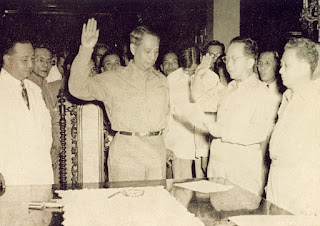
Nipaakar ed sayan talintao. Say inpansamba nen Carlos P. Romulo ed arap nen Pangolon Manuel Roxas nen 1946. Walad kawanan si Speaker of th...
Showing posts with label Pilikulan Pangasinan. Show all posts
Showing posts with label Pilikulan Pangasinan. Show all posts
Nov 18, 2011


Feb 6, 2010
Manaltalon pilikulan Pangasinan ipaway ed UP
Diad unaan ya panangimuria to ed Ibali, ipaway na U.P. Subol diad pisasakey na Sine Caboloan tan Ulupan na Pansiansia’y Salitan Pangasinan (UPSP) say Anacbanua, say unaan ya andukey ya pilikulan digital ed salitan Pangasinan ya walaa’y talos to ed Inglis, no Pibriro 24, 2010, 7 pm, diad Cineadarna, UP Film Center, UP Diliman ed siudad na Quezon.
Inkorit, inpaway, indirihi tan inidit nen gumagawa’y pilikula ya si Christopher Gozum, sayan pilikulan experimental et analo na Digital Lokal Lino Brocka Grand Prize tan Digital Lokal Best Director Award diad mika-11 Cinemanila International Film Festival nen October 2009.
Diad pangikana’y anlong ed Pangasinan nen Santiago Villafania, Erwin Fernandez tan Melchor Orpilla, saray oraciones ed Pangasinan pati say daan ya korit ed banga na Calatagan ya babalikasen ira legan onbabatik so pilikula, say Anacbanua et tongtong na sakey ya nipolisay tan abangatan ed sagur ya umaanlong ya, onkakapoy lapu’d sakit, et manpasian onpawil ed Pangasinan, say dalin ton nianakan. Diad ipapawil to, niyabetan to say musia ya mananap ya tambal ed liliknaen to. Diad pegley to’n impan-ogip, say abagot ya umaanlong naabetan to’y ogaw ya mangantabay ed sikato legan diad panames to’d talba sosoboken sikato ed galaw dara’y abangles ya bagoong, apakger ya ayep, apanday ya balatyiang, adamili'n dalin, tan aluto'n lario ya idalan sikato ed panagbawi na abayag la’n pikakabat to’d danum, uma, tan katooan. Diad pangipaway to’d saray panagsubsubok, say umaanlong onpawil ed tugtuwan mundo’n akaparaan la’n ibagat to’y dili to diad rinasimiento na kultura na baley to; diad saya, misasakey sikato ed musia.
Nibansag ed Bulan na Arte tan Kultura ed UP Diliman, say panangipaway to pisakbayanan na panagbantay na sakey lamet ya manaltalon pilikulan experimental ya antikey nen Gozum ed salitan Pangasinan, say Surreal Random MMS Texts para ed Ina, Agui, tan Kaamong ya Makakailiw ed Sika: Gurgurlis ed Banua, ya angipanalo’d gumagawa’y pilikula ya Ishmael Bernal Award for Young Cinema nen mika-10 Cinemanila International Film Festival nen 2008.
Niletneg nen 1975, say U.P. Subol et muyongan daray omaaral ed UP ya manlapu’d Pangasinan ya mangibabawag na kulturan Pangasinan ed unibersidad. Nipaway nen 2007 nen gumagawa’y pilikula’n si Christopher Gozum, say Sine Caboloan et sakey ya kompanian gumagawa’y pilikula ya nisipan ed panaggawa’y bokor tan niduma’n pilikula’n digital nipaakar ed rehiun na Pangasinan tan saray totoo to ed dalin ya nanlapuan tan diad biektaew. Nigapo nen 2000, say Ulupan na Pansiansia’y Salitan Pangasinan, say organisasion ya litirario’n mangitatandoro na salitan Pangasinan, et getma to so panboo na sakey ya kompog daray sumusulat ed dakel ya suri: anlong, salaysay, marakep ya nilesa’n tongtong tan marakep ya nilesa’n andi-tongtong. Say pantotogiop na taluran grupo masakbay la’n nimano so makakigtot ya pamasimbalo tan pamabolaslas na kulturan Pangasinan ed onsabi’n taon.
Diad saray tepet nipaakar ed tiket tan pangibiig, pikontak si Ana Asperin diad 0916 472 6097 odino e-buson si Erwin Fernandez diad win1tree@yahoo.com.

The U.P. Subol in cooperation with the Sine Caboloan and the Ulupan na Pansiansia’y Salitan Pangasinan (UPSP) [Association for the Preservation of the Pangasinan Language] will screen for the first time in Metro Manila the award-winning Anacbanua (The Child of the Sun), the first full-length digital feature film in the Pangasinan language with English subtitles, on February 24, 2010, 7 pm at the Cine Adarna, U.P. Film Center, U.P. Diliman in Quezon City.
Written, produced, directed, and edited by Pangasinan filmmaker Christopher Gozum, the experimental film won the Digital Lokal Lino Brocka Grand Prize as well as the Digital Lokal Best Director Award during the 11th Cinemanila International Film Festival in October 2009.
Using the Pangasinan poetry of Santiago Villafania, Erwin Fernandez and Melchor Orpilla and Pangasinan oraciones as well as the ancient Calatagan pot script as voice-over narration, Anacbanua is a story of an exiled Western-educated Umaanlong (poet) who, suffering from an unknown illness, decides to return to Pangasinan, the land of his birth. Upon his return, he encounters the Musia (muse) who would seek the cure to his illness. While in half-sleep, the uprooted poet would meet the Ogaw (child) who would guide him in his cosmic immersion testing him in the ways of the fermented fish sauce, butchered livestock, burned metal rods, molded clay and the baked bricks leading him to finally reclaim his primal connection to the water (danum), land (uma) and his people (katooan). Upon surviving the series of tests, the poet would return to the real world ready to offer himself towards the cultural renaissance of his own people; thus, he would become one with the Musia (muse).
Coinciding with the UP Diliman Arts and Culture Month, the screening will be preceded by the showing of another prize-winning Gozum short experimental film in the Pangasinan language, the Surreal Random MMS Texts para ed Ina, Agui, tan Kaamong ya Makakailiw ed Sika: Gurgurlis ed Banua (Surreal Random MMS Texts for a Mother, a Sister and a Wife Who Longs for You: Landscape with Figures), which won for the filmmaker the Ishmael Bernal Award for Young Cinema during the 10th Cinemanila International Film Festival in 2008.
Founded in 1975, the U.P. Subol is an organization of UP students from Pangasinan promoting Pangasinan culture in the university. Founded in 2007 by filmmaker Christopher Gozum, the Sine Caboloan is a film production company committed to producing independent digital feature films about the Pangasinan region and its people in the homeland and in the diaspora. Established in 2000, the Ulupan na Pansiansia’y Salitan Pangasinan, the only literary organization promoting the Pangasinan language, aims to create a pool of creative writers in various genres: poetry, essay, creative fiction as well as creative non-fiction. The gathering of these three organizations presages the exciting revitalization and development of Pangasinan culture in the years to come.
For ticket inquiries and reservations, please contact Ana Asperin at 0916 472 6097 or e-mail Erwin Fernandez at win1tree@yahoo.com.
Dec 19, 2009


Oct 1, 2009
Anacbanua: Say unan pilikula ed Pangasinan

Manbantay tayo'y sangkaunaan ya pilikula ed Pangasinan, say Anacbanua (Child of the Sun) ya indirihe nen Christopher Gozum. Finalist yan pilikula ed 2009 Cinemanila International Film Festival. Onpaway ed Cinema 6 na Market, Market! ed Bonifacio Global City, Taguig no Oktubri 17, Sabado, 9 na labi tan Oktubri 22, Huibes, 5 na ngarem.
Jun 28, 2009
The future of Pangasinan filmmaking
By Erwin S. Fernandez
(Editor’s note: Erwin Fernandez is a historian and freelance writer who had interest in deepening his understanding of Pangasinan prehistoric and pre-Hispanic culture and civilization. He is currently attending an archaeological field school at the University of Illinois at Chicago through a scholarship award by the American Council of Learned Societies and the Luce Foundation. Excluding the interview, this article is delivered as introduction to the first screening in Pangasinan of this film at SM City Rosales on June 10, 2009 in the event called “Pamabulaslas: Showcasing Pangasinan in time for Independence Day.”)
It was April 2008 when I received an email from Christopher Gozum although I already encountered him in February in our yahoo group, which I moderate. We have common interest, which is the promotion of Pangasinan language and culture in our respective fields – his work is filmmaking while mine deals with literary and historical researches. It was coincidental that when he was attending the 2006 Asian Film Academy in Pusan, South Korea, I was also there but in Gwangju participating in the 1st Asia Youth Culture Academy.
Born and raised in Bayambang, Chris Gozum is a prizewinning filmmaker who had two Palanca awards to his credit for his plays. Surreal Random MMS Texts para ed Ina, Agui, tan Kaamong ya Makaiiliw ed Sika: Gurgurlis ed Banua (Surreal Random MMS Texts for a Mother, a Sister and a Wife who longs for You: Landscape with Figures) is the fifth in the list of his filmography. Released last year it won the Ismael Bernal Award for Young Cinema during the 10th Cinemanila International Film Festival.
The film is a 15-minute short experimental production in which eighty percent of the footages were taken by a Nokia mobile phone camera while the rest consisted of moving images of an eye surgery by a microscope video camera. Founder of an independent film outfit, the Sine Caboloan, he became the all-around producer, director, editor and scorer of this film. The film is a sort of diary of his thoughts and life as a Filipino overseas worker in the Middle East dedicated to his family in Pangasinan. Divided into four segments, the non-linear narrative uses the translation in Pangasinan of a poem of Binalonan-born writer and activist Carlos Bulosan and the eye surgery as the unifying element.
A film is worth a thousand meanings and, in this film Chris Gozum is not keen to circumscribing its kabaliksan, pakatalos. To those uncomfortable seeing an eye operation, it serves a purpose to the plot and motive. According to Chris, “…the eye surgery we see in the short film is actually performed in the ophthalmology field for a corrective purpose. They are done by the surgeon to improve the patient’s poor vision or to save the patient from further blindness. The eye you see in this film may represent my sight or my vision.”
But the sight is not only his. It is the sight of all Pangasinenses who are being blinded and, thus, could not see the beauty of their culture and their language. Hopefully, with this film, their eyes cured and restored could appreciate what our ancestors had seen. It also means that with their eyes corrected to see Pangasinan in its true form and relevance, there is hope that this film is not and will never be the last. And that Chris blazed the path of Pangasinan filmmaking toward the liberating future.
Here is the transcript of my virtual interview with Chris Gozum to enable everyone to have a view of the director’s mind.
What made you decide to make a film using the Pangasinan language? Is using the language intentional? Or is it an up-to-the-last-minute change in the plan because dubbing in English is possible?
This short experimental film (Surreal Random MMS Texts para ed Ina, Agui, tan Kaamong ya Makaiiliw ed Sika: Gurgurlis ed Banua) is the first in a series of digital films I am producing under my own independent film company called Sine Caboloan. In 2007, I decided to establish this independent film production outfit whose main aim is to produce cutting edge digital films that utilizes Pangasinan, my native language, as a medium to communicate my ideas as a writer-filmmaker who comes from this region in the Philippines.
Recently, for almost four or five years already, I realized that in order to be more sincere, authentic, and honest, I had to situate my cinematic stories in the Pangasinan heartland and communicate them in the mother tongue I have known since birth. So, everything you see and hear in this short experimental film is aligned to Sine Caboloan’s aim of promoting the Pangasinan language in audio-visual media like the cinema.
When did you come up with doing this film?
In December 2007, I purchased for the first time a new Nokia mobile phone with built-in camera. At this point, I have toyed with the idea of coming up with a short experimental film using it. But I did not go through the conventional filmmaking process where at the outset the author has a clear concept of which he writes down into a script. For this short film, I went through a more “organic” process. At the onset, I wanted to make a short film about my life and thoughts as a Filipino migrant worker in the Middle East. And I am fully aware that I only have a mobile phone camera with me, found footages, and a professional video editing software as my resources to finish the short film. So I have to structure my material within my limited resources.
Why Carlos Bulosan’s Landscape in Figures? How does the poem capture the emotions that your short film wanted to convey about the Filipino Diaspora?
I became a fan of the writer Carlos Bulosan after reading his novel America is in the Heart in 2000. In fact, I have written a 500-page screenplay adapting this great novel’s Depression-era storyline interweaving it with the narrative thread of F. Sionil Jose’s novel Po-on set in the late Spanish Period, and the actual historical narrative of the Tayug Colorum Uprising in the thirties in Eastern Pangasinan. The script is called Agkal-kalautang (Wandering). Also, I identify with him because he is an intellectual from Pangasinan with lower class origins.
I believe his poem Landscape with Figures which is intentionally translated in Pangasinan and used as an audio narration in this film encapsulates the varied layers of emotions and experiences of a Filipino migrant worker either in Depression/post-Depression era America or the present-day oil rich countries of the Middle East. Although the poem was written way back in 1942, I believe it is a timeless piece.
Aside from saving time and money, why did you use photos as collage to portray the OFW experience? How did you come up with this technique?
At the start, I was already conceiving of a short film that does away with straightforward and closed narratives we see in mainstream Filipino filmmaking and even in the so-called emerging independent Filipino cinema. I was conceiving of a fragmented, open, non-linear, abstract, and reflexive short film that would show my life and thoughts as a migrant Filipino worker in the Middle East. I have to choose a style and consider a working method/process that will fit into the limited filmmaking resources that I have taking also into account the restrictions on filmmaking in the foreign country where I live.
As a follow up to the previous question, what or who inspired you to use that technique?
As I have mentioned, the style/technique and working method/process we see on it came out organically taking into great consideration the limited filmmaking resources that I have. No other filmmaker gave me the idea although many of the techniques you see in this project are no longer new. We see them in many experimental films from Europe as early as the 1920’s. I think I have a very instinctive and improvisational approach when I was making this project. There was really no structure in terms of a full-fledged script that I had to refer to during the entire filmmaking process.
What is surreal about the film? What does the “eye” or the operation itself serve? Is the “eye” a metaphor and for what?
What is surreal is the randomness of the images – the way they are placed or juxtaposed together to present a story. Really I am not comfortable explaining the meanings of the images I put in my films. Let the audience decide what meaning/s he will associate with them. But anyhow, the eye surgery we see is actually performed in the ophthalmology field for a corrective purpose. They are done by the surgeon to improve the patient’s poor vision or to save the patient from further blindness. The eye you see in this film may represent my sight or my vision. It is I guess in this light I wish the audiences to understand the symbol of the eye images in this short film.
With this release of your film, however modest it is, how will you gauge Pangasinan film-making in the coming years?
We need to develop a local creative pool of talents within Pangasinan – filmmakers, actors, etc. We also need to chart and develop distribution networks like schools and universities, local cable television stations, and regional television stations where independent Pangasinan films may be shown to the people. Currently, English and Tagalog-language media dominate the traditional and bigger media institutions within Pangasinan. But there are alternative venues/platforms like the Internet where we can broadcast media with Pangasinan language content with relative freedom.
I am hopeful that in the next few years, more Pangasinenses especially young people will get to see my films in their schools, or in local cable television stations, or in regional television stations like ABS CBN Dagupan, or even in movie theaters inside the big shopping malls in Pangasinan.
We also need to reach out to our fellow Pangasinenses in Metro Manila and abroad, the so-called Pangasinan diaspora where I am also a part of, so charting and developing our distribution networks through non-traditional platforms like the Internet and other alternative channels is also vital.
I hope more Pangasinan filmmakers will come out to make films about our people and our community narrating their stories in our indigenous language. I believe I am the only Pangasinan filmmaker doing this right now.
Your films are part of a larger phenomenon in Philippine film – the success of independent filmmakers. How will you assess its growth and contribution to the vibrancy of Philippine film industry today and in the future?
The Philippine film industry is not my reference point, which means I don’t consider my current works alongside my future works to be a part of the Philippine film industry. I also do not consider my current and future works to be a part of this emerging Philippine independent cinema movement. The term independent cinema or “indie” in the Philippine context is, I believe, a problematic and abused term that really does not embody the spirit, vision, mode of production, and aesthetics of a “free” cinema movement in our country. Moreover, the emerging Philippine independent cinema movement alongside its counterpart, the Philippine film industry, already in existence since the 1930’s, are actually two Manila-based and Tagalog-centric culture industries that are not really representative of the cultural and linguistic diversity of the entire Philippine nation. The output of these two culture industries are mostly Tagalog language media. Films presented in other Philippine languages or are made from and by filmmakers from the “regions” have little or no room for these two monolithic culture industries.
I am an outsider to the mainstream Philippine film industry and also consider myself an outsider to the so-called emergent Philippine independent cinema movement. I will not be bothered if the mainstream Philippine film industry eventually fizzles out or independent filmmakers from Metro Manila making a digital film in Sulu are abducted and eventually beheaded by the Abu Sayyaf. Will these people even care if we from Pangasinan totally lose our ethno-linguistic pride and our children stop speaking the indigenous language of our ancestors because of uneven cultural development in our country?
I believe the continued dominance of Tagalog-language mass media not just in Pangasinan but in other non-Tagalog communities as well is detrimental to the progressive cultural development of our people in the region. I feel there is a great need to counter this phenomenon by creating more audio-visual media like films that will be accessible and available to many of our people in Pangasinan. This is now my concern and advocacy as a Pangasinan filmmaker. I wanted to see more young people, including my children, see more Pangasinan audio-visual media like digital films, and be proud of our distinct identity and our indigenous language whose beauty I am starting to rediscover.
[First published in Northern Watch, June 27, 2009]
(Editor’s note: Erwin Fernandez is a historian and freelance writer who had interest in deepening his understanding of Pangasinan prehistoric and pre-Hispanic culture and civilization. He is currently attending an archaeological field school at the University of Illinois at Chicago through a scholarship award by the American Council of Learned Societies and the Luce Foundation. Excluding the interview, this article is delivered as introduction to the first screening in Pangasinan of this film at SM City Rosales on June 10, 2009 in the event called “Pamabulaslas: Showcasing Pangasinan in time for Independence Day.”)
It was April 2008 when I received an email from Christopher Gozum although I already encountered him in February in our yahoo group, which I moderate. We have common interest, which is the promotion of Pangasinan language and culture in our respective fields – his work is filmmaking while mine deals with literary and historical researches. It was coincidental that when he was attending the 2006 Asian Film Academy in Pusan, South Korea, I was also there but in Gwangju participating in the 1st Asia Youth Culture Academy.
Born and raised in Bayambang, Chris Gozum is a prizewinning filmmaker who had two Palanca awards to his credit for his plays. Surreal Random MMS Texts para ed Ina, Agui, tan Kaamong ya Makaiiliw ed Sika: Gurgurlis ed Banua (Surreal Random MMS Texts for a Mother, a Sister and a Wife who longs for You: Landscape with Figures) is the fifth in the list of his filmography. Released last year it won the Ismael Bernal Award for Young Cinema during the 10th Cinemanila International Film Festival.
The film is a 15-minute short experimental production in which eighty percent of the footages were taken by a Nokia mobile phone camera while the rest consisted of moving images of an eye surgery by a microscope video camera. Founder of an independent film outfit, the Sine Caboloan, he became the all-around producer, director, editor and scorer of this film. The film is a sort of diary of his thoughts and life as a Filipino overseas worker in the Middle East dedicated to his family in Pangasinan. Divided into four segments, the non-linear narrative uses the translation in Pangasinan of a poem of Binalonan-born writer and activist Carlos Bulosan and the eye surgery as the unifying element.
A film is worth a thousand meanings and, in this film Chris Gozum is not keen to circumscribing its kabaliksan, pakatalos. To those uncomfortable seeing an eye operation, it serves a purpose to the plot and motive. According to Chris, “…the eye surgery we see in the short film is actually performed in the ophthalmology field for a corrective purpose. They are done by the surgeon to improve the patient’s poor vision or to save the patient from further blindness. The eye you see in this film may represent my sight or my vision.”
But the sight is not only his. It is the sight of all Pangasinenses who are being blinded and, thus, could not see the beauty of their culture and their language. Hopefully, with this film, their eyes cured and restored could appreciate what our ancestors had seen. It also means that with their eyes corrected to see Pangasinan in its true form and relevance, there is hope that this film is not and will never be the last. And that Chris blazed the path of Pangasinan filmmaking toward the liberating future.
Here is the transcript of my virtual interview with Chris Gozum to enable everyone to have a view of the director’s mind.
What made you decide to make a film using the Pangasinan language? Is using the language intentional? Or is it an up-to-the-last-minute change in the plan because dubbing in English is possible?
This short experimental film (Surreal Random MMS Texts para ed Ina, Agui, tan Kaamong ya Makaiiliw ed Sika: Gurgurlis ed Banua) is the first in a series of digital films I am producing under my own independent film company called Sine Caboloan. In 2007, I decided to establish this independent film production outfit whose main aim is to produce cutting edge digital films that utilizes Pangasinan, my native language, as a medium to communicate my ideas as a writer-filmmaker who comes from this region in the Philippines.
Recently, for almost four or five years already, I realized that in order to be more sincere, authentic, and honest, I had to situate my cinematic stories in the Pangasinan heartland and communicate them in the mother tongue I have known since birth. So, everything you see and hear in this short experimental film is aligned to Sine Caboloan’s aim of promoting the Pangasinan language in audio-visual media like the cinema.
When did you come up with doing this film?
In December 2007, I purchased for the first time a new Nokia mobile phone with built-in camera. At this point, I have toyed with the idea of coming up with a short experimental film using it. But I did not go through the conventional filmmaking process where at the outset the author has a clear concept of which he writes down into a script. For this short film, I went through a more “organic” process. At the onset, I wanted to make a short film about my life and thoughts as a Filipino migrant worker in the Middle East. And I am fully aware that I only have a mobile phone camera with me, found footages, and a professional video editing software as my resources to finish the short film. So I have to structure my material within my limited resources.
Why Carlos Bulosan’s Landscape in Figures? How does the poem capture the emotions that your short film wanted to convey about the Filipino Diaspora?
I became a fan of the writer Carlos Bulosan after reading his novel America is in the Heart in 2000. In fact, I have written a 500-page screenplay adapting this great novel’s Depression-era storyline interweaving it with the narrative thread of F. Sionil Jose’s novel Po-on set in the late Spanish Period, and the actual historical narrative of the Tayug Colorum Uprising in the thirties in Eastern Pangasinan. The script is called Agkal-kalautang (Wandering). Also, I identify with him because he is an intellectual from Pangasinan with lower class origins.
I believe his poem Landscape with Figures which is intentionally translated in Pangasinan and used as an audio narration in this film encapsulates the varied layers of emotions and experiences of a Filipino migrant worker either in Depression/post-Depression era America or the present-day oil rich countries of the Middle East. Although the poem was written way back in 1942, I believe it is a timeless piece.
Aside from saving time and money, why did you use photos as collage to portray the OFW experience? How did you come up with this technique?
At the start, I was already conceiving of a short film that does away with straightforward and closed narratives we see in mainstream Filipino filmmaking and even in the so-called emerging independent Filipino cinema. I was conceiving of a fragmented, open, non-linear, abstract, and reflexive short film that would show my life and thoughts as a migrant Filipino worker in the Middle East. I have to choose a style and consider a working method/process that will fit into the limited filmmaking resources that I have taking also into account the restrictions on filmmaking in the foreign country where I live.
As a follow up to the previous question, what or who inspired you to use that technique?
As I have mentioned, the style/technique and working method/process we see on it came out organically taking into great consideration the limited filmmaking resources that I have. No other filmmaker gave me the idea although many of the techniques you see in this project are no longer new. We see them in many experimental films from Europe as early as the 1920’s. I think I have a very instinctive and improvisational approach when I was making this project. There was really no structure in terms of a full-fledged script that I had to refer to during the entire filmmaking process.
What is surreal about the film? What does the “eye” or the operation itself serve? Is the “eye” a metaphor and for what?
What is surreal is the randomness of the images – the way they are placed or juxtaposed together to present a story. Really I am not comfortable explaining the meanings of the images I put in my films. Let the audience decide what meaning/s he will associate with them. But anyhow, the eye surgery we see is actually performed in the ophthalmology field for a corrective purpose. They are done by the surgeon to improve the patient’s poor vision or to save the patient from further blindness. The eye you see in this film may represent my sight or my vision. It is I guess in this light I wish the audiences to understand the symbol of the eye images in this short film.
With this release of your film, however modest it is, how will you gauge Pangasinan film-making in the coming years?
We need to develop a local creative pool of talents within Pangasinan – filmmakers, actors, etc. We also need to chart and develop distribution networks like schools and universities, local cable television stations, and regional television stations where independent Pangasinan films may be shown to the people. Currently, English and Tagalog-language media dominate the traditional and bigger media institutions within Pangasinan. But there are alternative venues/platforms like the Internet where we can broadcast media with Pangasinan language content with relative freedom.
I am hopeful that in the next few years, more Pangasinenses especially young people will get to see my films in their schools, or in local cable television stations, or in regional television stations like ABS CBN Dagupan, or even in movie theaters inside the big shopping malls in Pangasinan.
We also need to reach out to our fellow Pangasinenses in Metro Manila and abroad, the so-called Pangasinan diaspora where I am also a part of, so charting and developing our distribution networks through non-traditional platforms like the Internet and other alternative channels is also vital.
I hope more Pangasinan filmmakers will come out to make films about our people and our community narrating their stories in our indigenous language. I believe I am the only Pangasinan filmmaker doing this right now.
Your films are part of a larger phenomenon in Philippine film – the success of independent filmmakers. How will you assess its growth and contribution to the vibrancy of Philippine film industry today and in the future?
The Philippine film industry is not my reference point, which means I don’t consider my current works alongside my future works to be a part of the Philippine film industry. I also do not consider my current and future works to be a part of this emerging Philippine independent cinema movement. The term independent cinema or “indie” in the Philippine context is, I believe, a problematic and abused term that really does not embody the spirit, vision, mode of production, and aesthetics of a “free” cinema movement in our country. Moreover, the emerging Philippine independent cinema movement alongside its counterpart, the Philippine film industry, already in existence since the 1930’s, are actually two Manila-based and Tagalog-centric culture industries that are not really representative of the cultural and linguistic diversity of the entire Philippine nation. The output of these two culture industries are mostly Tagalog language media. Films presented in other Philippine languages or are made from and by filmmakers from the “regions” have little or no room for these two monolithic culture industries.
I am an outsider to the mainstream Philippine film industry and also consider myself an outsider to the so-called emergent Philippine independent cinema movement. I will not be bothered if the mainstream Philippine film industry eventually fizzles out or independent filmmakers from Metro Manila making a digital film in Sulu are abducted and eventually beheaded by the Abu Sayyaf. Will these people even care if we from Pangasinan totally lose our ethno-linguistic pride and our children stop speaking the indigenous language of our ancestors because of uneven cultural development in our country?
I believe the continued dominance of Tagalog-language mass media not just in Pangasinan but in other non-Tagalog communities as well is detrimental to the progressive cultural development of our people in the region. I feel there is a great need to counter this phenomenon by creating more audio-visual media like films that will be accessible and available to many of our people in Pangasinan. This is now my concern and advocacy as a Pangasinan filmmaker. I wanted to see more young people, including my children, see more Pangasinan audio-visual media like digital films, and be proud of our distinct identity and our indigenous language whose beauty I am starting to rediscover.
[First published in Northern Watch, June 27, 2009]
Subscribe to:
Posts (Atom)
Bantog Iran Post
-
I am posting the syllabus I made for PI 100, which is a course on Rizal, the national hero of the Philippines. I taught this course for one ...
-
Ipalapag ko yan artikulo ta tinukoy da ak dia. Salamat kinen Ging. Saving Pangasinan literature By Gabriel Cardinoza Philippine Daily Inquir...
-
 Igapok natan so serye na saray salitan Pangasinan ya matalag ya narerengel tan nauusar ed agew agew ya bilay. Iter ko so kabaliksan da tan s...
 -
Erwin S. Fernandez ...
-
But I can tell you the dream all Philippine nationalists share. It is the dream to be the first colony in Asia to achieve modernity, as it w...
-
Approved submitted abstracts (as of October 27, 2007) Plenary Speakers Ma. Crisanta Nelmida Flores, Ph.D. "An Ethnocultural Mapping of ...
-
By Erwin S. Fernandez If music is the soul of a nation, then what is Pangasinan music? Last November 2007, when I attended the first confe...
-
Erwin S. Fernandez Thinking of Pasig while touring the Rhine But before he left for Heidelberg, ...
-
PROGRAM DAY 1 NOVEMBER 8, 2007 7:00 – 8:00 REGISTRATION 8:00 – 9:40 OPENING CEREMONIES NATIONAL ANTHEM Urdaneta City University Chorale and ...
-
Musikero si Lakik Pilon mantaoy sitenta lanang ya trumpet so bembenda lapud ta satan so anapanda sipor nen balolaki nira. Diad panmumusikoda...