By Erwin S. Fernandez
(Editor’s note: Erwin Fernandez is a historian and freelance writer who had interest in deepening his understanding of Pangasinan prehistoric and pre-Hispanic culture and civilization. He is currently attending an archaeological field school at the University of Illinois at Chicago through a scholarship award by the American Council of Learned Societies and the Luce Foundation. Excluding the interview, this article is delivered as introduction to the first screening in Pangasinan of this film at SM City Rosales on June 10, 2009 in the event called “Pamabulaslas: Showcasing Pangasinan in time for Independence Day.”)
It was April 2008 when I received an email from Christopher Gozum although I already encountered him in February in our yahoo group, which I moderate. We have common interest, which is the promotion of Pangasinan language and culture in our respective fields – his work is filmmaking while mine deals with literary and historical researches. It was coincidental that when he was attending the 2006 Asian Film Academy in Pusan, South Korea, I was also there but in Gwangju participating in the 1st Asia Youth Culture Academy.
Born and raised in Bayambang, Chris Gozum is a prizewinning filmmaker who had two Palanca awards to his credit for his plays. Surreal Random MMS Texts para ed Ina, Agui, tan Kaamong ya Makaiiliw ed Sika: Gurgurlis ed Banua (Surreal Random MMS Texts for a Mother, a Sister and a Wife who longs for You: Landscape with Figures) is the fifth in the list of his filmography. Released last year it won the Ismael Bernal Award for Young Cinema during the 10th Cinemanila International Film Festival.
The film is a 15-minute short experimental production in which eighty percent of the footages were taken by a Nokia mobile phone camera while the rest consisted of moving images of an eye surgery by a microscope video camera. Founder of an independent film outfit, the Sine Caboloan, he became the all-around producer, director, editor and scorer of this film. The film is a sort of diary of his thoughts and life as a Filipino overseas worker in the Middle East dedicated to his family in Pangasinan. Divided into four segments, the non-linear narrative uses the translation in Pangasinan of a poem of Binalonan-born writer and activist Carlos Bulosan and the eye surgery as the unifying element.
A film is worth a thousand meanings and, in this film Chris Gozum is not keen to circumscribing its kabaliksan, pakatalos. To those uncomfortable seeing an eye operation, it serves a purpose to the plot and motive. According to Chris, “…the eye surgery we see in the short film is actually performed in the ophthalmology field for a corrective purpose. They are done by the surgeon to improve the patient’s poor vision or to save the patient from further blindness. The eye you see in this film may represent my sight or my vision.”
But the sight is not only his. It is the sight of all Pangasinenses who are being blinded and, thus, could not see the beauty of their culture and their language. Hopefully, with this film, their eyes cured and restored could appreciate what our ancestors had seen. It also means that with their eyes corrected to see Pangasinan in its true form and relevance, there is hope that this film is not and will never be the last. And that Chris blazed the path of Pangasinan filmmaking toward the liberating future.
Here is the transcript of my virtual interview with Chris Gozum to enable everyone to have a view of the director’s mind.
What made you decide to make a film using the Pangasinan language? Is using the language intentional? Or is it an up-to-the-last-minute change in the plan because dubbing in English is possible?
This short experimental film (Surreal Random MMS Texts para ed Ina, Agui, tan Kaamong ya Makaiiliw ed Sika: Gurgurlis ed Banua) is the first in a series of digital films I am producing under my own independent film company called Sine Caboloan. In 2007, I decided to establish this independent film production outfit whose main aim is to produce cutting edge digital films that utilizes Pangasinan, my native language, as a medium to communicate my ideas as a writer-filmmaker who comes from this region in the Philippines.
Recently, for almost four or five years already, I realized that in order to be more sincere, authentic, and honest, I had to situate my cinematic stories in the Pangasinan heartland and communicate them in the mother tongue I have known since birth. So, everything you see and hear in this short experimental film is aligned to Sine Caboloan’s aim of promoting the Pangasinan language in audio-visual media like the cinema.
When did you come up with doing this film?
In December 2007, I purchased for the first time a new Nokia mobile phone with built-in camera. At this point, I have toyed with the idea of coming up with a short experimental film using it. But I did not go through the conventional filmmaking process where at the outset the author has a clear concept of which he writes down into a script. For this short film, I went through a more “organic” process. At the onset, I wanted to make a short film about my life and thoughts as a Filipino migrant worker in the Middle East. And I am fully aware that I only have a mobile phone camera with me, found footages, and a professional video editing software as my resources to finish the short film. So I have to structure my material within my limited resources.
Why Carlos Bulosan’s Landscape in Figures? How does the poem capture the emotions that your short film wanted to convey about the Filipino Diaspora?
I became a fan of the writer Carlos Bulosan after reading his novel America is in the Heart in 2000. In fact, I have written a 500-page screenplay adapting this great novel’s Depression-era storyline interweaving it with the narrative thread of F. Sionil Jose’s novel Po-on set in the late Spanish Period, and the actual historical narrative of the Tayug Colorum Uprising in the thirties in Eastern Pangasinan. The script is called Agkal-kalautang (Wandering). Also, I identify with him because he is an intellectual from Pangasinan with lower class origins.
I believe his poem Landscape with Figures which is intentionally translated in Pangasinan and used as an audio narration in this film encapsulates the varied layers of emotions and experiences of a Filipino migrant worker either in Depression/post-Depression era America or the present-day oil rich countries of the Middle East. Although the poem was written way back in 1942, I believe it is a timeless piece.
Aside from saving time and money, why did you use photos as collage to portray the OFW experience? How did you come up with this technique?
At the start, I was already conceiving of a short film that does away with straightforward and closed narratives we see in mainstream Filipino filmmaking and even in the so-called emerging independent Filipino cinema. I was conceiving of a fragmented, open, non-linear, abstract, and reflexive short film that would show my life and thoughts as a migrant Filipino worker in the Middle East. I have to choose a style and consider a working method/process that will fit into the limited filmmaking resources that I have taking also into account the restrictions on filmmaking in the foreign country where I live.
As a follow up to the previous question, what or who inspired you to use that technique?
As I have mentioned, the style/technique and working method/process we see on it came out organically taking into great consideration the limited filmmaking resources that I have. No other filmmaker gave me the idea although many of the techniques you see in this project are no longer new. We see them in many experimental films from Europe as early as the 1920’s. I think I have a very instinctive and improvisational approach when I was making this project. There was really no structure in terms of a full-fledged script that I had to refer to during the entire filmmaking process.
What is surreal about the film? What does the “eye” or the operation itself serve? Is the “eye” a metaphor and for what?
What is surreal is the randomness of the images – the way they are placed or juxtaposed together to present a story. Really I am not comfortable explaining the meanings of the images I put in my films. Let the audience decide what meaning/s he will associate with them. But anyhow, the eye surgery we see is actually performed in the ophthalmology field for a corrective purpose. They are done by the surgeon to improve the patient’s poor vision or to save the patient from further blindness. The eye you see in this film may represent my sight or my vision. It is I guess in this light I wish the audiences to understand the symbol of the eye images in this short film.
With this release of your film, however modest it is, how will you gauge Pangasinan film-making in the coming years?
We need to develop a local creative pool of talents within Pangasinan – filmmakers, actors, etc. We also need to chart and develop distribution networks like schools and universities, local cable television stations, and regional television stations where independent Pangasinan films may be shown to the people. Currently, English and Tagalog-language media dominate the traditional and bigger media institutions within Pangasinan. But there are alternative venues/platforms like the Internet where we can broadcast media with Pangasinan language content with relative freedom.
I am hopeful that in the next few years, more Pangasinenses especially young people will get to see my films in their schools, or in local cable television stations, or in regional television stations like ABS CBN Dagupan, or even in movie theaters inside the big shopping malls in Pangasinan.
We also need to reach out to our fellow Pangasinenses in Metro Manila and abroad, the so-called Pangasinan diaspora where I am also a part of, so charting and developing our distribution networks through non-traditional platforms like the Internet and other alternative channels is also vital.
I hope more Pangasinan filmmakers will come out to make films about our people and our community narrating their stories in our indigenous language. I believe I am the only Pangasinan filmmaker doing this right now.
Your films are part of a larger phenomenon in Philippine film – the success of independent filmmakers. How will you assess its growth and contribution to the vibrancy of Philippine film industry today and in the future?
The Philippine film industry is not my reference point, which means I don’t consider my current works alongside my future works to be a part of the Philippine film industry. I also do not consider my current and future works to be a part of this emerging Philippine independent cinema movement. The term independent cinema or “indie” in the Philippine context is, I believe, a problematic and abused term that really does not embody the spirit, vision, mode of production, and aesthetics of a “free” cinema movement in our country. Moreover, the emerging Philippine independent cinema movement alongside its counterpart, the Philippine film industry, already in existence since the 1930’s, are actually two Manila-based and Tagalog-centric culture industries that are not really representative of the cultural and linguistic diversity of the entire Philippine nation. The output of these two culture industries are mostly Tagalog language media. Films presented in other Philippine languages or are made from and by filmmakers from the “regions” have little or no room for these two monolithic culture industries.
I am an outsider to the mainstream Philippine film industry and also consider myself an outsider to the so-called emergent Philippine independent cinema movement. I will not be bothered if the mainstream Philippine film industry eventually fizzles out or independent filmmakers from Metro Manila making a digital film in Sulu are abducted and eventually beheaded by the Abu Sayyaf. Will these people even care if we from Pangasinan totally lose our ethno-linguistic pride and our children stop speaking the indigenous language of our ancestors because of uneven cultural development in our country?
I believe the continued dominance of Tagalog-language mass media not just in Pangasinan but in other non-Tagalog communities as well is detrimental to the progressive cultural development of our people in the region. I feel there is a great need to counter this phenomenon by creating more audio-visual media like films that will be accessible and available to many of our people in Pangasinan. This is now my concern and advocacy as a Pangasinan filmmaker. I wanted to see more young people, including my children, see more Pangasinan audio-visual media like digital films, and be proud of our distinct identity and our indigenous language whose beauty I am starting to rediscover.
[First published in Northern Watch, June 27, 2009]

"Dissent" ed Inglis, no onsomlang ka et ag ka onabuloy ed kabaliksan na saray totoon maganon manisia ed ibabaga na karaklan.
Featured Post
Say Pangasinensen ngalngalin nanmaliw ya pangolo na bansa: Si Carlos Peña Romulo (1898-1985)
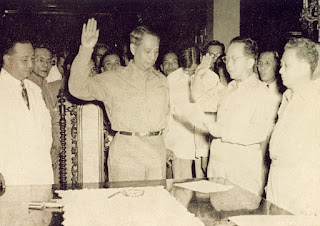
Nipaakar ed sayan talintao. Say inpansamba nen Carlos P. Romulo ed arap nen Pangolon Manuel Roxas nen 1946. Walad kawanan si Speaker of th...
Jun 28, 2009

Jun 24, 2009
Saving Pangasinan literature
Ipalapag ko yan artikulo ta tinukoy da ak dia. Salamat kinen Ging.
Saving Pangasinan literature
By Gabriel Cardinoza
Philippine Daily Inquirer
June 24, 2009
Dagupan City, Philippines—Pangasinan’s writers are in an uphill climb in their effort to save the dying Pangasinan literature.
Aside from the dearth of writers in the vernacular, members of the Ulupan na Pansiansia’y Salitan Pangasinan (Association for the Preservation of the Pangasinan Language) say they have not been getting enough support to implement projects that will encourage a literary resurgence.
“Pangasinan [writers] today lack the invigorating environment of a literary movement. We are alone in a wasteland … We are a dying tribe on the verge of extinction,” says Santiago Villafania, the province’s leading umaanlong (poet), who is also a member of the Ulupan.
With a population of 2.65 million, half of whom are Pangasinan-speaking, Villafania says the province has only three short story writers, two novelists, six poets and one essayist. Only three of them have published books in the last six years.
Literary silence
“After half a century of literary silence, sadly, this is all we’ve written,” says Villafania, a faculty member and a senior web designer of the Emilio Aguinaldo College in Manila.
In fact, Villafania’s books may be the only ones dwelling on Pangasinan poetry since the turn of the 20th century. His first, “Pinabli tan arum ni’ran Anlong,” was published in 2003, followed four years later by “Malagilion: Sonnets tan Villanelles,” a finalist in the 2007 National Book Award (poetry category)—a first for a Pangasinan poetry book.
In 2005, Villafania published a Pangasinan poetry booklet, “Balikas ed Caboloan.”
Freelance writer and Ulupan member Erwin Fernandez says the problem is that Pangasinan is still not used in teaching in schools despite the availability of Pangasinan literary materials written from the 1930s to the 1960s.
“The names of Catalino Palisoc (1865-1932) and Pablo Mejia (1872-1934), only two among the renowned zarzuela writers, come to mind when we speak of Pangasinan literature. We must not miss Maria Magsano, the educator-writer and suffragist who put up the Silew magazine,” says Fernandez, who taught at the University of the Philippines’ departments of history and Filipino.
“In the annals of Philippine vernacular literature, these illustrious names rank among the best in Tagalog, Ilocano and Cebuano literatures,” he says.
Magsano and Juan Villamil were the leading Pangasinan fiction writers of their time. Both have published their own anthologies.
Fernandez also says that unlike other languages, such as Ilocano, Tagalog and Visayan, Pangasinan does not have a publication in the vernacular. Thus, he adds, there is no proper venue for aspiring writers and authors.
“The Ilocanos have the weekly Bannawag magazine, the Tagalogs have Liwayway, and the Visayans have the Hiligaynon and Bisaya, popular vernacular magazines where one ordinarily finds short stories, essays, poems and other occasional pieces,” he says.
Since its founding in 2000, Ulupan has struggled to publish a monthly magazine called “Balon Silew.” The magazine, however, has not been coming out regularly due to shortage of funds.
Media role
Melchor Orpilla, an Alaminos City-based poet and broadcaster, says media play an important role in the resurgence of Pangasinan literature and language.
“There is a prevailing thinking, especially among the youth, that speaking in Pangasinan is bakya (pedestrian). The media can inject into the people’s consciousness that they should not be ashamed to speak in Pangasinan,” Orpilla says.
When this is done, he says, people will start reading or appreciating literary works in Pangasinan. “Unless the present generation acts concertedly to preserve it, Pangasinan shall always be in an unhappy position pushed into the periphery of oral and literary avenues,” Fernandez says.
Saving Pangasinan literature
By Gabriel Cardinoza
Philippine Daily Inquirer
June 24, 2009
Dagupan City, Philippines—Pangasinan’s writers are in an uphill climb in their effort to save the dying Pangasinan literature.
Aside from the dearth of writers in the vernacular, members of the Ulupan na Pansiansia’y Salitan Pangasinan (Association for the Preservation of the Pangasinan Language) say they have not been getting enough support to implement projects that will encourage a literary resurgence.
“Pangasinan [writers] today lack the invigorating environment of a literary movement. We are alone in a wasteland … We are a dying tribe on the verge of extinction,” says Santiago Villafania, the province’s leading umaanlong (poet), who is also a member of the Ulupan.
With a population of 2.65 million, half of whom are Pangasinan-speaking, Villafania says the province has only three short story writers, two novelists, six poets and one essayist. Only three of them have published books in the last six years.
Literary silence
“After half a century of literary silence, sadly, this is all we’ve written,” says Villafania, a faculty member and a senior web designer of the Emilio Aguinaldo College in Manila.
In fact, Villafania’s books may be the only ones dwelling on Pangasinan poetry since the turn of the 20th century. His first, “Pinabli tan arum ni’ran Anlong,” was published in 2003, followed four years later by “Malagilion: Sonnets tan Villanelles,” a finalist in the 2007 National Book Award (poetry category)—a first for a Pangasinan poetry book.
In 2005, Villafania published a Pangasinan poetry booklet, “Balikas ed Caboloan.”
Freelance writer and Ulupan member Erwin Fernandez says the problem is that Pangasinan is still not used in teaching in schools despite the availability of Pangasinan literary materials written from the 1930s to the 1960s.
“The names of Catalino Palisoc (1865-1932) and Pablo Mejia (1872-1934), only two among the renowned zarzuela writers, come to mind when we speak of Pangasinan literature. We must not miss Maria Magsano, the educator-writer and suffragist who put up the Silew magazine,” says Fernandez, who taught at the University of the Philippines’ departments of history and Filipino.
“In the annals of Philippine vernacular literature, these illustrious names rank among the best in Tagalog, Ilocano and Cebuano literatures,” he says.
Magsano and Juan Villamil were the leading Pangasinan fiction writers of their time. Both have published their own anthologies.
Fernandez also says that unlike other languages, such as Ilocano, Tagalog and Visayan, Pangasinan does not have a publication in the vernacular. Thus, he adds, there is no proper venue for aspiring writers and authors.
“The Ilocanos have the weekly Bannawag magazine, the Tagalogs have Liwayway, and the Visayans have the Hiligaynon and Bisaya, popular vernacular magazines where one ordinarily finds short stories, essays, poems and other occasional pieces,” he says.
Since its founding in 2000, Ulupan has struggled to publish a monthly magazine called “Balon Silew.” The magazine, however, has not been coming out regularly due to shortage of funds.
Media role
Melchor Orpilla, an Alaminos City-based poet and broadcaster, says media play an important role in the resurgence of Pangasinan literature and language.
“There is a prevailing thinking, especially among the youth, that speaking in Pangasinan is bakya (pedestrian). The media can inject into the people’s consciousness that they should not be ashamed to speak in Pangasinan,” Orpilla says.
When this is done, he says, people will start reading or appreciating literary works in Pangasinan. “Unless the present generation acts concertedly to preserve it, Pangasinan shall always be in an unhappy position pushed into the periphery of oral and literary avenues,” Fernandez says.
May 8, 2009
What and How is Pangasinan music?
By Erwin S. Fernandez
If music is the soul of a nation, then what is Pangasinan music?
Last November 2007, when I attended the first conference on revitalizing Pangasinan language and cultural heritage where I presented a paper on Pangasinan studies, a guy in his late teens with uneven teeth chatted me up while I was browsing magazines and books on a table he was watching over. In the course of conversing with him, he told me that he was a member of a band at his school.
It flashed in my mind that recently a progressive group of Kapampangan youth had successfully launched a music feast known as RocKapampangan featuring different renditions of “Atin cu pung sing sing” in rock by different bands. So, I broached to him this idea: “Why not do the same in your school?” I remember telling him that by doing so his band would be pioneering in promoting Pangasinan Rock at the same time reacquainting Pangasinan youth with their native language.
Months later, the following year, I was told that a festival of that sort was being planned in San Carlos City only to be aborted. Why I felt a little sad about it is that music is in the family’s business.
My beloved grandfather can play the trumpet; I think, well, well enough to be invited whenever an important occasion happens in our barrio like fiesta or a funeral wake. I imagine him playing the trumpet to the tune of “Malinak lay labi.” It’s the only song I can sing since I was a grade-schooler ignorant of what the lyrics meant. It’s the only Pangasinan music that I can think of immediately without actually thinking. Anyway, I regret that my grandfather did not teach me the trumpet but more than this I regret what happened to Pangasinan music all these years. It has got to do with a national policy implemented when I was not yet born but when I entered school, the whole of my generation and the next were made to suffer so that the meaning of that beautiful song became buried deep in our memory.
That language policy has been around since 1974 when bilingual instruction in schools was approved to the detriment of the other languages including Pangasinan because the use of local languages in schools as medium of instruction was indefinitely suspended. Do you still wonder why Pangasinan music is not heard in most radio airwaves or why Pangasinan bands continue to ape music foreign to their ears but no stranger to an indifferent audience accustomed to Western and popular Tagalog songs? Most Pangasinenses are not trained to listen to their own music that embodies their being as a people, as a nation. Because they were made illiterate in their own language, how can they compose great songs that would express their aspirations and longings as a people? How is Pangasinan music? I could shout on top of my lungs to bewail and protest the deafening silence.
But I’m happy to note that this is not the whole picture.
Sometime in 1984 a professor at a local university who did her dissertation on Pangasinan folk literature at UP organized a performing arts group to showcase Pangasinan music.
First called Tambayo Cultural Group, in 1988 they got invitations from civic organizations, government offices and cultural associations to perform at seminars, conferences and workshops.
Under the stewardship of five former presidents: Gilmer Bautista, Genaro Manolid, Larry Milanes, Jess Estabillo and Nathaniel Valerio, this student organization came to be known today as the Tambayo Singers.
It was last year, at the book-launching of the founder’s daughter, when I finally met the group. At the dinner I talked to Shirley L. Milanes, one of the six singers and married to the musical director of the group, asking some timid questions and betraying my joy of having known that they exist, that all are not lost for Pangasinan music.
True to their name, they offered solace to the audience, mostly Pangasinenses who are, for the first time, listening in unison to the cadence and tempo of the national anthem in Pangasinan.
It had a cathartic effect on me – something in me had reawakened – but I also feel the revulsion of having to endure listening to music all these years in languages not entirely alien to me yet they caused almost irreparable damage to the indigenous musicality of my people. Nevertheless, a veteran broadcaster keeps this musicality alive.
Raul “Insiong” Tamayo, who is himself a singer, livens up the mood with his amusing, light-hearted songs in Pangasinan. Listening to him, I could not help myself grinning. His compositions depart from the folk songs like “Managsigay” or “Dumaralos”, which evoke the unhurried life in the sea and in the farm.
Or the communal chants, verses in themselves, performed around a bonfire and during harvests before the colonizer Juan de Salcedo set foot on the coasts of Pangasinan.
Biting but funny, Tamayo satirizes the excesses of individuals known and dear to every Pangasinense. In “Malabir Ka” he lampoons a wife addicted to gambling who was also a nagger.
In “Ponciano” he takes issue on some (here a family he hilariously named Ponciano from the word poncia in Pangasinan meaning party or gathering) who makes a living out of attending parties and other gatherings where food is served.
In 2004 Tamayo was named one among the most outstanding Pangasinenses in the field of music. Last year he was commissioned to write a Pangasinan hymn to be translated into Tagalog! I argue, however, that there is no need for that because we already had.
“Malinak lay labi,” in English “calm is the night,” is not only a love serenade of a man to his beloved. It is more than that. Mita Q. Sison-Duque says it’s “a love song to Pangasinan.”
And I tend to agree. Taken metaphorically, that woman, Urduja if you will, personifies Pangasinan, our homeland that we love and care because we owe her our life and freedom.
It is a patriotic song that appeals to Pangasinenses wherever they are, either scattered throughout the country or abroad. Whenever they remember Pangasinan in their loneliness or go home to visit, their sufferings are made bearable and their anxieties seem to fade away.
Pangasinan appears as a spring of hope and dreams to the masses, a fountain of wisdom to its thinkers and a source of wealth to a selfish few. For more than a century, this country song had touched the hearts of millions of Pangasinenses. Nobody knew who wrote it but the genius of its author tells us that behind the literal meaning lies the message – love of country.
Let us love Pangasinan by promoting our culture and loving our language. Sing new songs to her, mistress of our heroes, who rekindled in them the fire that forged an ancient civilization on the banks of Agno. Let these new songs, yes in Pangasinan, express love, patriotism, loyalty, anger, hate, humor, injustice – everything in the realm of human emotions – in every musical genre.
Prepare for a musical revolution and get ready to rock.
[First published in Northern Watch, March 22, 2009]
No kapigan ka manpasalamat ed atsim
Erwin S. Fernandez
Ag labat no inter toy labay mo,
Ag labat no initdan to kay palabo.
No nankolkol kayo manpasalamat ka.
No walay barongan yo manpasalamat ka.
Ta say mansanagi singa agew tan labi,
onuran onagew panangaro ag naandi.
[When to thank your sister
Not only when she acceded to what you want,
Nor when she had given you a gift.
When you had a quarrel, give thanks.
When you incurred her wrath, give thanks.
Because siblings are like night and day,
Rain or shine love never goes away.
- Erwin S. Fernandez]
Ag labat no inter toy labay mo,
Ag labat no initdan to kay palabo.
No nankolkol kayo manpasalamat ka.
No walay barongan yo manpasalamat ka.
Ta say mansanagi singa agew tan labi,
onuran onagew panangaro ag naandi.
[When to thank your sister
Not only when she acceded to what you want,
Nor when she had given you a gift.
When you had a quarrel, give thanks.
When you incurred her wrath, give thanks.
Because siblings are like night and day,
Rain or shine love never goes away.
- Erwin S. Fernandez]
Mar 11, 2009
Liriko numero 1
nen
Say naynay kon kakansionen -
Ag aya naanap ed saray agew
Aya amay naynay ya ongagapo
Diad kapalduan-ambilonget, diad kapalduan-liwawa.
Onsisileng lalon pikewet
Balet ontatagey ya atagey tan mangibabaga
No iner say unan bulaklak limmukso
Nen abalang ed lima na Dios so panangaro.
Saya et baleg a salita naandian ya tanol
Naandian taningting ya mangipatnag
No iner ya linmesab so balingit!
O balet amin iya wadman
Ed tagey na saray anlong ko sakey a balanggit.
Mar 9, 2009
Para'd Bantog ya Proletario
nen Angela Manalang-Gloria
inpatalus manlapud Inglis ed Pangasinan nen Erwin S. Fernandez
Kimmerew kayoy tinapay
Inter mi'd sikayoy bato
Andi-taligaygay
Intayatak yo ray pokel
Tan bongo yo diad
Sakop na kanonotan mi
Sinosobok yoy agew mi
Sinosomlang yoy uran mi
Pian onapura ed
Sangpot na
inkaanggapo
Impanpayabol na bosol
Sikamin angibantak na bato
Tan nankerew ed ipapatey yo
Diad pegley na kapokelan yo
Natan manorangal - para'd tinapay
inpatalus manlapud Inglis ed Pangasinan nen Erwin S. Fernandez
Kimmerew kayoy tinapay
Inter mi'd sikayoy bato
Andi-taligaygay
Intayatak yo ray pokel
Tan bongo yo diad
Sakop na kanonotan mi
Sinosobok yoy agew mi
Sinosomlang yoy uran mi
Pian onapura ed
Sangpot na
inkaanggapo
Impanpayabol na bosol
Sikamin angibantak na bato
Tan nankerew ed ipapatey yo
Diad pegley na kapokelan yo
Natan manorangal - para'd tinapay
Jan 18, 2009
Salitan Pangasinan ed Inagew Agew
Báley pn. 1. Tawag ed sakey a politikal a yunit ya onbibilang ed sakey a probinsia. Al. baley na Dagupan 2. Say sintro na baley ya tatawagey poblasion. 3. Siudad. 4. Komunidad. 5. Mama-, mangiletneg na baley. 6. On-, mangawa'y baley, manayam ed baley, residente na baley.
Baléy pn. 1. Man-, mangipalagey na abung ya manayam a bokor. Say talos to mangasawa la. 2. Amaléy, nanasawa. 3. Sanka-, sanasawa; sakey a tributo, buis nen panaun na Espanyol, ya ontutukoy ed duaran sanobio ag ni nikasal. Aliwan naynay ya gagamiten ya singa sankabubung 4. Panamaléy, kipapasen na sanasawa. 5. Say kaiba na ogaw ya iyanak ya kasoldong na puseg [Kadkadua ed Iloko, placenta ed Inglis]. 6. Anawet ya matirial ya onkakawes ed sakey ya ayep, singa alama, odino itnol o prutas. 7. Totokoyen to met so pasikder ya gawa'd kawayan odino kiew.
© Erwin S. Fernandez

Baléy pn. 1. Man-, mangipalagey na abung ya manayam a bokor. Say talos to mangasawa la. 2. Amaléy, nanasawa. 3. Sanka-, sanasawa; sakey a tributo, buis nen panaun na Espanyol, ya ontutukoy ed duaran sanobio ag ni nikasal. Aliwan naynay ya gagamiten ya singa sankabubung 4. Panamaléy, kipapasen na sanasawa. 5. Say kaiba na ogaw ya iyanak ya kasoldong na puseg [Kadkadua ed Iloko, placenta ed Inglis]. 6. Anawet ya matirial ya onkakawes ed sakey ya ayep, singa alama, odino itnol o prutas. 7. Totokoyen to met so pasikder ya gawa'd kawayan odino kiew.
© Erwin S. Fernandez

Jan 13, 2009
Salitan Pangasinan ed Inagew Agew
Dangdanglay pn. Sakey a daan ya sayaw na saray Pangasinan ya nipalatag so panaggalaw na takyag. Kaokolan ya amtaen no panon to yan isayaw no wala ni mabilay ya makaamta. Nayari kasin saya so kapara na sayaw na saray agi tayon Ibaloi?
© Erwin S. Fernandez
© Erwin S. Fernandez
Dec 30, 2008
Salitan Pangasinan ed Inagew Agew

Natan ta agew nen Jose Rizal ya agew ya pamatey daray Kastila ed sikato ed Luneta, sinukait koy kabaliksan na salitan bayani.
Bayani 1. pn. Sebeg, kasil, puersa. 2. Tutukoyen to met so sebeg na saray totoo odino say tuka, alak tan antokaman ya klasi na inumen, ma-. 3. Nayarin tukoyen to so pankimey na gawan sebeg, man-, manbay-.
Sakey ya salitan nanlapud bayani so palbayani.
Palbayani 1. pn. Say managtalabay ed panaun na krisis, takot tan paga. 2. Say tawag ed saray makpel ya totoon mangiyagel ed saray kakaiba ra.
© Erwin S. Fernandez
Dec 29, 2008
Salitan Pangasinan ed Inagew Agew

Banláyon 1. pn. Say pantatapewan na saray angkakabaleg ya daluyon ed sakey tan sakey. 2. pl. Itaker ed singir so antokaman tan isabit ed tagey. 3. pl. Pangiter na simbang ed baloto 4. pamasuri [ps.] Say kipapasen ya ag makapansakey ya kanonotan. 5. pl. Nayarin ikanan pamalinawa singa, Manbabanlayo'y nonot da ed satan ya paraan.
© Erwin S. Fernandez
Subscribe to:
Posts (Atom)
Bantog Iran Post
-
I am posting the syllabus I made for PI 100, which is a course on Rizal, the national hero of the Philippines. I taught this course for one ...
-
Ipalapag ko yan artikulo ta tinukoy da ak dia. Salamat kinen Ging. Saving Pangasinan literature By Gabriel Cardinoza Philippine Daily Inquir...
-
 Igapok natan so serye na saray salitan Pangasinan ya matalag ya narerengel tan nauusar ed agew agew ya bilay. Iter ko so kabaliksan da tan s...
 -
Erwin S. Fernandez ...
-
But I can tell you the dream all Philippine nationalists share. It is the dream to be the first colony in Asia to achieve modernity, as it w...
-
Approved submitted abstracts (as of October 27, 2007) Plenary Speakers Ma. Crisanta Nelmida Flores, Ph.D. "An Ethnocultural Mapping of ...
-
By Erwin S. Fernandez If music is the soul of a nation, then what is Pangasinan music? Last November 2007, when I attended the first confe...
-
Erwin S. Fernandez Thinking of Pasig while touring the Rhine But before he left for Heidelberg, ...
-
PROGRAM DAY 1 NOVEMBER 8, 2007 7:00 – 8:00 REGISTRATION 8:00 – 9:40 OPENING CEREMONIES NATIONAL ANTHEM Urdaneta City University Chorale and ...
-
Musikero si Lakik Pilon mantaoy sitenta lanang ya trumpet so bembenda lapud ta satan so anapanda sipor nen balolaki nira. Diad panmumusikoda...