If non-Tagalogs want their language to be recognized locally and internationally, they must start institutionalizing departments of linguistics in universities of their respective regions and localities. If they want to put an end to the masquerade that Tagalog is the language of Filipinos when in fact there are other languages, marginalized by the status quo, now is the auspicious time to do so.
Language is wealth. Universities abroad are capitalizing on our languages and they are earning dollars from them. They are robbing us of our heritage and they are the ones who get recognition. Filipino intellectuals and cultural artists must secure to themselves the cultures of their ancestors by studying, propagating and disseminating them.
In terms of economic productivity as a language, English had become the richest on the basis of its dissemination. How many millions of dollars had been paid since the creation of TOEFL, IELTS, TSE, TWE etc. Filipinos should by now look at English as cultural capital. Why not establish a modified form of those tests recognized by the English community around the world administered by Filipinos?
In the same way, Pangasinan, Ilocano, Kapampangan, Bisaya and others could also join the league only if the stakeholders recognize their own. When? Decades from now? Now is the time!
TPFL (Test of Pangasinan as a Foreign Language), anyone?

"Dissent" ed Inglis, no onsomlang ka et ag ka onabuloy ed kabaliksan na saray totoon maganon manisia ed ibabaga na karaklan.
Featured Post
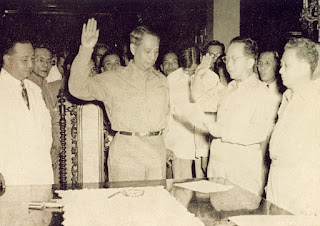
Say Pangasinensen ngalngalin nanmaliw ya pangolo na bansa: Si Carlos Peña Romulo (1898-1985)
Nipaakar ed sayan talintao. Say inpansamba nen Carlos P. Romulo ed arap nen Pangolon Manuel Roxas nen 1946. Walad kawanan si Speaker of th...
Nov 27, 2007

Nov 26, 2007
PI 100 Syllabus
I am posting the syllabus I made for PI 100, which is a course on Rizal, the national hero of the Philippines. I taught this course for one year at UP. Everyone is free to copy and use it provided the author is cited.
_________ El Filibusterismo (orihinal sa Espanyol, isinalin sa Ingles at Filipino)
_________ One Hundred Letters of Jose Rizal. Manila: Lopez Memorial Museum, 1959.
_________Escritos de Jose Rizal. Tomo I-XIII. Jose Rizal National Centennial Commission, 1961. Mga katipunan ng mga akda ni Rizal na isinalin rin sa Ingles at Filipino.
Kalaw, Teodoro M. ed. Epistolario Rizalino. Tomo I (1877-87); II (1887-90); III (1890-92); IV (1892- 96); V unang parte (1886-1888) at ikalawang parte (1888-1896). Manila: Bureau of Printing, 1938.
Coates, Austin. Rizal – Filipino Nationalist & Patriot. Manila: Solidaridad Publishing House, 1992. Isinalin ni Nilo S. Ocampo bilang Rizal – Makabayan at Martir. QC: UP Press, 1995.
Guerrero, Leon Ma. The First Filipino. Guerrero Publishing, 2003.
Ramos, Jesus Fer. et. al. Kalipunan ng mga Sinulat ni Dr. Jose P. Rizal (Tula, Sanaysay, Nobela, Liham). walang datos ng naglimbag pati petsa ng pagkakalimbag.
Mga karagdagang babasahin
Agoncillo, Teodoro A. & Milagros C. Guerrero. The History of the Filipino People. Quezon City: Malaya Books, 1970: Chapters 6, 7, 8, 9 &10.
Arcilla, Jose S. Rizal and the Emergence of the Philippine Nation. QC: Office of Research & Publications, Ateneo de Manila University, 1991.
Constantino, Renato. “Veneration without Understanding” in Dissent and Counter-consciousness. QC: Malaya Books, 1970.
Fast, Jonathan & Jim Richardson. Roots of Dependency: Political and Economic Revolution in 19th Century Philippines. Quezon City: Foundation for Nationalist Studies, 1979: Chapters II,
VII & VIII.
Foronda, Marcelino. The Canonization of Rizal. Manila, 1960.
Ileto, Reynaldo C. “Rizal and the Underside of Philippine History” in Filipinos and their Revolution: Event, Discourse and Historiography. QC: Ateneo de Manila University Press, 1998.
Joaquin, Nick. “Anatomy of the Anti-Hero” & “Why was the Rizal Hero a Creole?” in A Question of Heroes. Anvil, 2005.
Melendrez-Cruz, Patricia & Apolonio Chua. Himalay: Kalipunan ng mga Pag-aaral kay Rizal. Manila: Sentrong Pangkultura ng Pilipinas, 1991.
Ocampo, Ambeth R. Rizal without the Overcoat. Anvil, 2000.
Ocampo, Nilo S. May Gawa na Kaming Natapus Dini: si Rizal at ang Wikang Tagalog. QC: Office of the Vice Chancellor for Research and Development, University of the Philippines, 2002.
Quibuyen, Floro C. A Nation Aborted: Rizal, American Hegemony and Philippine Nationalism. QC: Ateneo de Manila University Press, 2000.
Sarkisyanz, Manuel. “Rizal’s Image: Archetypes, Influences, Analogies and Impacts” in Rizal and Republican Spain and other Rizalist Essays. Manila: National Historical Institute, 1995.
Schumacher, John N., S.J. The Propaganda Movement: 1880-1895. QC: Ateneo de Manila University Press, 1997: Chapters 5 & 12.
Mga pangangailangan ng kurso
Pagdalo sa klase (10%)
Tumbasan ng marka
1.0 96-100; 1.25 91-95; 1.5 86-90; 1.75 81-85; 2.0 76-80; 2.25 71-75; 2.5 66-70; 2.75 61-65; 3.0 56-60;4.0 51-55; 5.0 0-50
Mga tuntunin sa panunuring-sanaysay
Sumulat ng isang panunuring-sanaysay tungkol sa isang akdang hinggil kay Rizal, nakasulat sa Ingles o Filipino.
Maglalaman ito dapat ng 1500 na mga salita at naka-double space.
Balangkas ng kurso at schedule
I. Mga Lapit sa Pag-aaral kay Rizal
II. Jose Rizal: Buhay ng isang Bayani
A. Inihula sa mga bituin
1. Ang panahon bago ang kanyang pagsilang
2. Kapanganakan at Kabataan, 1861-1871
"Memorias de Un Estudiante de Manila" (1878-1881): Kabanata 1 at 2.
"Sa aking kabata" (ca 1869)
3. Buhay sa Paaralan at Pamantasan, 1872-1881
"Memorias": Kabanata 3, 4, 5 at 6
"San Eustaquio, Martir" (1876)
"A la Juventud Filipina" (1879)
"El Consejo de los Dioses" (1880)
4. Paglayag sa labas ng Kapuluan
B. Pagtahak sa kapalaran
1. Sa Madrid
"El Amor Patrio" (1882)
"Discurso-Brindis" (1884)
2. Pagpapakadalubhasa sa Paris at Heidelberg
3. Buhay sa Berlin
"Guillermo Tell" (Setyembre 1886)
"Limang Salita ni Hans Christian Andersen" (1886)
4. Noli Me Tangere
"Noli Me Tangere" (1887)
"A las flores de Heidelberg" (1887)
C. Mga pagsubok
1. Pag-uwi sa Calamba
2. Pagtanggap at pagtutol sa Noli
3. Matinding pagtutol ng mga prayle sa nobela
4. Pinayuhang umalis
5. Ang Hacienda ng Calamba
D. Pakikibaka at Pagsasakripisyo
1. Tungong Inglatera
2. Pag-aaral sa Museong Britano
3. Kilusang Propaganda
"Sa Kababayang Dalaga sa Malolos" (Pebrero 1889)
"La Vision de Fray Rodriguez" (1889)
"Por Telefono" (1889)
4. Noli ipinagbawal
5. Krisis sa pamilya
6. Sucesos ni Morga
"Filipinas Dentro de Cien Años" (Setyembre 1889-Pebrero 1890)
"Al Excmo. Sr.D. Vicente Barrantes" (Pebrero 1890)
7. Pagkakahati sa Madrid
"Sobre la Indolencia de los Filipinos" (Hulyo-Setyembre 1890)
8. El Filibusterismo
E. Ang Tadhana
1. Pagpunta sa Hongkong
"Ang mga Karampatan ng Tao" (1891-92)
2. Paglikas ng pamilya
"Makamisa" (1892)
3. Pagkaunsyami ng balak sa Hilagang Borneo
4. Pag-uwi at pagpapatapon sa Mindanao
5. Ang mga Heswita sa Dapitan
6. Abalang gawain sa Talisay
"La Curacion de los Hechizados (Apuntes Hechos Para el Estudio de la Medicina Filipina)"
7. si Josephine Bracken
8. Ang pagsabog ng himagsikan
9. Ang paglilitis
"Manifesto a algunos Filipinos" (Disyembre 1896)
10. Ang huling mga araw
Mi Ultimo Adios, Disyembre 1896
11. Kamatayan at Muling Pagsilang
Panonood ng pelikulang Jose Rizal ni Marilou Diaz-Abaya
III. Kongklusyon – si Rizal sa harap ng mga Hamon ng Kasalukuyan
A. si Rizal at ang edukasyon
B. si Rizal at ang patuloy na hamon ng himagsikan
C. si Rizal at ang hamon ng pagkamakabayan
D. si Rizal at pananampalataya
E. Ang paglagpas at pag-igpaw kay Rizal
Philippine Institutions 100 (PI 100)
Departamento ng Filipino at Panitikan ng Pilipinas, Kolehiyo ng Arte at Literatura, Unibersidad ng Pilipinas sa Diliman
G. Erwin S. Fernandez
(BR 2079 Oras ng Konsultasyon LH 1-2; MB 1-2)
Departamento ng Filipino at Panitikan ng Pilipinas, Kolehiyo ng Arte at Literatura, Unibersidad ng Pilipinas sa Diliman
G. Erwin S. Fernandez
(BR 2079 Oras ng Konsultasyon LH 1-2; MB 1-2)
Mga layunin
□ masuri ang buhay at kaisipan ni Rizal batay sa konteksto ng kanyang panahon.
□ madalumat at maunawaan ang lipunang kinabibilangan at kinairalan ni Rizal.
□ maiugnay at mapahalagahan ang mga kaisipan ni Rizal sa mga hamon ng kasalukuyang panahon.
Mga pangunahing babasahin
Rizal, Jose. Noli Me Tangere (orihinal sa Espanyol, isinalin sa Ingles at Filipino)
□ masuri ang buhay at kaisipan ni Rizal batay sa konteksto ng kanyang panahon.
□ madalumat at maunawaan ang lipunang kinabibilangan at kinairalan ni Rizal.
□ maiugnay at mapahalagahan ang mga kaisipan ni Rizal sa mga hamon ng kasalukuyang panahon.
Mga pangunahing babasahin
Rizal, Jose. Noli Me Tangere (orihinal sa Espanyol, isinalin sa Ingles at Filipino)
_________ El Filibusterismo (orihinal sa Espanyol, isinalin sa Ingles at Filipino)
_________ One Hundred Letters of Jose Rizal. Manila: Lopez Memorial Museum, 1959.
_________Escritos de Jose Rizal. Tomo I-XIII. Jose Rizal National Centennial Commission, 1961. Mga katipunan ng mga akda ni Rizal na isinalin rin sa Ingles at Filipino.
Kalaw, Teodoro M. ed. Epistolario Rizalino. Tomo I (1877-87); II (1887-90); III (1890-92); IV (1892- 96); V unang parte (1886-1888) at ikalawang parte (1888-1896). Manila: Bureau of Printing, 1938.
Coates, Austin. Rizal – Filipino Nationalist & Patriot. Manila: Solidaridad Publishing House, 1992. Isinalin ni Nilo S. Ocampo bilang Rizal – Makabayan at Martir. QC: UP Press, 1995.
Guerrero, Leon Ma. The First Filipino. Guerrero Publishing, 2003.
Ramos, Jesus Fer. et. al. Kalipunan ng mga Sinulat ni Dr. Jose P. Rizal (Tula, Sanaysay, Nobela, Liham). walang datos ng naglimbag pati petsa ng pagkakalimbag.
Mga karagdagang babasahin
Agoncillo, Teodoro A. & Milagros C. Guerrero. The History of the Filipino People. Quezon City: Malaya Books, 1970: Chapters 6, 7, 8, 9 &10.
Arcilla, Jose S. Rizal and the Emergence of the Philippine Nation. QC: Office of Research & Publications, Ateneo de Manila University, 1991.
Constantino, Renato. “Veneration without Understanding” in Dissent and Counter-consciousness. QC: Malaya Books, 1970.
Fast, Jonathan & Jim Richardson. Roots of Dependency: Political and Economic Revolution in 19th Century Philippines. Quezon City: Foundation for Nationalist Studies, 1979: Chapters II,
VII & VIII.
Foronda, Marcelino. The Canonization of Rizal. Manila, 1960.
Ileto, Reynaldo C. “Rizal and the Underside of Philippine History” in Filipinos and their Revolution: Event, Discourse and Historiography. QC: Ateneo de Manila University Press, 1998.
Joaquin, Nick. “Anatomy of the Anti-Hero” & “Why was the Rizal Hero a Creole?” in A Question of Heroes. Anvil, 2005.
Melendrez-Cruz, Patricia & Apolonio Chua. Himalay: Kalipunan ng mga Pag-aaral kay Rizal. Manila: Sentrong Pangkultura ng Pilipinas, 1991.
Ocampo, Ambeth R. Rizal without the Overcoat. Anvil, 2000.
Ocampo, Nilo S. May Gawa na Kaming Natapus Dini: si Rizal at ang Wikang Tagalog. QC: Office of the Vice Chancellor for Research and Development, University of the Philippines, 2002.
Quibuyen, Floro C. A Nation Aborted: Rizal, American Hegemony and Philippine Nationalism. QC: Ateneo de Manila University Press, 2000.
Sarkisyanz, Manuel. “Rizal’s Image: Archetypes, Influences, Analogies and Impacts” in Rizal and Republican Spain and other Rizalist Essays. Manila: National Historical Institute, 1995.
Schumacher, John N., S.J. The Propaganda Movement: 1880-1895. QC: Ateneo de Manila University Press, 1997: Chapters 5 & 12.
Mga pangangailangan ng kurso
Pagdalo sa klase (10%)
Isang mahabang pagsusulit (30%)
Mga maiikling pagsusulit (30%)
Maikling panunuring-sanaysay (30%)
Tumbasan ng marka
1.0 96-100; 1.25 91-95; 1.5 86-90; 1.75 81-85; 2.0 76-80; 2.25 71-75; 2.5 66-70; 2.75 61-65; 3.0 56-60;4.0 51-55; 5.0 0-50
Mga tuntunin sa panunuring-sanaysay
Sumulat ng isang panunuring-sanaysay tungkol sa isang akdang hinggil kay Rizal, nakasulat sa Ingles o Filipino.
Maglalaman ito dapat ng 1500 na mga salita at naka-double space.
Balangkas ng kurso at schedule
I. Mga Lapit sa Pag-aaral kay Rizal
II. Jose Rizal: Buhay ng isang Bayani
A. Inihula sa mga bituin
1. Ang panahon bago ang kanyang pagsilang
2. Kapanganakan at Kabataan, 1861-1871
"Memorias de Un Estudiante de Manila" (1878-1881): Kabanata 1 at 2.
"Sa aking kabata" (ca 1869)
3. Buhay sa Paaralan at Pamantasan, 1872-1881
"Memorias": Kabanata 3, 4, 5 at 6
"San Eustaquio, Martir" (1876)
"A la Juventud Filipina" (1879)
"El Consejo de los Dioses" (1880)
4. Paglayag sa labas ng Kapuluan
B. Pagtahak sa kapalaran
1. Sa Madrid
"El Amor Patrio" (1882)
"Discurso-Brindis" (1884)
2. Pagpapakadalubhasa sa Paris at Heidelberg
3. Buhay sa Berlin
"Guillermo Tell" (Setyembre 1886)
"Limang Salita ni Hans Christian Andersen" (1886)
4. Noli Me Tangere
"Noli Me Tangere" (1887)
"A las flores de Heidelberg" (1887)
C. Mga pagsubok
1. Pag-uwi sa Calamba
2. Pagtanggap at pagtutol sa Noli
3. Matinding pagtutol ng mga prayle sa nobela
4. Pinayuhang umalis
5. Ang Hacienda ng Calamba
D. Pakikibaka at Pagsasakripisyo
1. Tungong Inglatera
2. Pag-aaral sa Museong Britano
3. Kilusang Propaganda
"Sa Kababayang Dalaga sa Malolos" (Pebrero 1889)
"La Vision de Fray Rodriguez" (1889)
"Por Telefono" (1889)
4. Noli ipinagbawal
5. Krisis sa pamilya
6. Sucesos ni Morga
"Filipinas Dentro de Cien Años" (Setyembre 1889-Pebrero 1890)
"Al Excmo. Sr.D. Vicente Barrantes" (Pebrero 1890)
7. Pagkakahati sa Madrid
"Sobre la Indolencia de los Filipinos" (Hulyo-Setyembre 1890)
8. El Filibusterismo
"El Filibusterismo" (1891)
E. Ang Tadhana
1. Pagpunta sa Hongkong
"Ang mga Karampatan ng Tao" (1891-92)
2. Paglikas ng pamilya
"Makamisa" (1892)
3. Pagkaunsyami ng balak sa Hilagang Borneo
4. Pag-uwi at pagpapatapon sa Mindanao
5. Ang mga Heswita sa Dapitan
6. Abalang gawain sa Talisay
"La Curacion de los Hechizados (Apuntes Hechos Para el Estudio de la Medicina Filipina)"
7. si Josephine Bracken
8. Ang pagsabog ng himagsikan
9. Ang paglilitis
"Manifesto a algunos Filipinos" (Disyembre 1896)
10. Ang huling mga araw
Mi Ultimo Adios, Disyembre 1896
11. Kamatayan at Muling Pagsilang
Panonood ng pelikulang Jose Rizal ni Marilou Diaz-Abaya
III. Kongklusyon – si Rizal sa harap ng mga Hamon ng Kasalukuyan
A. si Rizal at ang edukasyon
B. si Rizal at ang patuloy na hamon ng himagsikan
C. si Rizal at ang hamon ng pagkamakabayan
D. si Rizal at pananampalataya
E. Ang paglagpas at pag-igpaw kay Rizal
Nov 24, 2007
Top Ten Universities
Saraya et unaan ya sampluran unibersidad ed intiron talba. Say University of the Philippines et tapuac. Pano nid arom ya unibersidad ey? Makapakelaw ta si Roman ya presidente na UP et ag to insali ed sayan survey so UP. Nayarin antato ya onbeba lamet so ranggo na UP. Wais met ta anta ton sakey ya pakanengnengen komon ya no maong so administrasyon to no iparis ed si Nemenzo.
1. Harvard University
2. University of Cambridge
2. University of Oxford
2. Yale University
5. Imperial College London
6. Princeton University
7. California Institute of Technology
7. University of Chicago
9. University College London
10. Massachusetts Institute of Technology
Walay anemiran sukatan ya inusar na Times Higher Education Survey 2007: peer review score, recruiter review score, faculty student score, citations per faculty score, international faculty score, international students score. Diad otet ya talura, antoy ilaban na UP ey? Diad mikapat, siopay taga-UP ya angiletneg ya sakey ya teorya ya uusaren da ray propesor ed intiron mundo? Anggapon balot. Anggapo ni ingen soy akasalampat ya Nobel ed siyensiya, litiratura etc. Irayan eskuelaan et diad campus da ra, wala iray mannaakar ya singa ordinaryon totoo balet ed katuaan et Nobel prize winners.
Ipapanengneng to labat balet yan listaan ya saray maaliguas ya banbansa et prioridad day produksiyon ya kakabatan, say edukasyon. Ibabaga to met ya say edukasyon et akasentro nid saray bansan nangiyulo'y kolonyalismo. Saray asakop ya baley et aralem so epekto na kolonyalismo tan imperyalismo ta anggad natan et kontrolado ira na saray mayayaman ya baley. Satan so tatawagen dan imperyalismod kultura. No omamengen say listaan et natalosan tayo ya sarayan unibersidad et nanlapud Nansakey ya Es-Estado [Estados Unidos] tan Nansakey ya Nanarian [Reino Unido] saray ibabagaran oley na Anglo-Amerikano. Siopa'y angibagan asumpal lay imperyalismo?
1. Harvard University
2. University of Cambridge
2. University of Oxford
2. Yale University
5. Imperial College London
6. Princeton University
7. California Institute of Technology
7. University of Chicago
9. University College London
10. Massachusetts Institute of Technology
Walay anemiran sukatan ya inusar na Times Higher Education Survey 2007: peer review score, recruiter review score, faculty student score, citations per faculty score, international faculty score, international students score. Diad otet ya talura, antoy ilaban na UP ey? Diad mikapat, siopay taga-UP ya angiletneg ya sakey ya teorya ya uusaren da ray propesor ed intiron mundo? Anggapon balot. Anggapo ni ingen soy akasalampat ya Nobel ed siyensiya, litiratura etc. Irayan eskuelaan et diad campus da ra, wala iray mannaakar ya singa ordinaryon totoo balet ed katuaan et Nobel prize winners.
Ipapanengneng to labat balet yan listaan ya saray maaliguas ya banbansa et prioridad day produksiyon ya kakabatan, say edukasyon. Ibabaga to met ya say edukasyon et akasentro nid saray bansan nangiyulo'y kolonyalismo. Saray asakop ya baley et aralem so epekto na kolonyalismo tan imperyalismo ta anggad natan et kontrolado ira na saray mayayaman ya baley. Satan so tatawagen dan imperyalismod kultura. No omamengen say listaan et natalosan tayo ya sarayan unibersidad et nanlapud Nansakey ya Es-Estado [Estados Unidos] tan Nansakey ya Nanarian [Reino Unido] saray ibabagaran oley na Anglo-Amerikano. Siopa'y angibagan asumpal lay imperyalismo?
Nov 22, 2007
Urduja
Bii kan mabiskeg, sika Urduja!
Nanoley ed Caboloan nen ugma;
Manlapud palandeyan na Cordillera anggad burakán na Bolinao;
Manlapud kaumaan na Zambales anggad katakelan na Abra
Sakbay nen Salcedo tan de Goiti ya Castila,
Panarianyo maaliguas tan mabuná;
Sankailian ya Hapon, Inchik mabetbet ombisita,
Onleksab saray Igolot manlakod kabisera
Intanduro da kay arom ya bánsa,
Inibaloi, Alinguey arom nen baley indayewdaka;
Diad awáran na Pangasinan nen saman tan natan,
Ed otel na kanonotan na lúyag agdaka alinguanan
Balet bangon ka, Urduja! Bangon ka!
Bangon kad lobók na linawa;
Say polim panpurakdad sika asinggerla,
Ta say inarom ya salita pateyto nabuasla!
Nanoley ed Caboloan nen ugma;
Manlapud palandeyan na Cordillera anggad burakán na Bolinao;
Manlapud kaumaan na Zambales anggad katakelan na Abra
Sakbay nen Salcedo tan de Goiti ya Castila,
Panarianyo maaliguas tan mabuná;
Sankailian ya Hapon, Inchik mabetbet ombisita,
Onleksab saray Igolot manlakod kabisera
Intanduro da kay arom ya bánsa,
Inibaloi, Alinguey arom nen baley indayewdaka;
Diad awáran na Pangasinan nen saman tan natan,
Ed otel na kanonotan na lúyag agdaka alinguanan
Balet bangon ka, Urduja! Bangon ka!
Bangon kad lobók na linawa;
Say polim panpurakdad sika asinggerla,
Ta say inarom ya salita pateyto nabuasla!
Sayan anlong et analo ya Honorable Mention ed Unan Paliagan na Anlong ed Pangasinan nen Agosto 2006 na inisponsor na Komisyon na Dilan Filipino. Unan naipalapag ed Nolasco, Ricardo Ma., Jose Laderas Santos & Santiago Villafania, eds. Ani ng Wika 2006. Maynila: Komisyon sa Wikang Filipino, 2007: 213.
Nov 11, 2007

Nov 7, 2007
1st Conference on Revitalizing the Pangasinan Language and Cultural Heritage
PROGRAM DAY 1 NOVEMBER 8, 2007
7:00 – 8:00 REGISTRATION
8:00 – 9:40 OPENING CEREMONIES
NATIONAL ANTHEM Urdaneta City University Chorale and Ensemble
DOXOLOGY Urdaneta City University Chorale and Ensemble
WELCOME ADDRESS Hon. Amadeo R. Perez, Jr.Mayor, Urdaneta City
INSPIRATIONAL MESSAGE Dr./Col. Antonio Laperal Tamayo
Commissioner, KWF Wikang Pangasinan
SPECIAL NUMBER Urdaneta City University Dance Troupe
INTRODUCTION OF THE KEYNOTE SPEAKER Mr. Mel V. Jovellanos
President, DJGT Foundation
KEYNOTE ADDRESS Hon. Marlyn Primicias Agabas Vice Governor, Pangasinan
CONFERENCE ORIENTATION Dr. Ricardo Ma. Duran NolascoChairman, KWF
9:40 – 10:00 COFFEE BREAK
10:00 – 11:00 PLENARY LECTURE 1:
An Ethnocultural Mapping of Pangasinan
Ma. Crisanta Nelmida-Flores, Ph.D.
Director, Office of Extension Coordination
Office ofthe Vice Chancellor for Academic Affairs
University of the Philippines Diliman
Assoc. Professor of Philippine Studies
11:00 – 12:00 PLENARY LECTURE 2:
Pangasinan Literary HistoryMaria Magno-Icagasi, Ph.D.
Retired Professor, Art Studies,
University of the Philippines Diliman
12:00 – 1:00 LUNCH BREAK1:00 – 3:20
PARALLEL SESSIONS
Session 1 Heritage and History
Godofredo Tiong Ph.D. "A Brief History of Pangasinan Leaders"
Elnora Dudang "Pangasinan Lenten Cultural Practices: A Dying Ritual?"
Fe L. Alcantara-Andico "The Fishing Tradition of a Coastal Communityin Pangasinan: Seascape, Legends and Indigenous Knowledge"
Edgar Guevara "Lifestyle Changing Back to Culture"
Session 2 Literary and Folkloric Legacy
Ruby Keith S. Sison et al. "Bangon La Zarzuela: Revitalizing theArte Cancion in Pangasinan"
Reagan R. Maiquez "Ang Panimulang Paghahanap sa Anacbanua sa PagbasangPanitikang Bayan ng Pangasinan"
Rosalina A. Mendigo, Ph.D. "Mga Zarzuelang Pangasinan sa Pagdaan ngPanahon"
Santiago B. Villafania "The Pangasinan Anlong: Oral Traditions into the 21st Century"
3:20 – 3:40 COFFEE BREAK
3:40 – 5:00 SOLIDARITY, AWARDING AND CULTURAL PROGRAM
INSPIRATIONAL MESSAGE
Cirilo F. Bautista, Ph. D.
Poet, Literary Critic and Educator
BOOK LAUNCHING
GAWAD KOMISYON 2007 (WIKANG PANGASINAN)
Paggawad ng Gantimpalang Tamayo sa Tula at Maikling Kuwento
DAY 2 NOVEMBER 9, 2007
7:00 – 8:00 REGISTRATION
8:00- 8:20 CULTURAL PRESENTATION
8:20 – 10:20 PARALLEL SESSIONS
Session 3 Language
Russel Lomboy "Is Pangasinan a Threatened Language?"
Mel. V. Jovellanos "Similarities between Bahasa Indonesia and thePangasinan Language"
Rowena Caacbay "Preservation of Bolinao Language and CulturalHeritage"
Catalina L. Felicitas "The Evolution and Development of the Ulupanna Pansiansiay Salitan Pangasinan"
Session 4
Education and Indigenous Knowledge Systems
Anita C. Dematera "Inobasyon at Interbensyon sa Pagsulong ngKurikulum ng Paaralang Pangkomunidad"
Erwin S. Fernandez "Reclaiming Identity, Mapping the Future:Pangasinan Studies in Theory and Praxis"
Adrian Laurence P. Carbajal "Integration of the Course on Culturaland Literary Heritage of Pangasinan in the Collegiate Program ofHigher Institution in the Province of Pangasinan: Basis of EffectiveSyllabus Model"
Oscar P. Ferrer, Ph.D. "Globalisasyon, Lokal na Pamahalaan atKultura (Local Governance and Community Culture in a GlobalizingWorld)"
10:20 – 10:40 COFFEE BREAK
10:40 – 11:40 PLENARY LECTURE 3:
Pangasinan's Pre-Colonial Links with OverseasKingdoms and Cultures
Arnold Molina Azurin
Historian, Center for Interdisciplinary DevelopmentStudies University of the Philippines Diliman
11:40 – 12:00 LUNCH BREAK
1:00 – 2:30 AGENDA SETTING AND COMMITMENT(Policy and Action Research and other Activities)
2:31 – 3:30 CLOSING PROGRAM
CALL FOR COMMITMENT
Dr. Ricardo Ma. Duran NolascoChairman, KWF
EVALUATION
CLOSING REMARKS
Hon. Charizzma " Chu" Carancho
Chairwoman, Committee on Arts, Culture and Tourism
Provincial Board, Pangasinan
7:00 – 8:00 REGISTRATION
8:00 – 9:40 OPENING CEREMONIES
NATIONAL ANTHEM Urdaneta City University Chorale and Ensemble
DOXOLOGY Urdaneta City University Chorale and Ensemble
WELCOME ADDRESS Hon. Amadeo R. Perez, Jr.Mayor, Urdaneta City
INSPIRATIONAL MESSAGE Dr./Col. Antonio Laperal Tamayo
Commissioner, KWF Wikang Pangasinan
SPECIAL NUMBER Urdaneta City University Dance Troupe
INTRODUCTION OF THE KEYNOTE SPEAKER Mr. Mel V. Jovellanos
President, DJGT Foundation
KEYNOTE ADDRESS Hon. Marlyn Primicias Agabas Vice Governor, Pangasinan
CONFERENCE ORIENTATION Dr. Ricardo Ma. Duran NolascoChairman, KWF
9:40 – 10:00 COFFEE BREAK
10:00 – 11:00 PLENARY LECTURE 1:
An Ethnocultural Mapping of Pangasinan
Ma. Crisanta Nelmida-Flores, Ph.D.
Director, Office of Extension Coordination
Office ofthe Vice Chancellor for Academic Affairs
University of the Philippines Diliman
Assoc. Professor of Philippine Studies
11:00 – 12:00 PLENARY LECTURE 2:
Pangasinan Literary HistoryMaria Magno-Icagasi, Ph.D.
Retired Professor, Art Studies,
University of the Philippines Diliman
12:00 – 1:00 LUNCH BREAK1:00 – 3:20
PARALLEL SESSIONS
Session 1 Heritage and History
Godofredo Tiong Ph.D. "A Brief History of Pangasinan Leaders"
Elnora Dudang "Pangasinan Lenten Cultural Practices: A Dying Ritual?"
Fe L. Alcantara-Andico "The Fishing Tradition of a Coastal Communityin Pangasinan: Seascape, Legends and Indigenous Knowledge"
Edgar Guevara "Lifestyle Changing Back to Culture"
Session 2 Literary and Folkloric Legacy
Ruby Keith S. Sison et al. "Bangon La Zarzuela: Revitalizing theArte Cancion in Pangasinan"
Reagan R. Maiquez "Ang Panimulang Paghahanap sa Anacbanua sa PagbasangPanitikang Bayan ng Pangasinan"
Rosalina A. Mendigo, Ph.D. "Mga Zarzuelang Pangasinan sa Pagdaan ngPanahon"
Santiago B. Villafania "The Pangasinan Anlong: Oral Traditions into the 21st Century"
3:20 – 3:40 COFFEE BREAK
3:40 – 5:00 SOLIDARITY, AWARDING AND CULTURAL PROGRAM
INSPIRATIONAL MESSAGE
Cirilo F. Bautista, Ph. D.
Poet, Literary Critic and Educator
BOOK LAUNCHING
GAWAD KOMISYON 2007 (WIKANG PANGASINAN)
Paggawad ng Gantimpalang Tamayo sa Tula at Maikling Kuwento
DAY 2 NOVEMBER 9, 2007
7:00 – 8:00 REGISTRATION
8:00- 8:20 CULTURAL PRESENTATION
8:20 – 10:20 PARALLEL SESSIONS
Session 3 Language
Russel Lomboy "Is Pangasinan a Threatened Language?"
Mel. V. Jovellanos "Similarities between Bahasa Indonesia and thePangasinan Language"
Rowena Caacbay "Preservation of Bolinao Language and CulturalHeritage"
Catalina L. Felicitas "The Evolution and Development of the Ulupanna Pansiansiay Salitan Pangasinan"
Session 4
Education and Indigenous Knowledge Systems
Anita C. Dematera "Inobasyon at Interbensyon sa Pagsulong ngKurikulum ng Paaralang Pangkomunidad"
Erwin S. Fernandez "Reclaiming Identity, Mapping the Future:Pangasinan Studies in Theory and Praxis"
Adrian Laurence P. Carbajal "Integration of the Course on Culturaland Literary Heritage of Pangasinan in the Collegiate Program ofHigher Institution in the Province of Pangasinan: Basis of EffectiveSyllabus Model"
Oscar P. Ferrer, Ph.D. "Globalisasyon, Lokal na Pamahalaan atKultura (Local Governance and Community Culture in a GlobalizingWorld)"
10:20 – 10:40 COFFEE BREAK
10:40 – 11:40 PLENARY LECTURE 3:
Pangasinan's Pre-Colonial Links with OverseasKingdoms and Cultures
Arnold Molina Azurin
Historian, Center for Interdisciplinary DevelopmentStudies University of the Philippines Diliman
11:40 – 12:00 LUNCH BREAK
1:00 – 2:30 AGENDA SETTING AND COMMITMENT(Policy and Action Research and other Activities)
2:31 – 3:30 CLOSING PROGRAM
CALL FOR COMMITMENT
Dr. Ricardo Ma. Duran NolascoChairman, KWF
EVALUATION
CLOSING REMARKS
Hon. Charizzma " Chu" Carancho
Chairwoman, Committee on Arts, Culture and Tourism
Provincial Board, Pangasinan
Nov 3, 2007
Where are the Linguists?
As I have written in my working paper, there are those who argue that Filipino is a separate language from Tagalog, i.e. Ernesto Constantino. I conclude that based on their assertions and my observations, Filipino and Tagalog are two different languages but still needs the verification from the linguists. I am forced to think that Nolasco was reacting to my essay when he delivered a lecture on the closing ceremony of the KWF program asserting thatTagalog and Filipino are one and the same language because of their mutual intelligibility. I should have cited this in my paper. Yes, I will in my third draft.
Mel may want to read Nolasco's conference address translated into English in Sonny Villafania's website.
Here are the pertinent excerpts:
"Are 'Tagalog,' 'Pilipino' and 'Filipino' different languages? No,they are mutually intelligible varieties, and therefore belong to one language. According to the KWF, Filipino is that speech variety spoken in Metro Manila and other urban centers where different ethnic groups meet. It is the most prestigious variety of Tagalog and the language used by the national mass media.
The other yardstick for distinguishing a language from a dialect is: different grammar, different language. 'Filipino', 'Pilipino' and 'Tagalog' share identical grammar. They have the same determiners (ang, ng and sa); the same personal pronouns (siya, ako,niya, kanila, etc); the same demonstrative pronouns (ito, iyan,doon, etc); the same linkers (na, at and ay); the same particles (na and pa); and the same verbal affixes -in, -an, i- and -um-. In short, same grammar, same language."
So Nolasco had spoken that Filipino is a "speech variety spoken inMetro Manila and other urban centers..." In short, Filipino as we have contended here is a dialect of Tagalog. Is Nolaco saying that our "national language" is mere "national dialect" of Tagalog? A fish is caught through its mouth, right? As I have posted here I will include a section in my paper dealing with this. A discussion on Nolasco's categorical statements will become a part of this section.
In the following section of my paper, I argued that Tagalog should stop being masqueraded as Filipino by returning to its former name in honor of its people. To stem the objections that may possibly arise from it, two other languages should be declared national languages along with Tagalog, that of Cebuano and Ilokano. I did not stop there recognizing the implicit difficulties that may arise from declaring these languages as national languages. In the last section, I advocated the recognition of the "other" languages as official languages in their respective localities. I compared Philippine and Indian language policies and found that India's language policy is superior respecting of its multilingual andmulticultural society, a model that we can emulate.
It would be better if a study done by a linguist should be able to answer Mel's question not just from the mouth of Nolasco although the latter himself is credible because he has a doctorate in linguistics. I am thinking of research titles like this: "Are Tagalog and Filipino Two Different Languages? Answers from a Linguistic Analysis" and "Is Filipino a dialect of Tagalog? Implications to the Language Policy." Perhaps a Master's thesis in linguistics would suffice or an MA seminar paper can also be a rewarding exercise. Both theses particularly the latter would surely provoke intrigue and debate and that someone would become an instant celebrity in Philippine linguistics. Who will give a try? Don't forget to contact me so that I could cite the theses in my paper, hopefully already published by that time but may revise it in lieu of the researches.
[Posted in DILA as message 18444 Nov. 3, 2007]
Mel may want to read Nolasco's conference address translated into English in Sonny Villafania's website.
Here are the pertinent excerpts:
"Are 'Tagalog,' 'Pilipino' and 'Filipino' different languages? No,they are mutually intelligible varieties, and therefore belong to one language. According to the KWF, Filipino is that speech variety spoken in Metro Manila and other urban centers where different ethnic groups meet. It is the most prestigious variety of Tagalog and the language used by the national mass media.
The other yardstick for distinguishing a language from a dialect is: different grammar, different language. 'Filipino', 'Pilipino' and 'Tagalog' share identical grammar. They have the same determiners (ang, ng and sa); the same personal pronouns (siya, ako,niya, kanila, etc); the same demonstrative pronouns (ito, iyan,doon, etc); the same linkers (na, at and ay); the same particles (na and pa); and the same verbal affixes -in, -an, i- and -um-. In short, same grammar, same language."
So Nolasco had spoken that Filipino is a "speech variety spoken inMetro Manila and other urban centers..." In short, Filipino as we have contended here is a dialect of Tagalog. Is Nolaco saying that our "national language" is mere "national dialect" of Tagalog? A fish is caught through its mouth, right? As I have posted here I will include a section in my paper dealing with this. A discussion on Nolasco's categorical statements will become a part of this section.
In the following section of my paper, I argued that Tagalog should stop being masqueraded as Filipino by returning to its former name in honor of its people. To stem the objections that may possibly arise from it, two other languages should be declared national languages along with Tagalog, that of Cebuano and Ilokano. I did not stop there recognizing the implicit difficulties that may arise from declaring these languages as national languages. In the last section, I advocated the recognition of the "other" languages as official languages in their respective localities. I compared Philippine and Indian language policies and found that India's language policy is superior respecting of its multilingual andmulticultural society, a model that we can emulate.
It would be better if a study done by a linguist should be able to answer Mel's question not just from the mouth of Nolasco although the latter himself is credible because he has a doctorate in linguistics. I am thinking of research titles like this: "Are Tagalog and Filipino Two Different Languages? Answers from a Linguistic Analysis" and "Is Filipino a dialect of Tagalog? Implications to the Language Policy." Perhaps a Master's thesis in linguistics would suffice or an MA seminar paper can also be a rewarding exercise. Both theses particularly the latter would surely provoke intrigue and debate and that someone would become an instant celebrity in Philippine linguistics. Who will give a try? Don't forget to contact me so that I could cite the theses in my paper, hopefully already published by that time but may revise it in lieu of the researches.
[Posted in DILA as message 18444 Nov. 3, 2007]
Nov 1, 2007
Conference on Revitalizing the Pangasinan Language and Cultural Heritage
Approved submitted abstracts (as of October 27, 2007)
Plenary Speakers
Ma. Crisanta Nelmida Flores, Ph.D. "An Ethnocultural Mapping of Pangasinan"
Arnold Molina Azurin "Pangasinan's Pre-Colonial Links with Overseas Kingdoms and Cultures"
Maria Magno-Icagasi, Ph.D. "Pangasinan Literary History"
A. Heritage and History
Godofredo Tiong Ph.D. "A Brief History of Pangasinan Leaders"
Elnora Dudang "Pangasinan Lenten Cultural Practices: A Dying Ritual?"
Fe L. Alcantara-Andico "The Fishing Tradition of a Coastal Community in Pangasinan: Seascape, Legends and Indigenous Knowledge"
Edgard Guevara "Lifestyle Changing Back to Culture"
B. Literary & Folkloric Legacy
Ruby Keith S. Sison et al. "Bangon La Zarzuela: Revitalizing the Arte Cancion in Pangasinan" Reagan R. Maiquez "Ang Panimulang Paghahanap sa Anacbanua sa Pagbasa ngPanitikang Bayan ng Pangasinan"
Rosalina A. Mendigo, Ph.D. "Mga Zarzuelang Pangasinan sa Pagdaan ng Panahon"
Santiago B. Villafania "The Pangasinan Anlong: Oral Traditions into the 21st Century"
C. Language
Russel Lomboy "Is Pangasinan a Threatened Language?"
Catalina L. Felicitas "The Evolution and Development of the Ulupan na Pansiansiay Salitan Pangasinan"
Rowena Caacbay "Preservation of Bolinao Language and Cultural Heritage"
Mel. V. Jovellanos "Similarities between Bahasa Indonesia and the Pangasinan Language"
D. Education and Indigenous Knowledge
Anita C. Dematera "Inobasyon at Interbensyon sa Pagsulong ng Kurikulum ng Paaralang Pangkomunidad"
Erwin S. Fernandez "Reclaiming Identity, Mapping the Future: Pangasinan Studies in Theory and Praxis"
Adrian Laurence P. Carbajal "Integration of the Course on Cultural and Literary Heritage of Pangasinan in the Collegiate Program of Higher Institution in the Province of Pangasinan: Basis of Effective Syllabus Model"
Oscar P. Ferrer, Ph.D. "Globalisasyon, Lokal na Pamahalaan at Kultura (Local Governance and Community Culture in a Globalizing World)"
[Source: www.dalityapi.com]
Plenary Speakers
Ma. Crisanta Nelmida Flores, Ph.D. "An Ethnocultural Mapping of Pangasinan"
Arnold Molina Azurin "Pangasinan's Pre-Colonial Links with Overseas Kingdoms and Cultures"
Maria Magno-Icagasi, Ph.D. "Pangasinan Literary History"
A. Heritage and History
Godofredo Tiong Ph.D. "A Brief History of Pangasinan Leaders"
Elnora Dudang "Pangasinan Lenten Cultural Practices: A Dying Ritual?"
Fe L. Alcantara-Andico "The Fishing Tradition of a Coastal Community in Pangasinan: Seascape, Legends and Indigenous Knowledge"
Edgard Guevara "Lifestyle Changing Back to Culture"
B. Literary & Folkloric Legacy
Ruby Keith S. Sison et al. "Bangon La Zarzuela: Revitalizing the Arte Cancion in Pangasinan" Reagan R. Maiquez "Ang Panimulang Paghahanap sa Anacbanua sa Pagbasa ngPanitikang Bayan ng Pangasinan"
Rosalina A. Mendigo, Ph.D. "Mga Zarzuelang Pangasinan sa Pagdaan ng Panahon"
Santiago B. Villafania "The Pangasinan Anlong: Oral Traditions into the 21st Century"
C. Language
Russel Lomboy "Is Pangasinan a Threatened Language?"
Catalina L. Felicitas "The Evolution and Development of the Ulupan na Pansiansiay Salitan Pangasinan"
Rowena Caacbay "Preservation of Bolinao Language and Cultural Heritage"
Mel. V. Jovellanos "Similarities between Bahasa Indonesia and the Pangasinan Language"
D. Education and Indigenous Knowledge
Anita C. Dematera "Inobasyon at Interbensyon sa Pagsulong ng Kurikulum ng Paaralang Pangkomunidad"
Erwin S. Fernandez "Reclaiming Identity, Mapping the Future: Pangasinan Studies in Theory and Praxis"
Adrian Laurence P. Carbajal "Integration of the Course on Cultural and Literary Heritage of Pangasinan in the Collegiate Program of Higher Institution in the Province of Pangasinan: Basis of Effective Syllabus Model"
Oscar P. Ferrer, Ph.D. "Globalisasyon, Lokal na Pamahalaan at Kultura (Local Governance and Community Culture in a Globalizing World)"
[Source: www.dalityapi.com]
Oct 24, 2007
NK Nuke Crisis
Erwin S. Fernandez
Having stayed only for three weeks in Gwangju City, news about the nuke crisis is somewhat making me a little nervous. Back home, in the Philippines, though I haven’t received any call from my parents or emails from my friends, I am pretty sure they, having heard or read about it, might be feeling a bit alarmed. Nonetheless, I still believe there is nothing to worry about.
I don’t only have sympathy but also respect for North Korean people. Sympathy and respect because they have suffered a lot from the brutal depredations of two previous wars with the memories and scars still fresh but managed to withstand the massive pressures from the outside and the calamities that resulted in miseries ranging from hunger to famine. Yet, until when can they maintain the same composure in the face of serious challenges at present?
North Korea in Western press is always painted in bad light. Whether Kim Jong-Il, popularly portrayed as “communist dictator,” was the apparent culprit for the suffering of millions of North Koreans is not for me or anyone, any government or any nation to judge. I reserve this sacred right to the North Korean people who had capably demonstrated their capacity for self-determination in the midst of foreign intervention during the past half-century. This brings us to the raging issue of the moment.
Last week, North Korea publicly claimed having conducted its first nuclear test provoking a storm of protests, denunciations from all corners of the globe wary of an impending war. Others look for whom to blame. Kim Dae Jung, former South Korean president, in a special lecture at Chonnam National University, host of the Asia Culture Academy Youth Workshop, singled out the United States “hostile” foreign policy towards North Korea as having precipitated the crisis. Some called for punitive actions against North Korea. The United Nations Security Council particularly the U.S. and Japan demanded severe economic sanctions. Conservatives issued a declaration supporting the latter’s move and even challenged the Roh government to resign from office and take the alleged responsibility for the current critical situation. The crisis, however, demanded a closer examination than what is being presented.
North Korea, equally valid for other states, has every right to develop its own nuclear program as a defensive mechanism as long as any nation on earth continues to have its own nuclear capability undisturbed and unmitigated. The nuclear non-proliferation treaty has been in existence for many years now but the nuclear arms race is not yet over. Far from it, it paved the way for the rise of new nuclear powers such as China, India and Pakistan. These countries, beneficiaries of a leaked technology either from Russia or the U.S., supposedly built their nuclear arsenals as powerful deterrent to any military threat by a foreign power. The same holds true for North Korea if one believes Ri Jong-hyok, member of North Korea’s Supreme People’s Assembly in his address before European parliamentarians in Brussels. Right to defend itself from external aggression is a crucial factor for national survival not only for North Korea but to all besieged governments around the world.
For the past sixty years, the U.S., according to Ri, carried out “severe sanctions and threats” to his country. The latest, as of last year, four days after the denuclearization agreement in Beijing was signed on September 19, the United States Treasury Department cut off North Korea’s financial access to international money-lending and credit institutions affecting even legitimate business transactions. Few years prior to this, the United States invaded Iraq on the pretext of harboring weapons of mass destruction (WMD); arrested Saddam Hussein and effected “regime change.” It was therefore a tactical move on the part of the Kim regime to pursue its nuclear program to stave off U.S. invasion as the war freak Bush administration although having denied such intention was half-secretly known to be mulling over this not-so-remote possibility.
Seoul’s engagement policy toward Pyongyang became a convenient scapegoat to clamor for a change in policy especially the move toward strengthening military alliance with the United States. Rather than defusing the tense situation between the two countries, bringing more troops to Korea might send a wrong signal to the other side putting in jeopardy the hard-earned diplomatic gains and the peace and stability of Northeast Asia. Also, the hurry to “punish” Pyongyang rather than the solution is contributory to the already volatile environment.
The North-South divide in the peninsula, a curious relic from the Cold War, is still a contested object in international power relations. Thus, the struggle for a united Korea is a continuing project to get out from the imperialist game.
[Reedited with the original unedited draft, which was severely mutilated and first published as "Filipino View on NK Nuke Crisis" under the "Student Corner" The Korea Times 7 December 2006 with the full text shown below:
Since I’ve been in Kwangju for only three weeks, the news about the nuke crisis is making me a little nervous. North Korea is always portrayed in the Western press in a bad light.
Whether Kim Jongil, commonly portrayed as a communist dictator, is responsible for the suffering of millions of North Koreans is not for me to judge, or for anyone else, any government or any nation, to judge either.
North Korea publicly declared that it had conducted its first nuclear test in October, provoking a storm of protests and denunciations from all corners of the globe.
Everyone seems to be looking for someone to blame. Kim Dae-jung, a former South Korean president, in a special lecture at Chonnam National University, the host of the Asia Culture Academy Youth Workshop, singled out the United States’ “hostile” foreign policy as having precipitated the crisis.
Some people called for punitive actions against North Korea. The United Nations Security Council and Japan put in place economic sanctions.
Conservatives in Korea issued a declaration supporting the latter’s move and even challenged members of the Roh Moo-hyun government to resign from office to take responsibility for the current critical situation.
The crisis, however, demands closer examination. North Korea has every right to develop a nuclear program for its defense as long as other nations continue to have their nuclear capabilities undisturbed and unmitigated.
The Treaty on the Non-proliferation of Nuclear Weapons has been in existence for many years now, but the nuclear arms race is not over.
The treaty paved the way for the rise of new nuclear powers such as China, India and Pakistan. These countries, beneficiaries of leaked technology from Russia or the U.S., supposedly built their nuclear arsenals to deter military attacks.
The same holds true for North Korea, if one believes Ri Jong-hyok, a member of North Korea’s Supreme People’s Assembly, in his address to European parliamentarians in Brussels.
The right to defend itself from external aggression is important for national survival not only for North Korea, but also for other besieged governments.
For the past 60 years, the U.S., according to Ri, directed “severe sanctions and threats” toward his country.
Four days after the denuclearization agreement in Beijing was signed on Sept. 19, 2005, the United States Treasury Department cut off North Korea’s financial access to international money-lending and credit institutions, affecting even legitimate business transactions.
Few years before this, the U.S. invaded Iraq under the pretext that Iraq was harboring weapons of mass destruction.
It arrested Saddam Hussein and effected “regime change.”
It was a tactical move on the part of the Kim regime to pursue a nuclear program to stave off an invasion from the U.S.
Although the warmongering George W. Bush administration has denied having such an intention, it was known to be mulling this not-so-remote possibility.
Seoul’s engagement policy toward Pyongyang became a convenient scapegoat amid the clamor for policy change and moves to strengthen the military alliance with the U.S.
The rush to punish Pyongyang rather than to find a solution is contributing to the already volatile environment. The struggle for a united Korea is a continuing project to escape from the imperialist game.]
Imagining Ourselves as Asians
By Erwin S. Fernandez
Global Student Reporter
***
PANGASINAN, the Philippines ㅡ Nowadays, words like "imagine'' and "imagination'' have become so trite that they have become commonplace in discursive practices. Benedict Anderson's Imagined Communities is a dissertation on the origins and spread of nationalism whose provocative ideas can also apply to the three following concepts ㅡ pan-Asianism, Asian identity and Asian community.
Pan-Asianism seems to be resurging everywhere, particularly after Asian nations, having been freed from their colonial masters, embarked on the twin-processes of decolonization and modernization. Japanese imperialist propaganda on "Asia for the Asians'' in support of the "Greater East Asia Co-Prosperity Sphere'' provided at least the seed for pan-Asian solidarity to germinate over the upcoming decades. Japan's defeat of the United States in the Philippines conflict during World War II shattered the myth of Western superiority and invulnerability and thus, became a source of pride and belief in Asia's reawakening from its colonial past.
Japan's rise to power in the global capitalist economy followed by Korea, Singapore, Hong Kong and Taiwan in recent decades was enough reason for Samuel Huntington to posit his claim on the "decline of the West.'' China's latest entry to the World Trade Organization (WTO) in 2001 confirmed former Philippine senator and diplomat Leticia Ramos-Shahani's declaration of the "Pacific century.''
The recent election of Ban Ki-moon as the U.N. secretary general, the second Asian to hold the post after U Thant of Burma, is another long overdue affirmation of Asia's growing ascendancy on the world stage.
The Association of Southeast Asian Nations (ASEAN) composed of eleven countries and established in late 1960s is at present a major regional grouping concerned with economic cooperation. The Asia Pacific Economic Cooperation (APEC), although it includes member nations that cross four continents, affirms the growing importance of Asia and the Pacific Rim in global free trade. We can also add the East Asian Growth Area (EAGA) conceptualized in the late 90s, which promotes and encourages free trade in the region.
When did Filipinos acquire their Asian identity?
Although geographically the Philippines is located in Southeast Asia, a U.S. military designated area during the war, after its independence in 1946 it suffered from a schizophrenic character. Colonized by Spain for 300 years and controlled by the U.S. for more or less 50 years, undoubtedly Filipino leaders and policymakers extolled values from the West on the one hand but were also proud of their Asian heritage on the other.
During the late 40s, the Philippines, however, instead of gaining respect from fellow neighbors, suspicious of its Asian identity was derided as merely an American satellite. Claro M. Recto, a brilliant Filipino nationalist and foremost critic of Philippine foreign policy, kicked off the struggle toward decolonization, which called for the reorientation of foreign policy toward Asia.
The successive administrations after Magsaysay slowly adopted Recto's prescription for an independent foreign policy, which during the 20-year rule of President Ferdinand Marcos, culminated in the opening of diplomatic networks with different countries of the world, even with Communist or socialist political systems, finally claiming its Asian identity.
Globalization makes the world smaller. As communication and travel become easier and faster than before, the contact among Asians becomes frequent and this facilitates cultural understanding and interaction. However, as Asians meet other Asians, their identity as Filipinos, Koreans, Japanese, Chinese or Indians is emphasized even more, as each asserts to show their respective cultural differences. Being Asian is imagining differences.
[First published in The Korea Times 27 September 2007]
Subscribe to:
Posts (Atom)
Bantog Iran Post
-
I am posting the syllabus I made for PI 100, which is a course on Rizal, the national hero of the Philippines. I taught this course for one ...
-
Ipalapag ko yan artikulo ta tinukoy da ak dia. Salamat kinen Ging. Saving Pangasinan literature By Gabriel Cardinoza Philippine Daily Inquir...
-
 Igapok natan so serye na saray salitan Pangasinan ya matalag ya narerengel tan nauusar ed agew agew ya bilay. Iter ko so kabaliksan da tan s...
 -
Erwin S. Fernandez ...
-
But I can tell you the dream all Philippine nationalists share. It is the dream to be the first colony in Asia to achieve modernity, as it w...
-
Approved submitted abstracts (as of October 27, 2007) Plenary Speakers Ma. Crisanta Nelmida Flores, Ph.D. "An Ethnocultural Mapping of ...
-
By Erwin S. Fernandez If music is the soul of a nation, then what is Pangasinan music? Last November 2007, when I attended the first confe...
-
Erwin S. Fernandez Thinking of Pasig while touring the Rhine But before he left for Heidelberg, ...
-
PROGRAM DAY 1 NOVEMBER 8, 2007 7:00 – 8:00 REGISTRATION 8:00 – 9:40 OPENING CEREMONIES NATIONAL ANTHEM Urdaneta City University Chorale and ...
-
Musikero si Lakik Pilon mantaoy sitenta lanang ya trumpet so bembenda lapud ta satan so anapanda sipor nen balolaki nira. Diad panmumusikoda...