Featured Post

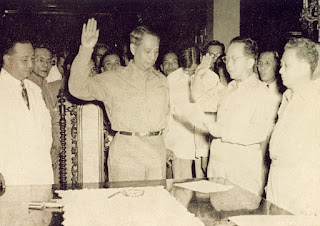
Say Pangasinensen ngalngalin nanmaliw ya pangolo na bansa: Si Carlos Peña Romulo (1898-1985)

Nipaakar ed sayan talintao. Say inpansamba nen Carlos P. Romulo ed arap nen Pangolon Manuel Roxas nen 1946. Walad kawanan si Speaker of th...

Dec 31, 2009

Rizal in Europe: Portrait of the Traveller as Filipino (First of two parts)


Erwin S. Fernandez

                                                                                                                             Hoja seca que cuela indecisa 
                                                                                                                            Y arrebata violente turbión,
                                                                                                                            Asi vive en la tierra el viajero,
                                                                                                                            Sin norte, sin alma, sin patria ni amor.1
 
Jose Rizal, Canto del Viajero

In commemoration of the Philippine national hero’s 2009 birth and death anniversary, this article describes in detail Jose Rizal’s voyage to Europe in 1882 and his tour of Paris and other European cities prior to his return to the Philippines in 1887. By telling how Rizal encountered and confronted Europe, it arrives at an honest portrait of the Filipino as a traveller, which is no different from the experiences of Filipinos today in the Diaspora.
Without Europe, Rizal could never be the Rizal anybody knew him to be in the same way that without 1872, as he himself had admitted to his fellow propagandists; he could have been a Jesuit (Guerrero, 1998). It was in Europe where he would seek the cure for the malady afflicting his beloved Filipinas. In Europe he would sit and listen to liberal Republican professors; work with French and German doctors; and meet its great sages. All these, however, would be too academic to deal with for someone like Rizal who only wanted to enjoy every minute of his visit and stay in Europe in the 1880s as any traveller would want to today.

Oceanic voyage and reptilian dreams: Manila to Madrid
But Rizal would cross oceans to see in flesh and blood the Europe he had read in Cesare Cantu’s world history about great battles fought, of palaces and courts where royal intrigues and murders happened. The long voyage would take him to Singapore where he was almost cheated by the carriage driver, to Point Galle where on their way there he dreamed of snakes, and Colombo in Ceylon (now Sri Lanka), to Cape Guardafui in what is now Somalia, Gulf of Aden and its city and Suez and its famous canal. On June 7, 1882, they entered the Mediterranean Sea and four days later, they reached Naples and Sicily in Italy. They were allowed for an hour and a half to stay ashore but he was “carried by love and curiosity” so he went down riding in a boat, bringing with him a watch and some orders for the telegraph office (Rizal, 1977, p. 71). He saw “paved streets, squares, buildings, shops, statues” and strolled down the town of Naples (Ibid). Quickly learning his lesson, he returned aboard “without being fooled by the guide and the driver” (Ibid.). Two days after, the Djemnah dropped anchor in Marseille.
The more-than-a-month trip endeared him to his new friends and acquaintances so that he was saddened by their departure. Bidding his goodbye to them, he went to the customhouse where he was treated politely. It was early in the morning when riding a coach on the way to Hotel Noailles he saw magnificent houses along well-paved Rue Canebière, and the Bourse Palace. At the hotel he occupied a room complete with first-class amenities on the second floor overlooking the street. After getting a haircut, he took a walk around becoming enchanted with the large and beautiful houses and captivated by newspaper and flower vendors. Back in the hotel, he caught up with his Spanish friends suggesting to them that they go to chateau d’eau or “the water castle,” the other name for Parc Longchamp. There he saw the Palais Longchamp with the stunning fountain, “the water…falls in a grand cascade” (Ibid., p. 75). It was a memorial to the arrival of water in Marseille via the canal. They visited the botanical and the zoological gardens where he was amused with the monkeys. Then they visited the museum, the Musée des Beaux-Arts in the East Wing and the Museum of Natural History in the West Wing of which it was his first time to see one. It gave him an indescribable feeling; he wanted to spend the whole day there. After his companions left him, he stayed devouring all he could see and then he went home stopping in a shop to buy a pair of candles and a bar of soap. From the hotel, he went to a restaurant to eat, then strolled for a while and went back to the hotel. Having known that his friends were not in the hotel, he went out of the hotel but he was forced to go back because of the blistering cold.
The following morning he woke up late and went to see his companions. They took a stroll going as far as rue de la Republiqué to see the Panorama, then to Belfast Place where they spent a good time. New to their surroundings, they lost their way but found it nonetheless. They spent lunch together and with a companion he went shopping until four o’clock in the afternoon. They returned to the hotel only to see the departure of his Dutch friends. To take away his sadness, he chatted with his friends and planned to take supper at Café Maison Dorée but instead ended in the hotel. Then they went for a walk and stayed in a café listening to concert, songs and drama until midnight. The following day, waking up late again, he went with his friends to take a last stroll going into last-minute shopping so that only twenty-eight pesos remained of the seventy-six pesos he brought from Manila. With a first-class ticket costing twelve pesos, he only had sixteen pesos left. Treated rudely by the carabineers in Barcelona upon his arrival on June 16, he came not as a tourist but as a medical student with a vague if not unknown mission in his head (Ibid., 77-79).

Missing Laguna in the heart of beautiful Paris
After almost exactly a year of studies in Madrid, Rizal went back to France but now in Paris. More than the suggestion of his elder brother who advised him to study there, he was really enchanted by France (Quirino, 1997). Aboard an express train, he would notice the bare landscape of Old Castile from the verdant topography of Hendaye, the first French town. Passing through many cities awakened his memories of their glorious past. He arrived on June 17 and stayed at Hotel de Paris at 37 rue de Maubeuge. “The environs of Paris are very beautiful and very picturesque” he would write to his parents, and that “here everything is dear” (Rizal, 1977, p. 234).  On his first morning he went for a stroll and he could only imagine how big Paris in a description to his parents as the whole area comprising Calamba, Cabuyao and Santa Rosa. He did nothing but walk perhaps to save money for the carriage fare to see the Champs Elysées, Vendome Column, Place de la Concorde, Obelisk of Luxor and the Madeleine Church. About the Champs Elysées, he wrote that it was “a grand avenue from the Place de la Concorde to the Arch of the Carrousel, wide and long, filled with trees, with theatres on both sides in which plays and concerts are held at night…” (Ibid., p.235). In the evening, he went with his Filipino friends to the Theatre of the Opera “the most sumptuous public edifice I’ve seen until the present” (Ibid., p.236). The following day he went to the Laennec Hospital marvelling at the advances the French were doing, then the Bon Marché, one of the five big department stores and the Church of Notre Dame of Paris where it reminded him of Victor Hugo.
The whole summer he spent much in sightseeing and observing and attending French medical institutions. Regarding the latter, he went to see the Lariboisiere Hospital. After attending an operation, he visited the Jardin d’Acclimatation located outside the city where he saw a variety of plants and birds. He also went to see at the end of the grand avenue the Summer Circus in which equestrian and gymnastic performances were performed. The National Panorama, just like what he saw in Marseille and Madrid, depicted historical scenes, this time the Franco-Prussian war. He also visited the Palace of Industry displaying Japanese painting, the Hotel Dieu, a big hospital that can accommodate 300 patients, the Museum of Orfila where he saw human and comparative anatomies, an interest to medical students like him, the Jardin des Plantes, the Luxembourg Garden and Palace, of the latter he was able to see the museum of painting and sculpture, the Hotel des Invalides built to provide shelter to poor soldiers and the Museum of Artillery (Ibid., pp. 239-245).
Apart from the Musée Gavin, a private museum, he did not miss the Louvre Museum spending three days there from ten in the morning until five in the afternoon without taking a rest. He was not the usual tourist who would cursorily look at the pieces and leave. He was there to learn and was even mesmerized by the splendour he saw that he imagined that out of the walls would come out a historic face embodying the tales and stories of which the Louvre had a role through the centuries. At the ground floor, he was delighted with so much antiquity, the sphinxes in the Egyptian Museum, pieces of stone with huge bas reliefs in the Assyrian Museum, a column from a Greek temple in the Asiatic section and sculptures of Michelangelo in the Renaissance section. On the second floor, he saw paintings by great European masters: da Vinci, Ruysdael, Van Dyck, and Murillo among others (Ibid., pp. 247-250).
He did not leave France without visiting the Pantheon where tombs of great French men were kept going down the ground to see Voltaire’s and Rosseau’s with the help of a guide holding a lantern. From Paris, he went with his Filipino friends to the Palace of Versailles by train, a one-hour ride. The former residence of the Bourbons and the Bonapartes built under Louis XIV, it was now a historical museum.  It was a hurried tour but he was able to visit the rooms of Napoleon I, his study, the rooms of Louis XIV, XV, XVI and their wives, the queens. Outside, he marvelled at the garden and the park (Ibid., pp. 251-256).
He would leave Paris more impressed than before of French courtesy, cleanliness and orderliness and more knowledgeable of the French language but he knew that Paris was not Europe. He would learn this in February 1886 in Germany.


Northern Mirror (Dagupan City) December 30, 2009-January 5, 2010: 5-6.

Rizal in Europe: Portrait of the Traveller as Filipino (Last of two parts)


Erwin S. Fernandez


Thinking of Pasig while touring the Rhine
But before he left for Heidelberg, he was in Paris staying there for seven months under Dr. Louis de Wecker, a famous ophthalmologist and had begun studying German (Guerrero, 1998). The moment he arrived at the Franco-German frontier town of Avricourt, he noticed the change of atmosphere because military men ran the railroad. He made a stop in Strasbourg visiting its famous cathedral and went straight to Heidelberg. Beside his compartment was a first-class seat for Russian royalties who were accorded military honours every time they went down making him conclude that Germany was “a country of great order and subordination” (Rizal, 1977, p. 262).  He would stay in Heidelberg, an old university town until August 9, 1886 when he would make a tour of Germany through the Rhine valley.
The train arrived in Mannheim affording him visits to Schlossgarten of which he compared it to the Retiro in Madrid, the Ludwigshafen and the Jesuitenkirche, a beautiful baroque church. Changing trains at Dornberg Gross-Gerau, he arrived at the Central Bahnhof in Mainz. Staying in a first-class hotel, he visited public squares where he saw the statues of Gutenberg and Schiller before leaving Mainz aboard a little steamer the following day. The Rhine river reminded him of the Pasig River, factories on the banks, of Mandaloyon while Beibrich that of San Miguel with its mansions and gardens. “Were it not for the beautiful towns and extensive plantations on these banks, the Pasig would have been superior to them” (Ibid., p. 105).
He got off at Bindesheim, rode a train to Niederwald and then took a steamer in Rudesheim passing the rock of Lorelei, which to him was the Malapad-na-bato, the ruined castles, Coblenz, Neuwied and disembarked in Bonn. In Bonn, he took the train for Cologne in the morning of August 11. From there he saw the Kaiser Glocke, the cathedral, and the Museum of Fine Arts. He left the city aboard a train to Bonn and from there boarded an ugly boat arriving at Coblenz at night. The following morning he toured the city visiting a chapel, the post office, a fortress and a house of the Order of Knights Templars. From Coblenz, he took a steamer getting to the city of Bingen. Aboard a steamer, he arrived at Mainz to ride again in a steamboat for him to take a trip to Kastel and from there take the train to Frankfurt (Ibid., pp. 106-114).
In Frankfurt, he saw the Staedel Institute, the statue of Goethe, beautiful but “he looks more like a rich banker than a poet,” the zoological park, the opera house, the palace of the stock exchange and a Jewish synagogue (Ibid., p 115). From Frankfurt, the second beautiful city in Germany he had seen, he went to Leipzig by train carefully noting the towns and cities he was passing through and finally arriving on August 15.
Staying for two months in Leipzig, he found the food and the lodging there cheaper than anywhere else in Europe. He would meet Dr. Hans Meyer, author and anthropologist; visit two largest breweries in Germany; go to Halle to visit its university and visit Dresden. In Dresden, he visited the picture gallery rich in classical but poor in modern paintings, the Japanese Palace, the Grunes Gewolbe where he was dazzled by the glow of the precious stones kept in there, the Zoological, Anthropological and Ethnographic Museum where he finally met its director, Dr. A.B. Meyer and the Museum Johanneum. On November 1, he went to Berlin. Arriving in early afternoon, he took accommodation at the Central Hotel with a good service, large dining room and a reading room with newspapers and “insignificant” books (Ibid., pp. 119-125).

Threat of deportation and the lure of going home
His tour of Europe did not end in Berlin. On May 12, 1887, he began his tour with his friend Maximo Viola before embarking on a trip to Manila. Prior to this, faced with threat of deportation he had to report to the German police who wanted him to show his passport because he was being suspected as a French spy. Departing from Berlin, they went to Dresden, Teschen, Leitmeritz where he finally met Dr. Ferdinand Blumentritt, Prague, Brunn, Vienna, Linz, Salzburg, Munchen (Munich), Nuremberg, Ulm, Stuttgart, Baden, Rheinfall, Schaffhausen; Basel, Bern, Lausanne and Geneva in Switzerland.  In the last country when the train reached its frontiers they parted ways on June 23: Viola to Barcelona and he to Italy. In Italy, he would write to Blumentritt of his enchantment with Rome and aboard the same Djemnah he would bid farewell to his “beloved Europe” (Ibid., pp. 318-320, 324-333).
Nevertheless, he loved the Philippines more than Europe and like what he said to the departing Dutch sisters on June 13, 1882 in Marseille, “no matter how beautiful Europe may be, I want to return to the Philippines” (Ibid., p. 74). Here was Rizal the traveller who had seen the best of Europe but kept his longing for his country because it is truism that ‘there is no place like home.’

Conclusion
What portrait can we draw from this narrative based on the travel diaries and letters Rizal himself wrote? What can Filipinos in the Diaspora learn from Rizal as an exile? More than a hundred years after his death, Rizal’s life demonstrates the qualities of a quintessential and durable hero whom Filipinos should try to understand toward understanding their own selves as Filipinos. Though numerous books and countless articles were written about every aspect of Rizal’s life, there remains something in his life unexplored just like any other great Asian or European. But Rizal is unique among the world’s great men and women; some Filipinos consider him not only as a hero but as a god, a Christ. Regardless of one’s religious or political beliefs, Rizal displays both divine and human qualities. The latter is emphasized here, which is the portrayal of Rizal as a Filipino traveller.
Rizal’s attachment to his homeland, his homesickness, is reflected in the way he would compare Laguna and Pasig with what he saw in Europe. He was never the lackadaisical tourist who would fritter away his time seeing without learning. But like most of his countrymen today scattered all over the world struggling to survive in an environment where foreigners are regarded with suspicion, he had been subjected to police harassment and threatened with deportation. It is not an exaggeration to say that he prefigured, that’s why he’s the first Filipino, what thousands of Filipinos would suffer in foreign lands for the same reason – love of country. Rizal went to Europe to create a nation while Filipinos go abroad to build the nation. But what makes Rizal the traveller Filipino is his longing to go home, to breathe the same air that nourished his soul in the land of his birth, the nation he fathered causing Filipinos today to leave and seek greener pastures hopeful of coming back.

Note
1.      The late National Artist Nick Joaquin translated the poem as “Song of the Wanderer” with the first stanza in the following lines: “Dry leaf that flies at random, till it’s seized by a wind from above: so lives on earth the wanderer, without north, without soul, without country or love!” A literal translation by unknown translator rendered it “The Song of a Traveller” with the following first stanza: “A withered leaf which flies uncertainly, and hurled about by furious hurricanes, so goes the traveller about the world, no guide, no hope, no fatherland, no love.”

References
Guerrero, L. M. (1998). The First Filipino: A Biography of Jose Rizal. Manila: Guerrero
      Publishing.
Quirino, C. (1997). The Great Malayan. Manila: Tahanan Books.
Rizal, J. (1977). Reminiscences and Travels of Jose Rizal (Encarnacion Alzona, Trans.).
Manila: National Historical Institute.

[Editor’s note: Founding director of an independent research center, the Abung na Panagbasa’y Pangasinan (House of Pangasinan Studies), the author is a former UP Diliman faculty member who taught PI 100, a course about the life and works of Rizal. While revising this, he was attending a summer archaeological field work at the University of Illinois at Chicago under a Luce/ACLS grant. He can be reached at win1tree[at]yahoo.com.]

Northern Mirror (Dagupan City) January 6-12, 2010: 5-6.


Nov 8, 2009

Panangisumpa ray balon opisiales na UPSP, Nobiembri 13, 2009

No Nobiembri 13, Biernes, ed Agew na Pangasinan, alas 9 na kabuasan, diad San
Carlos City gym ed plaza, nagawa so panangisumpa daray balon opisiales na UPSP
(Ulupan na Pansiansiay Salitan Pangasinan) ed panamegley na Konseho na Siudad na
San Carlos, say pangolo na siudad tan si Dr. Marcelo Casillan. Walay misa na
alas 7 na kabuasan tan panangitagey na bandira na alas 8 na kabuasan.

Kekerewen so panatindi da ray balon opisiales na UPSP, say balon manbebenben na
Balon Silew, saray miembro na UPSP, tan saray miembro na sayan ulupan ed yahoo.

Presidente- Mel Jovellanos
Onkumaduan presidente- Erwin S. Fernandez
Sekritaria- Elnora Dudang
Tresurera- Jesamyne Diokno
Tagapakabat (Papaway)- Sonny Villafania
Tagapakabat(paloob)- Mel Orpilla
Bisnis manedyer- Marino Repalda
Tagakwenta- Larry Millanes
Opapetan:
Dr.Rod Javier
Catalina Felicitas
Dir Jaime Lucas
Dr. Linda Andaya Grubb
Vice Mayor Orlando Bartolome

Pangolon manangikurang: Erwin S. Fernandez
Katolong ya manangikurang: Jesamyne Diokno (balita), Santiago Villafania
(anlong), Sergio Bumadilla (antikey ya tongtong), Melchor Orpilla (kopia)

Saray sumusulat: Elnora Dudang, Catalina Felicitas, Napoleon Resultay, Melanio
Malicdem tan arom ni ra

Nov 3, 2009

Panagkerew na anunsio para'd Balon Silew

Saray anunsio so bilay na Balon Silew ta pian ag napoltot so panangipalapag na
magasin. Say bili na sarayan anunsio et: loob na sakob ed arapan: P 1200 (boo),
P 600 (kapaldua), P 350 (kapat); ed loob na sakob ed beneg: P 1200 (boo), P 600
(kapaldua), P 350 (kapat); tan beneg ya sakob: P 2000 (boo), P 1000 (kapaldua),
P 500 (kapat).

Alimbawa na anunsio: panangibano na saray wadmad biektaew, panangibalitay kasal,
binyag, anibersario; doipo dara'y mankaklasi (reunion); produkto odino serbisio;
panangiamta na saray eskuelaan, unibersidad tan antoniran nayarin iyanunsio.

Kabaleyan, dia tan wadma'd biektaew, man-anunsio ki la ed Balon Silew. Naipaamta
ta'y gagaween yo, produkto, odino serbisio, akatolong ki ni ed Balon Silew tan
ed pamabulaslas na koritan tan salitan Pangasinan. Saray man-anunsio et walay
sakey ya kopia da na Balon Silew ya diman pimmaway say anunsio da.

Para'd labay day man-anunsio, ipawit yo'y kaokolan ya naamtaan ed
balonsilew@yahoo.com.

Magnayon lawas so salitan Pangasinan.

Erwin S. Fernandez
Pangolon manangikurang
Balon Silew

Korespondiente para'd Balon Silew

Pian naibilang saray aktibidades na kaluyagan ed arom ya pasen ed Pilipinas
tan diad biektaew, kekerewen na Balon Silew saray nayarin
korespondiente na magasin ed Ibali (Manila), Tarlac, Laguna, Saudi Arabia, Canada, Estados
Unidos tan arom ni ran ag abitlan lugar. Say kimey na korespondiente et
mangisulat ya 500-kataga ya balita ed lugar to ya nipaakar ed Pangasinan (totoo,
agawa, moyongan (organisasion) tan antokaman). Ipawit soy ngaran tan arom ni ran impormasion ed balonsilew@yahoo.com.

Erwin S. Fernandez
Pangolon manangikurang
Balon Silew

Tawag na pangisumiti na artikulo para'd Balon Silew

Kekerewen saray sumusulat ya mangisumiti ray anlong, antikey ya
tongtong, balita tan salaysay. Say pangisumiti et aliwan garantiya na
panangipalapag na saray artikulo. Onsaral ya ed tutul na pangolon manangikurang
tan say ibaga na saray katolong ya manangikurang. Ipawit yo ed
balonsilew@yahoo.com ya ag onlampas na Nobiembri 22.

Erwin S. Fernandez
Pangolon manangikurang
Balon Silew

Salaysay nipaakar ed miting na Balon Silew

Nen Oktubri 24, masakbayak ya nanpa-PSU Lingayen ta pian masakbay ya nasumpal so miting. Akasabiak ya 8:10 na kabuasan. Balet naigapo so miting na 11 na kabuasan ta inalagar niray arom ya kabiangan. Wadman la ya 9 na kabuasan si Madam Elnora Dudang ya maistra ed PSU.

Saray apantongtongan:

1. Say tima na ontumbok ya paway na Balon Silew (Hulio-Disiembri 2009) et say administrasion nen Gobernador Amado T. Espino Jr.

2. Say pangiuksoy na ortograpiya na saray artikulon onpapaway ed Balon Silew ed panamegley na panangipalapag na "Saray Ganggan nipaakar ed Balon Ortograpiya na Balon Silew."

3. Say pangilukas na Balon Silew ya bolong ed Bolinao tan Iloko.

4. Say reorganisasion na liderato na Balon Silew:

Pangolon manangikurang: Erwin S. Fernandez
Katolong ya manangikurang: Jesamyne Diokno (balita), Santiago Villafania (anlong), Sergio Bumadilla (antikey ya tongtong), Melchor Orpilla (kopia)

Saray sumusulat: Elnora Dudang, Catalina Felicitas, Napoleon Resultay, Melanio Malicdem tan arom ni ra

Manag-uksoy (talintao tan nengneng na magasin) Marino Repalda

5. Say pangipawitan ya amin ya artikulo: balonsilew@yahoo.com

6. Saray tima ed saray ontumbok ya paway:

a. Iniro-Marso 2010 - Saray Simbaan ed Pangasinan
b. Abril-Hunio 2010 - Saray Masansanting ya Pasen ed Pangasinan
c. Hulio-Setiembri 2010 - Panagparles na Panaun ed Pangasinan
d. Oktobri-Disiembri 2010 - Kikiew tan Tantanaman ed Pangasinan
e. Iniro-Marso 2011 - Sira-sira ed Pangasinan
f. Abril-Hunio 2011 - Saray Manok ed Pangasinan
g. Hulio-Setiembri 2011 - Saray Industria ed Pangasinan
h. Oktobri-Disiembri 2011 - Tradision ed Inkianak ed Pangasinan

No sarag ya gaween ya kada duaran bulan so paway na Balon Silew et marakep.

7. Pamaakaran nipaakar ed pangalay pondo ta nababalang so pondo na Balon Silew:
a. Pankerew ya tolong pinansial ed saray pilantropo.
b. Saray anunsiyo ed Balon Silew ya itdan say makakerew na 20 porsiento na loob na sakob ed arapan: P 1200 (boo), P 600 (kapaldua), P 350 (kapat); ed loob na sakob ed beneg: P 1200 (boo), P 600 (kapaldua), P 350 (kapat); tan beneg ya sakob: P 2000 (boo), P 1000 (kapaldua), P 500 (kapat).

8. Saray naitdan ya betang nipaakar ed administrasion nen Gob. Espino:
a. administrasion - Catalina Felicitas
b. bilay nen Gob. Espino - Elnora Dudang
c. bilay tan kimey nen Bise-Gobernador Agabas - Jesamyne Diokno
d. Nipaakar ed Agew na Pangasinan - Melchor Orpilla
e. Saray nagawa no Agew na Pangasinan (Nobiembri 13) - Nap Resultay
f. Komiks - Jesamyne Diokno

9. Say kasampotan ya agew ya pangisumiti na artikulo tan arom ni ran sulat (anlong, antikey ya tongtong, balita, salaysay): imbis ya Nobiembri 15, gaween lan Nobiembri  22.

10. Pangiyanap ya mamura balet de-kalidad ya pangigalutan na Balon Silew

Asumpal so miting ya 4 na ngarem. Salamat ya daakan ed kinen Madam Dudang ed pangiwi to'd sikami legan wala kami'd lugar da.

Erwin S. Fernandez

Oct 19, 2009

Panagbasa'y Pangasinan ed Teoria tan Praksis

Say inkorit kon artikulon pinauloan koy "Reclaiming identity toward decolonisation: Pangasinan studies in theory and praxis" et pimmaway la ed AlterNative: An International Journal of Indigenous Peoples 4 (2) 2008: 102-122. Bisita yo'y kawing: http://www.alternative.ac.nz/journal/volume4-issue2

Bantog Iran Post